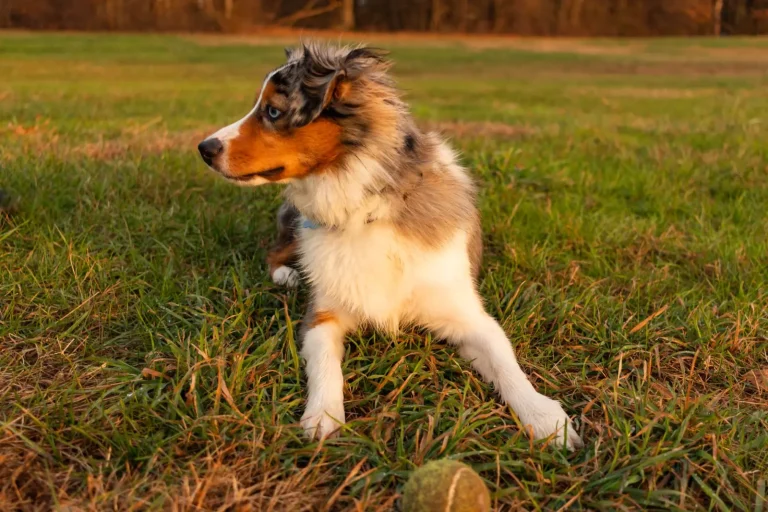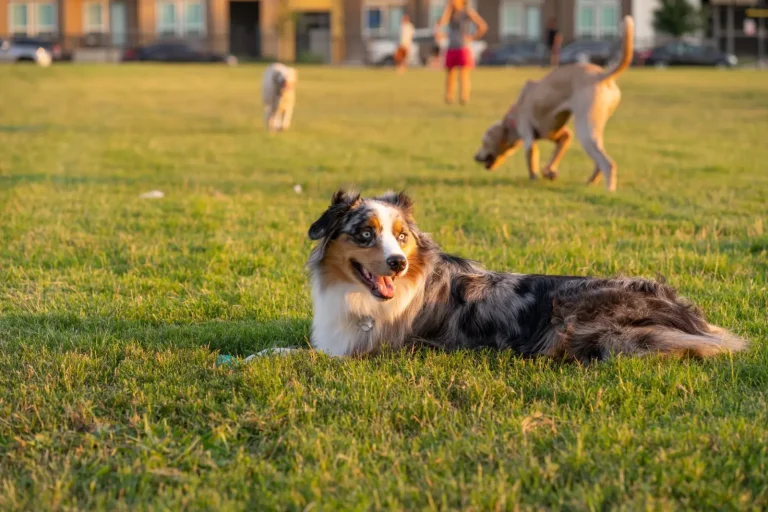

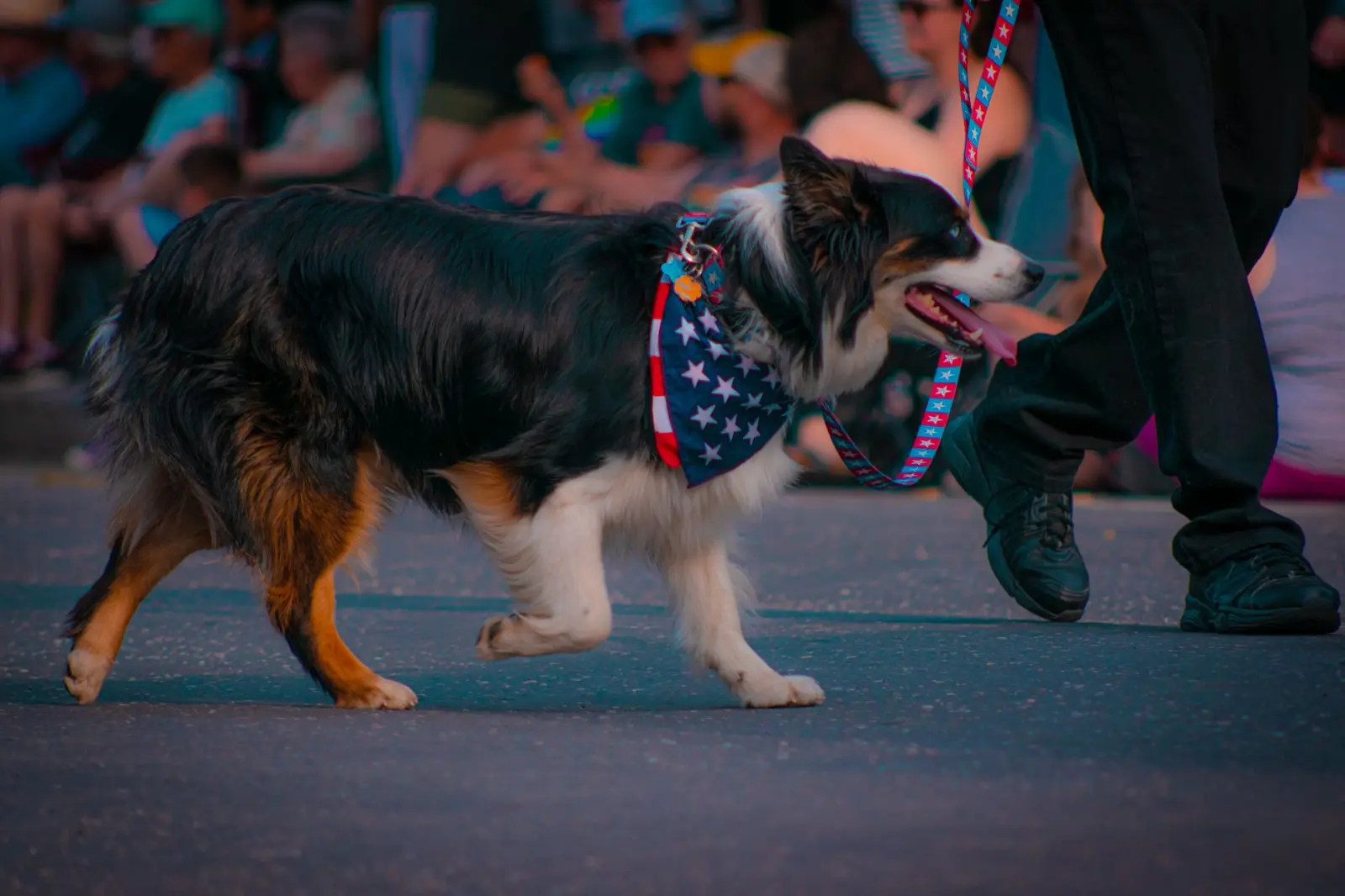
Australian Shepherds have a particular relationship with the leash. They’re bred to move stock across open ground with purpose and direction, and that instinct doesn’t simply vanish when you clip on a lead. Most of the loose lead walking problems I see with this breed aren’t about stubbornness or defiance – they’re about a dog whose natural movement patterns and mental drive don’t naturally align with human walking pace. The dog is thinking in terms of work, coverage, and scanning the environment. You’re thinking about a casual stroll.
What makes this breed different from many others is their responsiveness to engagement. They’re not independent in the way some breeds are, but they do need a reason to stay with you that makes sense to their brain. Treats and praise work, but they work better when wrapped inside something that feels more like play than obedience. This is where games become practical rather than cute.
I’ve found that the most reliable loose lead walking in Australian Shepherds develops when the dog understands that staying close to you is the beginning of something interesting, not the end of something fun. The leash shouldn’t feel like a constraint that stops activity. It should feel like a connection that starts it.
Why Standard Approaches Often Stall
The typical method – stop walking when the dog pulls, wait for slack, reward – does work with many dogs. With Australian Shepherds, it can work too, but it often creates a pattern where the dog learns the mechanical rule without developing genuine engagement. The dog stops pulling because the walk stops, not because staying close is intrinsically rewarding. You end up with a dog who walks loosely but whose attention is still elsewhere, still checking for opportunities to move ahead or investigate.
This breed needs mental involvement. If the walk itself is passive – just moving from point A to point B – the dog’s brain is available for distraction. A squirrel, another dog, a smell, a change in terrain. The Australian Shepherd’s herding instinct means they’re naturally scanning, naturally reactive to movement and change. A loose lead alone doesn’t solve that. You need the dog’s mind engaged in something that competes with those environmental triggers.
Games That Build Real Engagement
The most effective approach I’ve used involves turning the walk into a series of small, unpredictable challenges that keep the dog checking in with you. One simple version is the “sudden direction change” game. You’re walking normally, and without warning, you change direction sharply – not as a correction, but as the start of something. The moment the dog notices and follows, they get a reward. Food, a toy, a few seconds of play. The reward is immediate and it’s for noticing you changed, not for having been in the right position already.
This works because it leverages the Australian Shepherd’s natural awareness. You’re not fighting their tendency to scan the environment. You’re making yourself part of what they’re scanning for. Over time, the dog begins to anticipate that you might do something interesting at any moment, so checking in with you becomes a habit rather than something they do on command.
Another version is the “engagement marker” game. You establish a specific sound or word – something distinct from your normal speech – that means “something good is about to happen.” You use this marker only when the dog is already close to you and moving at your pace. A few steps of good loose lead walking, you make the sound, and immediately reward. The sound becomes a prediction of reward, and the dog learns that being near you and moving with you is when good things are likely to occur.
Handling the Herding Impulse
Australian Shepherds will sometimes use the leash as a tool for herding behavior – circling, cutting in front, applying pressure from the side. This isn’t disobedience. It’s the dog attempting to do what they’re built to do. Punishing or correcting this behavior often just teaches the dog to be sneaky about it, not to stop wanting to do it.
What I’ve observed is that redirecting this impulse works better than suppressing it. If your dog is circling or cutting in front, you can use that moment as an opportunity for a game. A sudden change of direction, a quick acceleration, a stop-and-reverse. You’re giving the herding impulse an outlet within the framework of the walk itself. The dog gets to move with purpose and strategy, but the strategy is now aligned with your movement rather than against it.
Some Australian Shepherds also respond well to having a specific “job” during the walk. This might be as simple as asking them to maintain position on a particular side of you, or to check in at regular intervals. The job gives their mind something structured to focus on, which often reduces the impulse to create their own work by herding.
Consistency and Environmental Progression
The games work best when they’re consistent but not rigid. You’re not running a drill every time you walk. You’re playing sporadically enough that the dog stays interested and can’t predict exactly when it will happen. If you reward engagement every single step, it becomes expected and loses its power. If you do it randomly, the dog stays alert to the possibility.
Environmental difficulty matters significantly with this breed. A quiet street is easy. A park with other dogs and people is harder. A trail with wildlife is harder still. Most Australian Shepherds can maintain loose lead walking in low-distraction environments fairly quickly. The real test is whether they maintain engagement when there’s actual competition for their attention. This is where the games become essential – they need to be more interesting than the environment.
I’ve seen dogs progress from reliable loose lead walking in controlled settings to reliable loose lead walking in challenging environments over weeks or months, but only if the games are maintained and adapted. As the dog’s skill improves, you can introduce the games in progressively more distracting environments. The dog learns that the engagement game is always available, regardless of where you are.
The shift from mechanical compliance to genuine engagement takes time with this breed, but it’s worth the investment. An Australian Shepherd who walks loosely because they’re genuinely interested in what you might do next is a fundamentally different experience than one who walks loosely because they’ve learned the rule. One is sustainable. The other is always one distraction away from reverting.