

Choosing the right breeder matters.
You are not simply looking for an Australian Shepherd puppy. You are looking for the right puppy, from someone who understands the breed, knows their dogs and cares where every puppy goes.
A good breeder is part of the dog's story.
Finding the right breed for your lifestyle is only the first step. Australian Shepherds vary in temperament, drive, energy and working instinct, so finding the right individual puppy matters too.
A responsible breeder knows the parents, watches the litter develop and is interested in which puppy's temperament is most likely to fit your home, expectations and experience.
And their involvement should not necessarily end when you leave with a puppy. A reputable breeder can remain an important source of information and support throughout the dog's life.
Don't be surprised when they start asking questions.
You will naturally want to evaluate a breeder's knowledge, practices and dogs. A responsible breeder should be doing something very similar with you.
They may ask about your home, family, previous experience with dogs, working hours, activity level, training plans and what attracted you to Australian Shepherds in the first place.
They may want to know whether you are looking for a companion, performance prospect, working dog or show prospect.
Don't be offended by those questions. In many cases they are a very good sign. A breeder who cares where their puppies go has reason to understand the home each puppy is entering.
The breeder-evaluation process should work both ways.
What responsible breeding looks like.
No single detail tells you everything about a breeder. Look at the whole picture: health, temperament, knowledge, transparency and the relationship they maintain with the dogs they produce.
Health information
They can explain the health testing completed on the parents and are comfortable discussing the health history behind their breeding decisions.
Temperament matters
The conversation goes beyond coat colour and sex. They care about which puppy is likely to suit your actual life.
No rush
Many responsible breeders have waiting lists. Availability tomorrow is not automatically a benefit when choosing a dog for the next decade or more.
Open conversation
They answer questions, explain their breeding goals and can discuss both the strengths and challenges of Australian Shepherds.
They know their dogs
A breeder should understand the temperament, drive and qualities of the parents and close relatives, not simply their appearance.
Long-term responsibility
A reputable breeder remains interested in the dogs they produce and should have a plan if an owner can no longer keep their Aussie.
“The parents are healthy” isn't the same as health testing.
Responsible breeding includes making informed decisions about inherited health risks. Ask what testing has been completed on both parents, why those tests matter for Australian Shepherds and whether the results can be documented.
A breeder should be willing to talk about health openly rather than treating questions as criticism. No breeder can promise that a puppy will never experience a health problem, but careful screening helps reduce avoidable risk.
Questions worth asking.
The answers matter. So does the breeder's willingness to have the conversation.
Why did you choose this pairing?
The answer can tell you whether the breeding has a considered purpose beyond simply producing puppies.
What are the parents like to live with?
Titles and photographs tell only part of the story. Everyday temperament matters.
What health testing has been completed?
Ask about both parents and whether results are available for you to review.
How are puppies raised and socialised?
Early environment matters. Ask what puppies experience before leaving for their new homes.
How do you match puppies to homes?
A breeder observing a litter for weeks may see temperament differences that are invisible during a short visit.
What happens if I need help later?
Find out what support is available after the puppy leaves and what happens if circumstances change.
What if the breeder asks you twenty questions?
Good. They may be trying to understand whether one of their puppies belongs in your home.
Expect questions about children, other pets, your daily routine, fencing, exercise, training, previous dog experience and how much time the dog will spend alone.
For an Australian Shepherd, those questions are particularly relevant. This is an intelligent herding breed whose energy, sensitivity and need for involvement can make one home an excellent fit and another much harder.
Temperament is more important than your favourite markings.
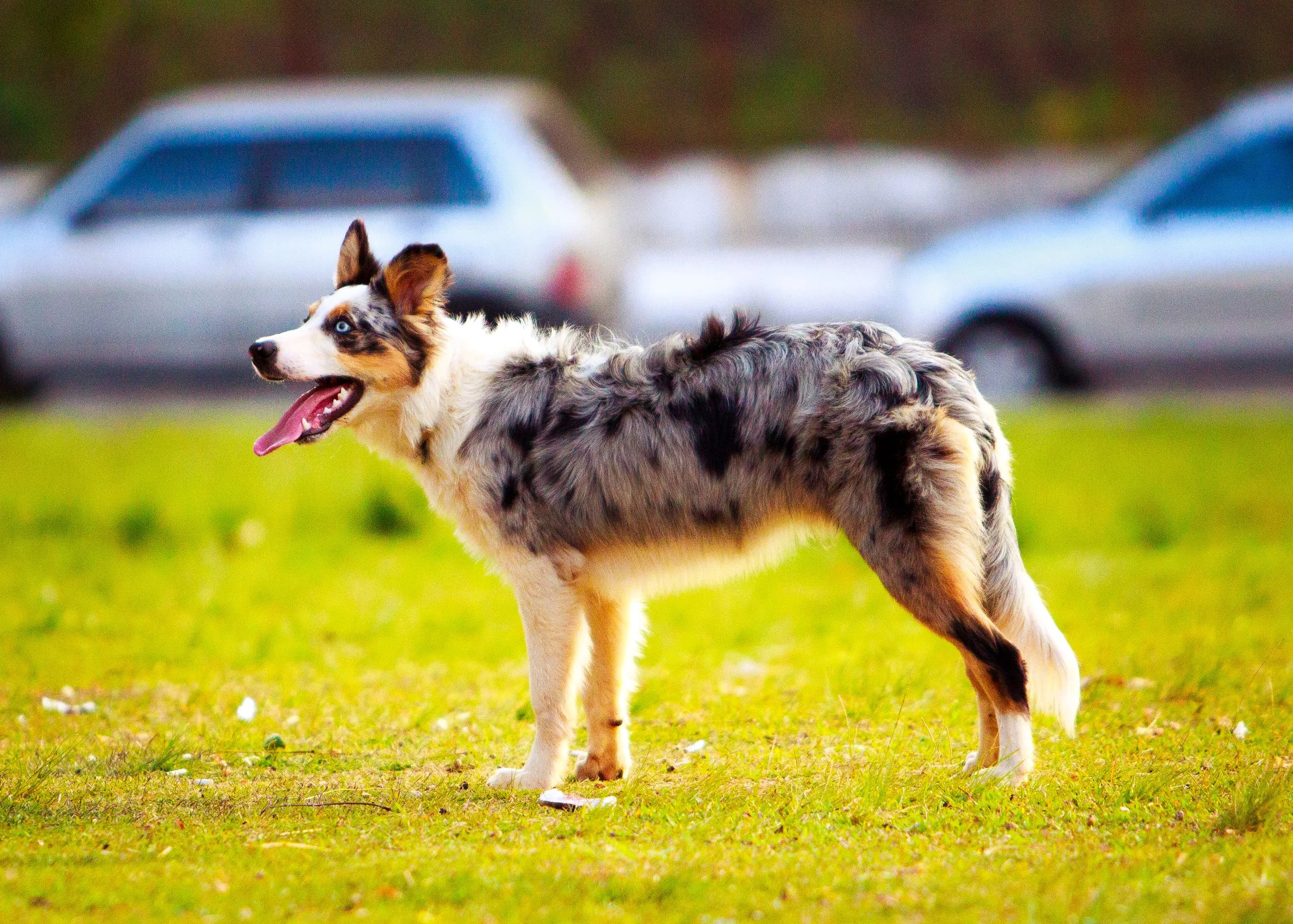
Blue merle. Red merle. Blue eyes. A particular sex. It is natural to have preferences.
But the puppy whose photograph catches your attention may not be the puppy whose temperament best fits your household.
An experienced breeder has watched the litter develop day after day. They may notice which puppies are bold, thoughtful, intense, independent, highly people-focused or particularly driven.
Tell the breeder what you want to do with your dog and what your normal week actually looks like. That gives them much more useful information than a request for “the blue merle with blue eyes”.
Explore Aussie puppy guidesA waiting list isn't necessarily a problem.
Many reputable breeders do not have puppies available whenever someone decides they want one. You may need to wait for a planned litter — and then wait again for the right puppy within that litter.
That can feel frustrating when you are ready to bring a dog home. But an Australian Shepherd may be part of your family for well over a decade. A few additional months at the beginning are small compared with the years that follow.
Availability should never be the strongest reason to choose a breeder.
Red flags aren't always dramatic.
Sometimes the concern is not one enormous warning sign. It is a pattern of missing information, pressure and little interest in what happens after payment.
No documented health testing
General statements that the parents “have always been healthy” do not replace appropriate screening.
The conversation is mostly about colour
Appearance matters in a breed standard, but it should not overshadow health, temperament and suitability.
No questions about your home
A breeder willing to place any puppy with anyone without discussion gives you useful information about their priorities.
Pressure to decide immediately
A long-term commitment deserves enough time for questions, research and a considered decision.
Little knowledge of temperament
A breeder should know more about their dogs than colour, pedigree names and show results.
No plan for the dog's future
Ask what happens if, years later, an owner can no longer keep a dog they bred.
Family companion, show dog or performance prospect?
Different goals can change what you should look for in a breeder, a pedigree and an individual puppy. Be clear about what you actually want to do with your Aussie.
Family companion
Most owners do not need a future show champion. They need a healthy dog with a temperament that fits their family, activity level and ability to provide training and engagement.
Show prospect
Show potential is not something that can simply be trained into any puppy. If conformation is your goal, tell breeders early and expect a deeper conversation about structure, pedigree, mentoring and realistic expectations.
Performance or herding
Drive, biddability, resilience, toy and food motivation and the working qualities seen in parents and close relatives become especially important when performance or stock work is the goal.
Resist the temptation to bring your puppy home too soon.
The time puppies spend with their mother and littermates plays an important role in early development. Puppies learn through interaction with one another and through the environment in which they are raised.
A puppy should not be sent to its new home before eight weeks of age. Depending on the breeder, puppy and circumstances, the appropriate collection age may be later.
Don't judge a breeder by how quickly they can put a puppy in your arms. Ask what the puppy is learning while you wait.
You should feel comfortable with more than the puppy.
A beautiful puppy can make careful thinking difficult. Before committing, make sure the bigger picture still makes sense.
You know why the litter was planned and what qualities the breeder values.
You know what testing was completed and can ask to see the relevant results.
The match is based on more than colour, sex or which puppy approached first.
There is a clear understanding of ongoing support and breeder responsibility.
The right breeder wants the placement to work as much as you do.
Take your time. Ask questions. Expect questions in return. Look beyond colour and availability to health, temperament and long-term responsibility. The puppy may come home with you — but a good breeder remains part of the support behind that dog.
Explore puppy guides