

Is an Australian Shepherd right for you?
Intelligent. Loyal. Beautiful. Intensely engaged with life. The qualities that make Australian Shepherds extraordinary companions are also the qualities that make them a poor fit for some homes. The question isn't whether Aussies are great dogs. It's whether the way they are built to live fits the way you want to live.
Maybe. And that's a better answer than “yes”.
Aussies are not the breed for everyone — and understanding that before bringing one home is good ownership.
An Australian Shepherd can be affectionate, intuitive, enthusiastic and remarkably connected to its family. It can also be demanding, inventive, intense and far more observant than many first-time owners expect.
This is a herding breed. Even dogs from generations of show or companion lines may retain behaviours connected to that heritage: chasing movement, circling, watching, controlling space and sometimes trying to herd people or other animals.
What matters most is not whether you have a farm, a huge backyard or a marathon training plan. It is whether you are prepared to make the dog part of your life and give its physical energy, intelligence and social nature somewhere productive to go.
An Aussie may suit you if…
You want an involved dog
You like the idea of a dog participating in walks, training, outings, games and everyday family life.
You enjoy training
Teaching behaviours, building communication and solving little problems together sounds enjoyable rather than like another chore.
You can provide consistency
Your dog can expect clear boundaries, predictable routines and enough attention even after the novelty of puppyhood disappears.
You like an intelligent personality
You appreciate a dog that watches, anticipates, learns quickly and occasionally makes you rethink your own strategy.
You are choosing for years
You are prepared for a commitment that commonly lasts 12–14 years and may last longer.
Think twice if…
You mainly want the look
Blue eyes and merle coats are striking, but appearance is a poor reason to choose a working breed.
You want a low-involvement pet
If your ideal dog is content with minimal interaction and largely entertains itself, an Aussie may feel demanding.
You dislike training
Intelligent dogs still need to learn how the human world works. Avoiding training rarely makes life simpler.
Your schedule leaves little room
Long periods alone combined with little meaningful activity can be a difficult setup for a highly engaged dog.
You expect the backyard to do the work
Space is useful. It is not enrichment, training, companionship or a substitute for doing things together.

Smart is wonderful. Smart is also work.
Australian Shepherds are highly intelligent and generally very trainable. That sounds like an uncomplicated advantage until you realise that learning happens whether you are deliberately teaching or not.
An Aussie notices routines. Which cupboard holds the treats. What you do before leaving the house. Which behaviours get attention. Where the weak point in the garden fence is.
Barking, digging, chewing, chasing and dismantling the garden can all become self-created occupations when a dog's physical and mental needs consistently have nowhere better to go.
Explore trainingNo sheep required.
A job does not have to mean working livestock or competing every weekend. For a companion Aussie, “work” can simply mean having structured ways to think, move, cooperate and succeed. The important part is engagement.
Training
Everyday manners, tricks, recall and new skills give the dog a clear language for working with you.
Scent work
Searching for food, toys or odours can turn an ordinary room or garden into meaningful mental work.
Dog sports
Agility, obedience, tracking and herding can channel athleticism and cooperation into structured challenges.
Everyday life
Carrying something, settling while you work, finding objects or following household routines can all provide purpose.
What about your situation?
There is no single perfect Aussie household. Context matters more than labels. An apartment can work beautifully; a large property can fail badly if the dog's actual needs are ignored.
Apartment living
Possible when exercise, training, enrichment and settling skills are handled deliberately. Floor area does not determine quality of life by itself.
House & yard
Useful space, especially with secure fencing, but a yard does not replace walks, learning, companionship or structured activity.
Children
Aussies can be excellent family dogs, but children and dogs both need guidance. Herding behaviours around running children should be managed rather than dismissed.
Other pets
Many Aussies live successfully with other dogs and pets. Individual temperament, introductions, socialisation and management remain important.
Full-time work
Having a job does not rule out having an Aussie, but routinely leaving a young or active dog alone for very long days requires a realistic care plan.
First-time owner
Possible. A motivated first-time owner who learns and trains may be a better match than an experienced owner looking for an effortless dog.
They don't just live near their people.
Australian Shepherds are often deeply interested in their families. Many want to know what is happening, where everyone is going and whether their participation is required.
That connection is one of the breed's great pleasures. It also means an Aussie is generally better suited to a home where the dog is treated as part of the family rather than an animal expected to occupy the backyard independently.
With strangers, Aussies may be reserved or initially unconcerned. That is different from fear or aggression. Thoughtful socialisation during puppyhood helps the dog learn to navigate people, environments and unfamiliar situations with confidence.
Life with an Aussie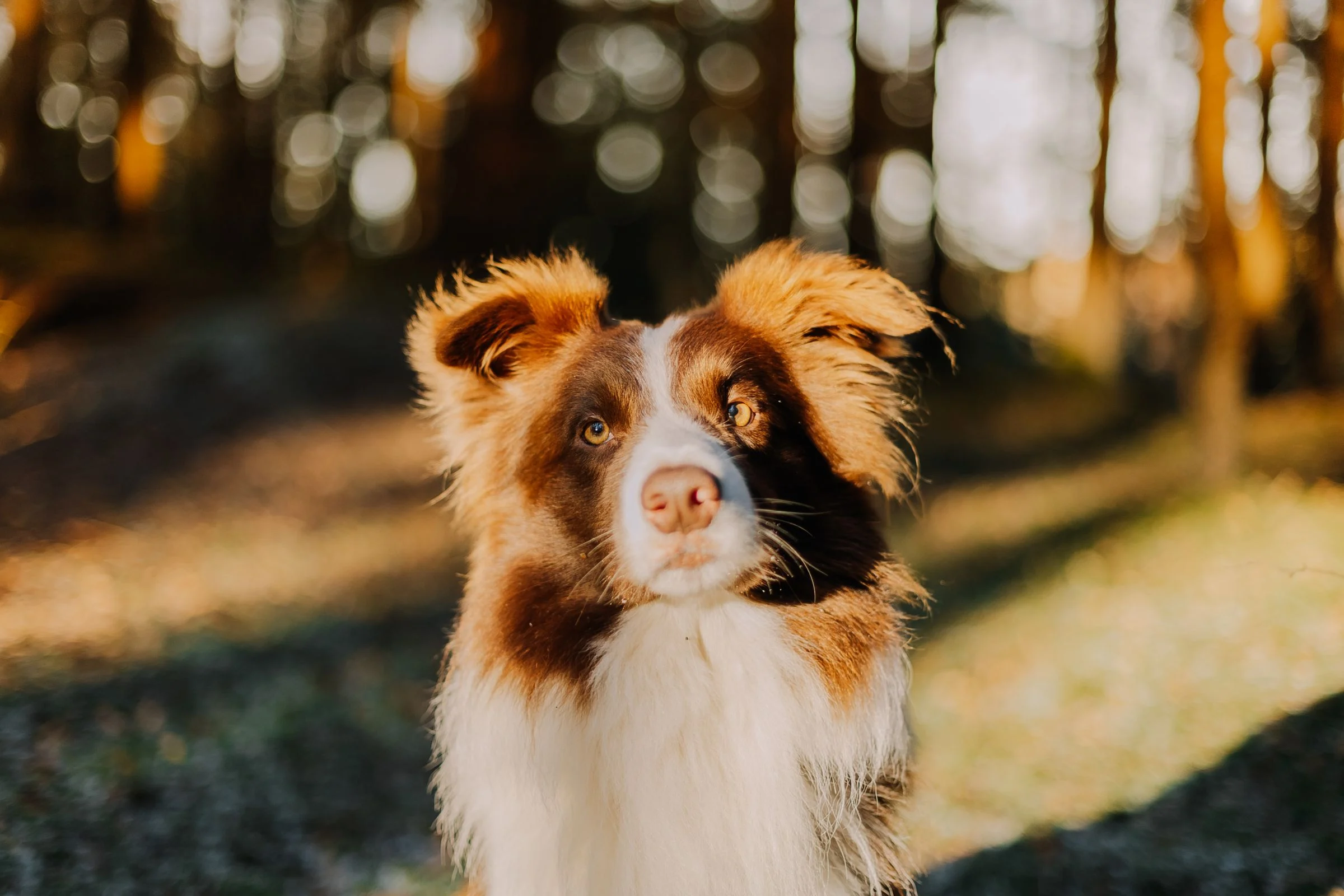
Think beyond the energetic puppy.
The decision is not about whether the next few months fit your life. It is about the next decade and beyond.
Exercise
Regular physical activity matters, but endlessly increasing exercise is not the goal. Fitness should be balanced with training and the ability to settle.
Coat care
The Aussie has a double coat. Routine brushing is generally manageable, with more attention needed during periods of heavier seasonal shedding.
Training
Training is not something to complete during puppy class and then retire. Communication evolves across adolescence, adulthood and new situations.
12–14 years, often more
Housing, jobs, children, travel and routines can all change during a dog's lifetime. The commitment remains.

Don't start by looking for a puppy.
Start by learning how good breeders make decisions.
The right breeder is not simply someone who raises the puppy for eight weeks. A responsible breeder should understand the temperament and health of their dogs, provide relevant health information and care about whether a puppy fits your household.
If a breeder wants to know about your lifestyle, plans, experience and expectations, don't be offended. Matching puppies with appropriate homes is part of responsible breeding.
Waiting for the right litter, breeder and puppy is usually a better decision than choosing whichever puppy happens to be available this weekend.
Choosing a breederSeven questions worth answering.
There is no score. The useful part is noticing which questions make you hesitate — and whether the answer can realistically change.
Do I genuinely enjoy interacting with and training a dog?
What will this dog do on an ordinary Tuesday, not just on weekends?
How long will the dog regularly be alone?
Am I comfortable managing shedding, barking and herding behaviours?
Can I provide mental work as well as physical exercise?
Does everyone in my household want the same kind of life with this dog?
Would I still choose an Aussie if colour and eye colour were irrelevant?
Choosing slowly is part of choosing well.
If the Aussie still feels right, the next step isn't a puppy listing. Build a clearer picture of the breed, responsible breeding and what those first months will actually involve.
Understand the breed
Explore temperament, heritage, size, coat and the traits that shape life with an Australian Shepherd.
Choose the breeder first
Learn what responsible breeding looks like, what to ask and which warning signs should make you walk away.
Prepare for puppyhood
Explore socialisation, routines, training and the practical decisions behind a strong first year.
The right breed isn't the one you admire most.
It's the one whose needs, temperament and way of moving through the world can fit naturally into yours. If that is an Australian Shepherd, you may be beginning a remarkable partnership.
Meet the Australian Shepherd