

The first year changes everything.
One small Australian Shepherd puppy. Twelve extraordinary months. The first year brings rapid growth, socialisation, teething, training, adolescence and the beginnings of the adult dog your puppy will become.
Puppies grow quickly. Development takes longer.
During the first year, your puppy is learning far more than cues such as sit, down and come. They are learning what is normal, what is safe, how humans communicate, how to handle frustration and what behaviour works in your household.
At the same time, their body is changing rapidly. Puppy teeth disappear. Adult coat begins developing. Coordination improves. Hormonal and behavioural changes arrive. Confidence may rise, wobble and rise again.
Development is not perfectly linear and puppies do not follow calendars with precision. Use age ranges as a map, not a deadline.
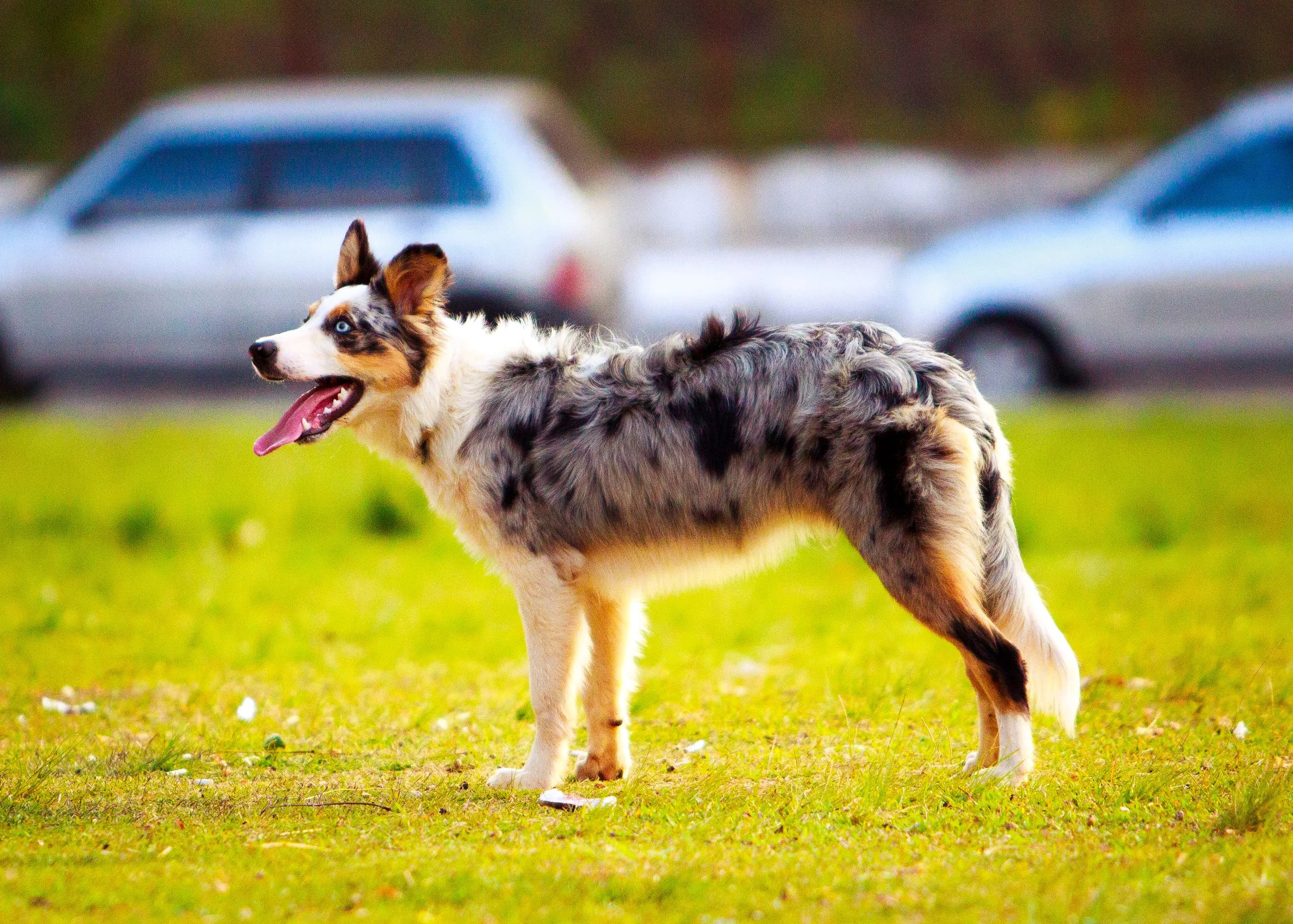
Start smaller than you think.
Your puppy has left their mother, littermates, breeder and the environment that represented their entire known world. Everything in your home is new: people, smells, surfaces, sounds and routines.
The first days do not need to become a festival of visitors, excursions and constant stimulation.
Establish predictable routines. Show your puppy where to sleep, where to toilet, where food appears and what happens throughout an ordinary day.
Keep training sessions tiny. Reward the behaviours you want to see again. Begin building attention, recall, handling and calmness without expecting the concentration of an adult dog.
Most importantly, give the puppy time to sleep. Growing bodies and developing brains need a surprising amount of rest.
Teach life before impressive tricks.
A puppy who can spin on command is entertaining. A puppy learning to settle, come when called, accept handling and navigate the world calmly is building skills you will use for years.
Recall
Make coming to you valuable from the beginning. Start where success is easy before adding distance and distractions.
Calmness
An active breed also needs an off switch. Reward quiet behaviour and help your puppy learn that not every moment requires action.
Handling
Build positive experience with paws, ears, mouth, brushing and body handling before grooming and veterinary care make those skills essential.
Loose-lead skills
Your puppy will become stronger quickly. Begin rewarding connection and comfortable movement with you before pulling becomes a well-practised habit.
Being alone
Build independence gradually. A people-oriented puppy can learn that short periods without constant access to you are safe and ordinary.
Impulse control
Waiting briefly, disengaging from something exciting and choosing you around distractions are skills that can grow with the puppy.
The world becomes fascinating
Your puppy may become increasingly interested in smells, movement, people and everything happening beyond you.
Training moves into real life
A cue learned in the kitchen is not automatically understood in the garden, street or around another dog. Practise gradually across different environments.
Attention is still short
Keep learning frequent, rewarding and manageable rather than turning puppy training into long formal sessions.
Confidence can fluctuate
Development is uneven. Something familiar may occasionally produce an unexpected reaction. Respond to the dog you have that day rather than forcing the issue.
The chewing phase is real.
Puppy teeth give way to adult teeth during the first months. Chewing is normal. Your furniture does not have to become the designated solution.
Teething changes what the mouth wants to do.
As adult teeth replace puppy teeth, many puppies become enthusiastic chewers. Provide safe, appropriate options and manage access to things you do not want converted into puppy projects.
Management matters. A puppy repeatedly chewing shoes is not practising “being naughty”; they are practising chewing shoes. Preventing rehearsal is often easier than correcting a habit later.
Mouthing people may also continue during excitement or play. Redirecting, teaching calm interaction and ensuring adequate rest can be more useful than escalating the situation into a battle.
If you have concerns about tooth development, retained puppy teeth or your puppy's mouth, discuss them with your veterinarian.
Bigger body. Bigger opinions.
The tiny puppy phase disappears surprisingly quickly. Your Aussie may look increasingly capable while still having a very young brain.
Add distractions carefully
Strengthen familiar behaviours around gradually increasing difficulty instead of expecting perfect responses everywhere.
Protect the cue
Do not repeatedly test recall in situations where you know the puppy is unlikely to respond. Use management while building skill.
Don't mistake tired for energetic
Overtired puppies can become mouthy, frantic and difficult to settle. More activity is not always the answer.
Keep being relevant
Play, train, explore and reward voluntary engagement so that the environment does not become the only interesting thing available.
No, your puppy has not forgotten everything.
Somewhere during the second half of the first year, many owners discover that the beautifully responsive puppy they were raising has developed new priorities.
The environment becomes more compelling. Independence may increase. Responses that seemed reliable suddenly wobble. Excitement can become harder to regulate.
This is not evidence that earlier training was wasted. Adolescence is a developmental period, and skills often need to be supported again under new levels of distraction and arousal.
Lower the difficulty when necessary. Use leads and long lines where appropriate. Reinforce the behaviours you want rather than repeatedly allowing the dog to practise ignoring you.
Adolescence is where consistency begins paying compound interest.
The Aussie brain gets faster before judgement catches up.
Your young dog may now learn behaviours extremely quickly. This is useful when you are teaching recall, settling and good household habits. It is equally effective when they discover how to open a door or make you chase them around the garden.
Herding-related behaviours may become more noticeable as confidence, speed and interest in movement increase. Chasing, circling or attempting to control movement should be given thoughtful outlets and appropriate boundaries.
Continue social experience, but remember that socialisation is not finished simply because puppyhood is ending. Your young dog is still learning how to behave around people, dogs, environments and excitement.
This is also an excellent time to deepen mental work rather than simply trying to physically exhaust an increasingly athletic dog.
Explore mental enrichment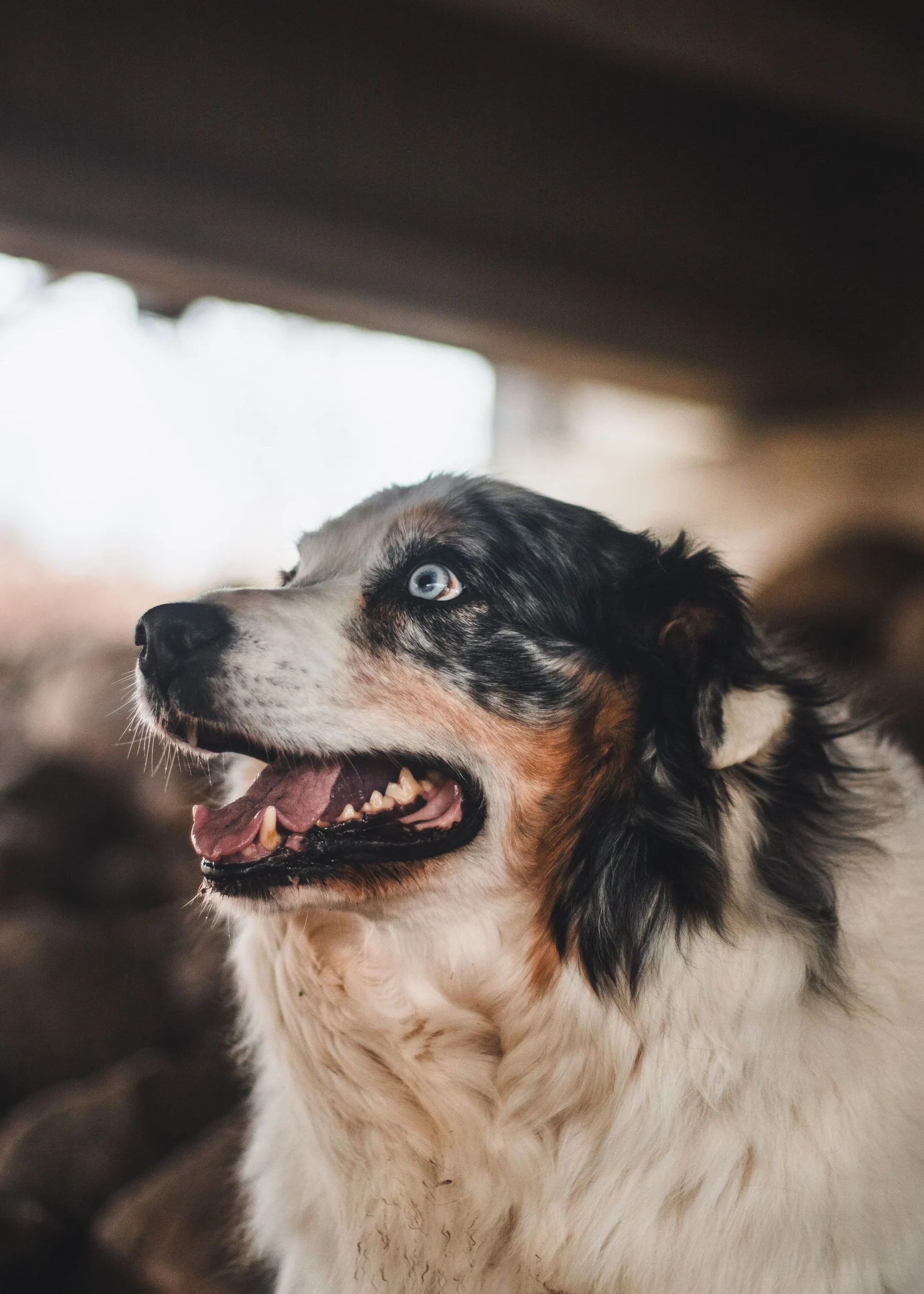
Build a capable dog, not an exhausted puppy.
Australian Shepherd puppies are active, but growing bodies should not be treated like miniature adult athletes. Variety and quality matter more than chasing arbitrary exercise targets.
Explore
Age-appropriate walks and free exploration can provide movement, sensory information and opportunities to learn about the world.
Think
Training, sniffing and problem solving can provide meaningful engagement without relying entirely on physical intensity.
Play
Appropriate play can develop coordination, communication and your relationship while giving energy somewhere useful to go.
Rest
Recovery is part of development. A puppy should also learn how to relax when nothing exciting is happening.
Looking adult can be misleading.
By the end of the first year, your Aussie may be close to adult height and capable of extraordinary things. Behavioural maturity is another story.
Growth continues and physical maturity should not be assumed simply because your dog no longer looks like a puppy.
Impulse control, judgement and emotional regulation continue developing beyond the first birthday.
Keep practising useful behaviours in the situations where you actually need them, not only in controlled training sessions.
Personality becomes increasingly clear, but experience and maturity will continue shaping the young Aussie.
One year old is still young.
The first birthday can create an artificial expectation that puppyhood has ended and adult behaviour should now be complete.
In reality, physical, behavioural and emotional maturation continue. An Australian Shepherd at twelve months may be powerful, fast and highly intelligent while still having the judgement of a young dog.
Keep supporting the behaviours you want. Keep managing situations that are still too difficult. Keep training.
The investment you make during this period is not remedial work. It is part of raising the adult dog.
Better goals than “perfectly trained”.
A useful first-year foundation is not measured by a catalogue of tricks. Look for skills that make everyday life safer, calmer and easier to navigate together.
Your dog has learned that engaging with you can still be worthwhile when the world is interesting.
Recall has a strong history of reinforcement and is protected with appropriate management when necessary.
Your Aussie is learning that a fulfilling life includes both activity and periods when nothing needs to happen.
Grooming, body checks and routine care are familiar rather than completely new experiences.
Your dog has encountered varied environments in ways that helped build confidence rather than simply exposure.
Training is becoming communication between you and your Aussie, not simply a collection of commands.
Look back before looking forward.
Twelve months ago, your puppy knew almost nothing about the life they were entering. Now you have a young Australian Shepherd with routines, preferences, learned skills and a relationship with you.
Some things will be beautifully established. Others will still need work. That is normal.
Continue developing recall, calmness, social skills, cooperative care and appropriate outlets for the Aussie brain. Adjust activities as your dog matures and as you learn more about the individual in front of you.
The puppy year builds the framework. The years ahead fill it in.
Puppyhood passes. Foundations stay.
The first year with an Australian Shepherd can feel fast, chaotic, funny and occasionally exhausting. Beneath all of it, something important is happening: your puppy is learning how to live in your world, and the two of you are learning how to understand each other.
Explore Aussie puppy guides