

One breed. Remarkable colours.
Blue merle may be the image many people associate with the Australian Shepherd, but the breed's coat comes in a striking range of colours, patterns and markings. Beautiful? Absolutely. But colour is only the surface of an Aussie.
Colour looks complicated. The foundation is simple.
From those foundations comes much of the visual variety people love about the breed. An Aussie may have white markings, tan points, both, or comparatively little additional marking.
Merle coats introduce another layer of individuality because the mottled pattern is not distributed identically from dog to dog. Even littermates can look dramatically different.
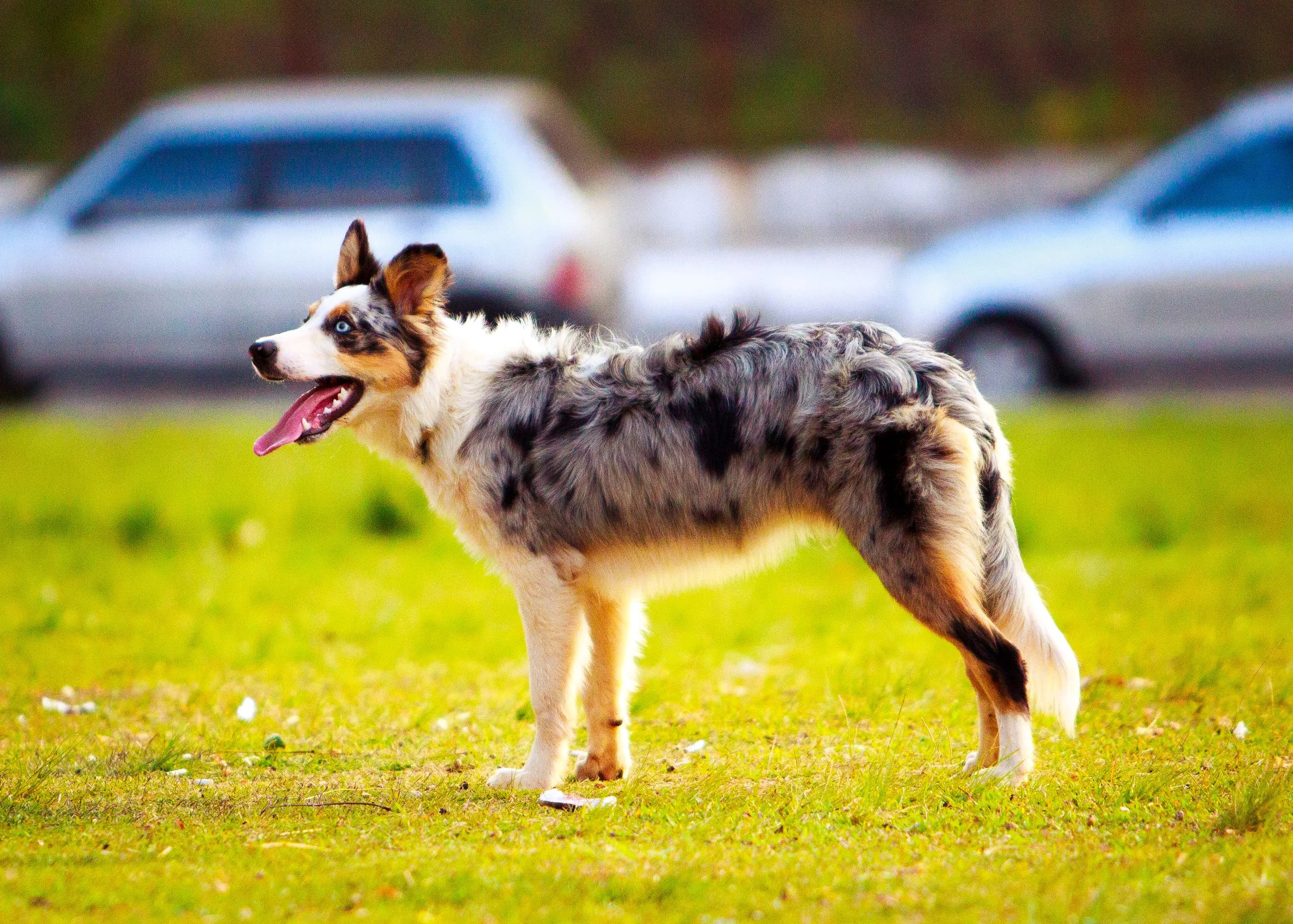
Then there are the eyes. Brown, blue and amber can occur, and an individual dog may have eyes of different colours or more than one colour within a single eye.
Four basic Australian Shepherd colours.
Markings can make two dogs from the same colour group look very different, but the broad colour picture begins with these four.
Blue merle
A marbled or mottled pattern involving black pigment on a lighter grey background. The amount, size and distribution of darker patches vary considerably between dogs.
Red merle
A mottled pattern based on red or liver pigment, often appearing as deeper red patches across a lighter reddish or buff-toned background.
Black
Black Aussies can range from predominantly black dogs to striking combinations with white markings and copper or tan points.
Red
Often described as liver or red, this colour can vary in apparent depth and may occur with white and copper markings.
Merle is a pattern, not simply a colour.
The merle pattern modifies pigment in the coat, creating areas where the underlying colour is diluted alongside patches where stronger pigment remains.
In a blue merle Australian Shepherd, the underlying black pigment is broken into areas that can visually range from pale silver-grey through darker grey to black.
In red merles, the same broad principle applies to red pigment, producing combinations of lighter and deeper reddish tones.
Merle expression can vary enormously. Some dogs have large, obvious patches. Others appear more finely mottled. That variation is part of why individual merle Aussies can look so distinctive.
White, copper and combinations.
Base colour is only part of the picture. Additional markings can dramatically change the appearance of an Australian Shepherd.
White markings
White may appear around the muzzle, blaze, neck, chest, legs and other permitted areas, creating everything from subtle accents to a much more strongly contrasted appearance.
Copper points
Tan or copper markings can appear on areas such as the face, legs and beneath the tail, adding warm contrast to black, blue merle, red or red merle coats.
Individual patterns
The position and extent of markings differ from dog to dog. Merle patterning adds still more variation, making appearance particularly individual.
Bicolour appearance
Some Aussies visually present with a base colour plus one additional marking colour rather than the classic three-colour combination many people expect.
Tricolour appearance
Black or red combined with white and copper creates the familiar tricolour look, with the exact distribution of markings varying between individuals.
Coat changes
A puppy's overall pattern is already present, but coat length, texture and maturation can alter how colours and markings appear as the dog grows.
A blue merle doesn't have a blue merle temperament.
Coat colour is visually powerful. It can become so powerful that prospective owners begin choosing the photograph before choosing the dog.
But a dog's colour does not tell you whether that individual will be bold or reserved, highly driven or comparatively moderate, intensely social or more independent.
Genetics affecting coat colour and the complex combination of genetics and experience shaping temperament are not the same thing. When choosing an Aussie, temperament and suitability deserve far more weight than your preferred pattern.
Brown. Blue. Amber. Sometimes more than one.
The breed is famous not only for coat variation but also for striking variation in eye colour.
Brown
Brown eyes are common and can vary in apparent depth from comparatively warm tones to very dark brown.
Blue
Blue eyes are one of the breed's most recognisable visual traits and can occur in Australian Shepherds.
Amber
Amber tones may occur, particularly in red-pigmented dogs, adding another distinctive eye colour to the breed.
Mixed colour
An Aussie may have two differently coloured eyes, or an individual eye may contain more than one colour.
Colour becomes more important when breeding decisions are involved.
For an owner admiring an individual dog, merle may simply look like an extraordinary coat pattern. For a responsible breeder, understanding the genetics behind that pattern matters.
Merle is associated with a genetic variant that changes pigment distribution. A dog may inherit the merle variant from one parent, producing the familiar merle phenotype.
The important welfare issue appears when breeding two merle dogs. Puppies inheriting merle-associated variants from both parents can have a substantially increased risk of sensory abnormalities, particularly involving hearing and vision.
If you are buying a merle puppy, coat genetics are another reason to choose a breeder who understands the breed and can discuss their breeding decisions openly.
Merle × merle deserves attention.
Colour genetics are not cosmetic when they influence health risk.
This is where colour stops being merely aesthetic.
When two merle Australian Shepherds are bred together, some puppies can inherit merle-associated variants from both parents. These dogs are commonly described as double merles.
Double-merle dogs can have extensive areas lacking pigment and face a greater risk of congenital hearing and vision problems. Not every double-merle dog is affected in exactly the same way, but the welfare risk makes merle-to-merle breeding an important subject for prospective owners to understand.
If a breeder cannot clearly explain the colours of the parents, relevant genetic information and why a particular pairing was chosen, that is a reason to ask more questions before committing.
Choosing an Australian Shepherd breederPut colour further down the list.
There is nothing wrong with loving a particular Aussie colour. The problem begins when appearance becomes the main selection criterion for a dog you may live with for well over a decade.
Start with responsible breeding practices and appropriate health information about the parents.
Look for a dog whose behavioural qualities make sense for your household and goals.
Energy, drive, sensitivity and training needs matter every day. Coat colour does not.
Then enjoy the markings, eye colour and coat pattern of the dog who already fits the things that matter most.
Will your Aussie's colour change?
The fundamental coat colour and pattern of an Australian Shepherd are already established genetically, but the way the dog looks can change noticeably as the puppy matures.
The adult coat becomes longer and fuller. Feathering develops. Puppy fluff disappears. Seasonal coat changes alter texture and volume, while sunlight and normal coat development can affect how particular shades appear to the eye.
Markings that looked visually dominant on a tiny puppy may feel quite different once surrounded by a mature adult coat.
What does not happen is a blue merle puppy naturally becoming a red merle adult. Maturation changes the presentation of the coat, not the dog's underlying genetic colour.
Follow the Aussie's first year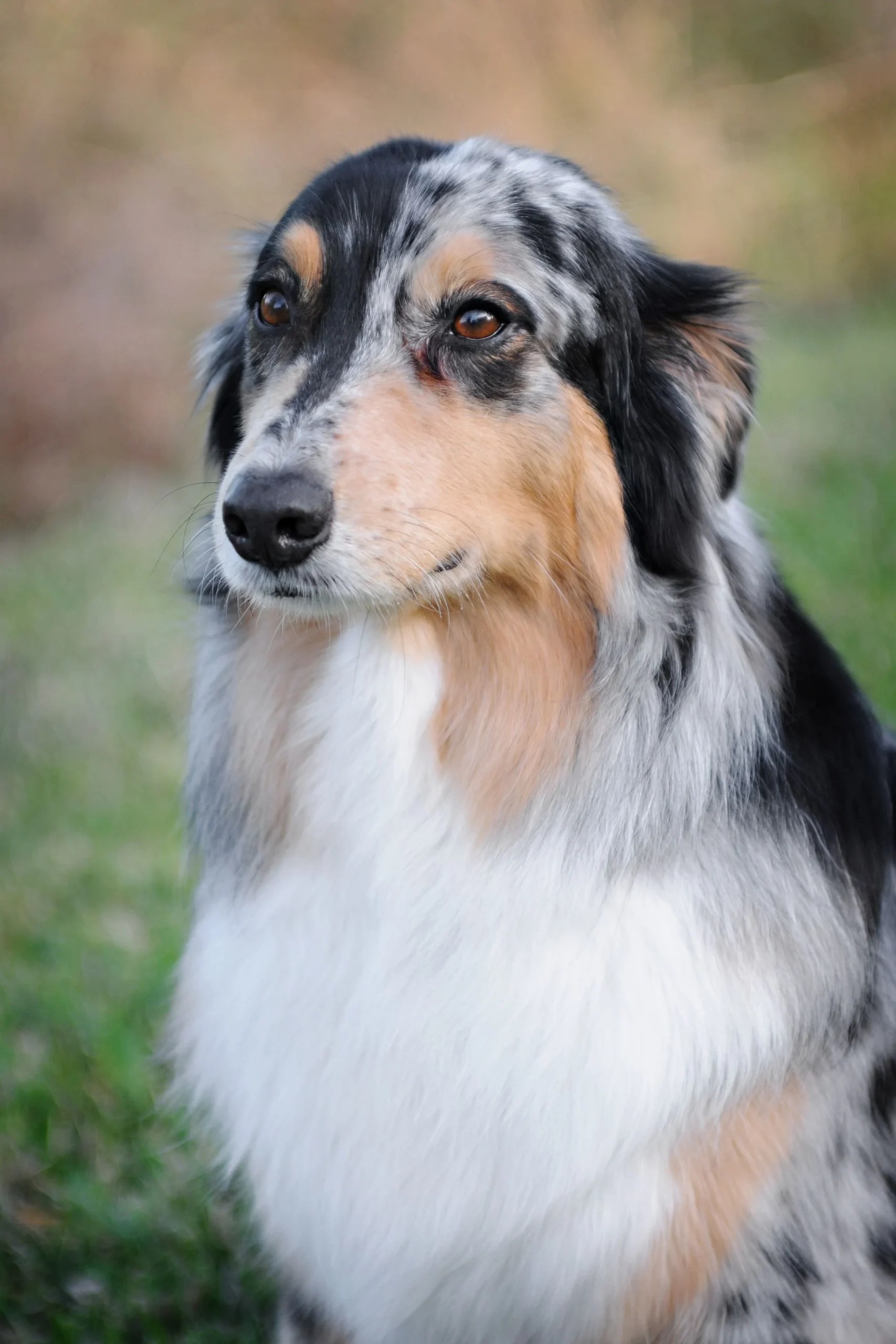
Australian Shepherd colour FAQ.
What are the main Australian Shepherd colours?
The four basic recognised colours are blue merle, red merle, black and red, with possible white and copper or tan markings.
What is the most popular Aussie colour?
Blue merle is particularly recognisable and often strongly associated with the breed, but popularity should not determine which individual dog is right for a home.
Are blue eyes normal in Australian Shepherds?
Yes. Australian Shepherds may have blue eyes, brown eyes, amber eyes, eyes of different colours or more than one colour within an individual eye.
Does coat colour affect temperament?
Coat colour should not be used as a predictor of an individual dog's personality. Genetics, breeding decisions, early development, learning and life experience all contribute to behaviour.
Why is double merle important?
Dogs inheriting merle-associated variants from both parents can face an increased risk of congenital hearing and vision problems, which is why responsible breeding decisions around merle matter.
Notice the colour. Choose the Aussie.
Blue merle, red merle, black or red. Brown eyes, blue eyes, copper points or a completely individual pattern. The Australian Shepherd offers extraordinary visual variety — but the qualities that shape your life together are found beneath the coat.
Explore the Australian Shepherd