
Australian Shepherds have a particular relationship with impulse control. They’re bred to move stock, to respond instantly to pressure, and to work independently at distance. That genetic wiring doesn’t simply switch off in a living room. What I’ve noticed over years of working with this breed is that their impulse struggles aren’t usually a sign of a broken dog – they’re a sign of a dog whose brain is moving faster than the environment is asking it to move.
Games that build impulse control work best when they acknowledge this. They’re not about suppressing the dog’s nature; they’re about giving that nature a framework. The games that stick are the ones that let the dog experience the reward of waiting, not the punishment of not waiting. There’s a meaningful difference, and Australian Shepherds feel it.
The foundation of any impulse work with this breed is understanding that they respond to clarity and structure. They’re not naturally stubborn, but they are naturally goal-oriented. If a dog doesn’t understand what earns the reward, the game falls apart. I’ve seen countless sessions where the handler was frustrated because the dog kept breaking, when really the dog simply hadn’t learned the rule yet.
The Wait Game and Threshold Control
This is the most basic and, in my experience, the most effective starting point. Set up a simple scenario: the dog sits, you place a treat on the floor a few feet away, and the dog waits for a release word before moving toward it. The distance and duration matter far less than consistency. What matters is that the dog learns the pattern: sit, wait, release, reward.
Australian Shepherds often struggle with this because they anticipate. They see the treat hit the ground and their body is already moving before your release word comes out. This isn’t defiance – it’s prediction. They’re reading the situation and acting on what they expect to happen next. The game works when you vary the timing unpredictably. Sometimes you release after two seconds, sometimes after ten. Sometimes you pick the treat up and try again. The dog learns that waiting is the only strategy that works.
What I’ve found is that this game’s real value emerges over weeks, not days. Early sessions might feel chaotic. The dog breaks, you reset, the dog breaks again. But something shifts around the third or fourth week when the dog starts to genuinely pause and look at you before moving. That’s the moment the impulse control is beginning to integrate into their decision-making, not just their obedience.
The Restrained Fetch and Release Timing
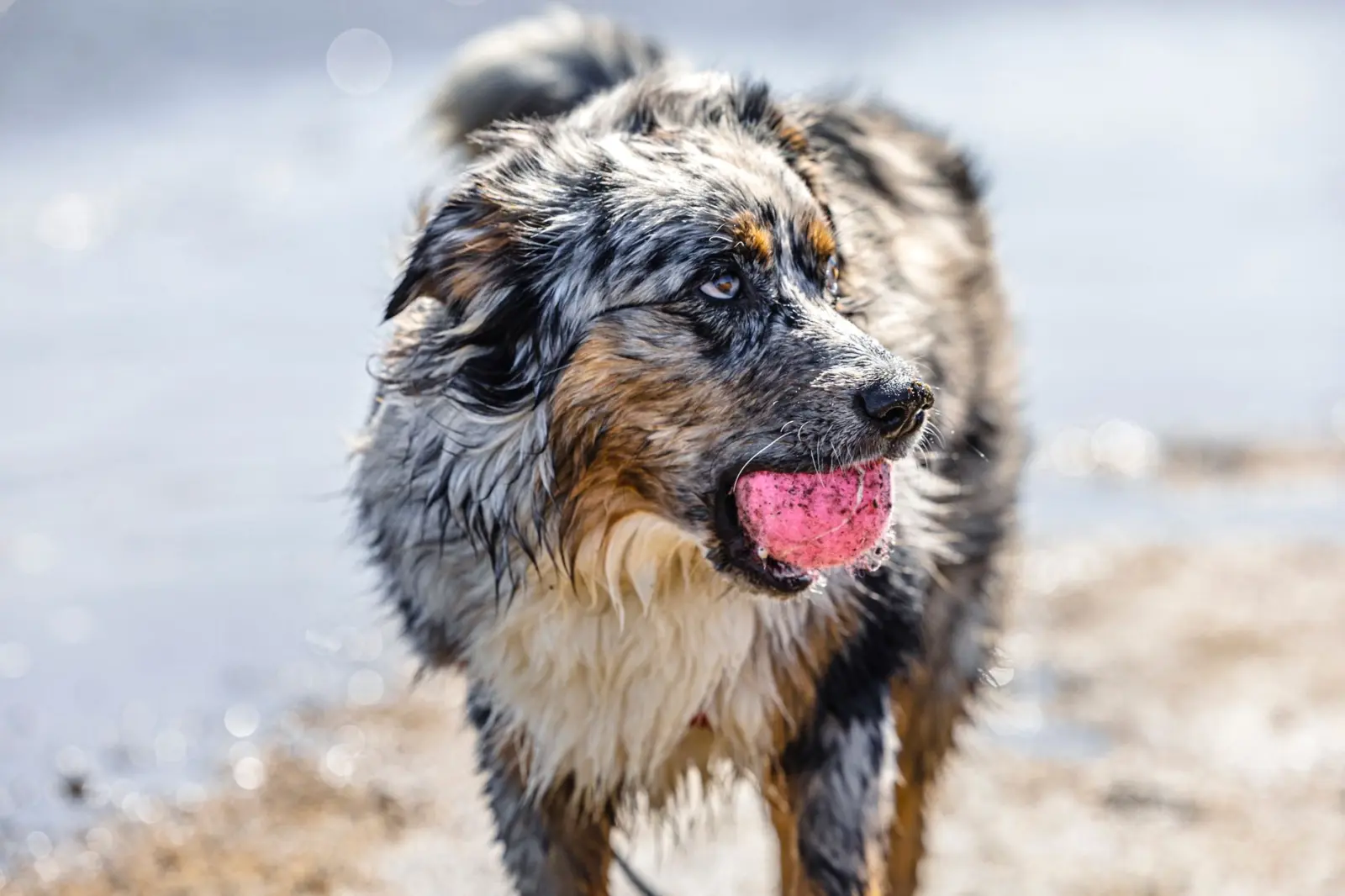
Fetch is where Australian Shepherds naturally excel and naturally struggle. The drive to chase is enormous. The impulse to grab and hold is equally strong. A structured fetch game builds control by introducing a deliberate pause in the middle of the action.
Start with a toy the dog wants. Hold it, let the dog see it, then throw it only when the dog is in a calm state. If the dog lunges or whines before the throw, you don’t throw. You wait. This teaches that excitement doesn’t accelerate the game; calm does. Once the dog retrieves, the real work begins. Many handlers immediately reward the return, but the impulse control moment is in the hold. Can the dog bring the toy back and wait for permission to release it? Can they hold it while you touch it, while you move, while you create mild pressure?
The dog learns that the game continues only when they make the choice to release on cue. For Australian Shepherds, this is profound because their natural instinct is to hold and control. Teaching them that releasing is the path to the next throw reframes their entire relationship with the object. I’ve worked with dogs where this single shift reduced resource guarding behaviors that seemed intractable.
The Sit-Stay with Distraction Layers
This isn’t a formal obedience exercise; it’s a game that gradually increases in complexity. The dog sits. You move around them – slowly at first, then more erratically. You might drop treats near them (but not for them), toss a toy, or move quickly past them. The rule is simple: the sit holds until you release.
What makes this work for Australian Shepherds is that you’re directly challenging their herding instinct. Movement triggers them. Their brain is wired to respond to motion. By teaching them to hold position while movement happens around them, you’re building real impulse control, not just obedience to a static command.
The progression matters. Start with minimal distraction and add layers only when the dog is genuinely solid at the current level. I’ve seen handlers jump to throwing toys or running past the dog too quickly, and the whole thing collapses. The dog doesn’t learn that they failed; they learn that the game is unpredictable and confusing. Slow progression means the dog is always succeeding, which means they’re always learning.
The “Leave It” Game with Delayed Reward
Leave it is often taught as an immediate command – the dog ignores something and gets rewarded right away. That’s useful, but it’s not really impulse control; it’s just obedience. The impulse control version involves a wait between the leave-it and the reward.
Place a treat on the floor. Cue leave it. The dog doesn’t touch it. Now comes the hard part: the dog waits while you do something else. You might pick up the treat, set it aside, and then reward the dog with a different treat. Or you might wait ten seconds before rewarding. The dog learns that ignoring something doesn’t immediately pay off – it pays off later, and sometimes in an unexpected way.
This mirrors real life more accurately than instant-reward training. In the real world, the dog doesn’t get rewarded immediately for ignoring something. They get rewarded by the absence of correction, by the continuation of the walk, by the general sense that good choices lead to good outcomes. This game builds that understanding.
Structured Play with Boundaries
Australian Shepherds have high play drive. Channeling that drive into a game with clear on-off switches builds impulse control naturally. Tug is an excellent example. Many handlers avoid tug because they worry it will make the dog more aggressive or less controllable. In reality, a structured tug game with clear rules teaches remarkable impulse control.
The game has a start cue, a play phase, and a clear end. The dog learns that grabbing the toy happens only on cue. The dog learns that when you say “drop,” the game stops. The dog learns that the game starts again only when they’re calm. Over time, the dog’s ability to modulate their own arousal improves dramatically. They learn they can be intense and excited, but only within the boundaries you’ve set.
What I’ve observed is that dogs who play structured tug games tend to have better overall impulse control in other contexts. There’s something about learning to turn excitement on and off that generalizes. The dog’s nervous system becomes more flexible. They can be aroused without being out of control.
The reality with Australian Shepherds is that impulse control isn’t a destination; it’s an ongoing conversation between you and the dog. These games work because they’re practice, not punishment. They give the dog a reason to pause, to check in, to make a choice. That’s what impulse control actually is – the ability to choose, not the inability to act. With this breed, that distinction matters.