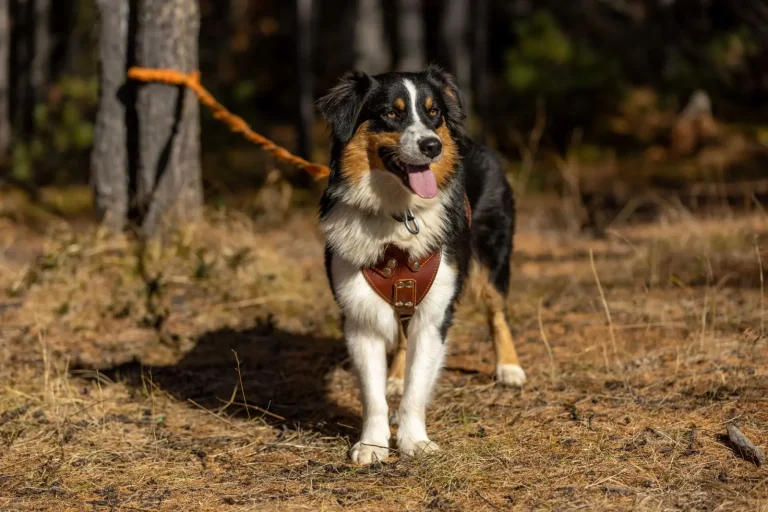


Australian Shepherds are relentless. After years of working with them, I’ve learned that a tired Aussie isn’t necessarily a satisfied one. These dogs were bred to move livestock across rough terrain for hours, making decisions about direction and pressure on the fly. That genetic blueprint doesn’t switch off just because they live in a suburban home. The games they engage with need to match that intensity and, more importantly, that need for purposeful work.
The mistake most people make is treating play as a simple outlet for energy. With Aussies, it’s more nuanced. They want to solve problems, chase with intention, and feel like they’re accomplishing something. A ball thrown across a yard might get a retrieve or two, but it rarely holds their attention for long. They’ll do it because you asked, but you’ll see the difference between compliance and genuine engagement. The games that work are the ones that tap into their herding instinct, their problem-solving drive, and their need to read and respond to a moving target.
Herding Games and Their Real-World Application
Flirt poles work exceptionally well with Aussies because they mimic the unpredictable movement of prey or livestock. The pole itself is simple – a rope attached to a pole with a lure at the end – but what happens when you use it is revealing. An Aussie doesn’t just chase the lure; they begin to anticipate its movement, cut angles, and adjust their strategy mid-leap. I’ve watched dogs that seemed bored with regular fetch suddenly come alive with a flirt pole because there’s an element of prediction involved. The lure doesn’t follow a predictable path. That’s what keeps them interested.
Tug games get a bad reputation, but they’re valuable for Aussies when structured correctly. The issue isn’t the game itself – it’s how it’s usually played. A mindless back-and-forth doesn’t engage them much. What does work is adding rules. Let them win sometimes. Change grip positions. Introduce a “drop” command that releases the toy momentarily, then resumes. This turns tug into a negotiation rather than a simple power exchange. They’re reading your movements, anticipating the next phase, and adjusting their grip and pull accordingly. That’s the kind of mental component that keeps an Aussie’s brain active.
Fetch Variations That Sustain Interest
Standard fetch – throw, retrieve, repeat – has a shelf life with this breed. They’ll do it, but boredom sets in. I’ve found that variations work much better. Throwing two toys instead of one forces them to make a choice about which to pursue, then decide whether to bring back one or both. Some Aussies develop a strategy of grabbing one, dropping it, going back for the second, then collecting both. Others prioritize the first toy they reach. Either way, there’s decision-making happening, not just running.
Directional fetch – where you send them to a specific location or object – taps into their herding heritage more directly. You’re not just asking them to chase something moving; you’re asking them to go to a place you’ve indicated and find or retrieve something there. This requires them to read your body language, understand directional cues, and problem-solve when the object isn’t immediately obvious. Hide a toy in tall grass or behind a tree, then send them with a hand signal. They have to search, not just react to movement.
Chase Games With Structure
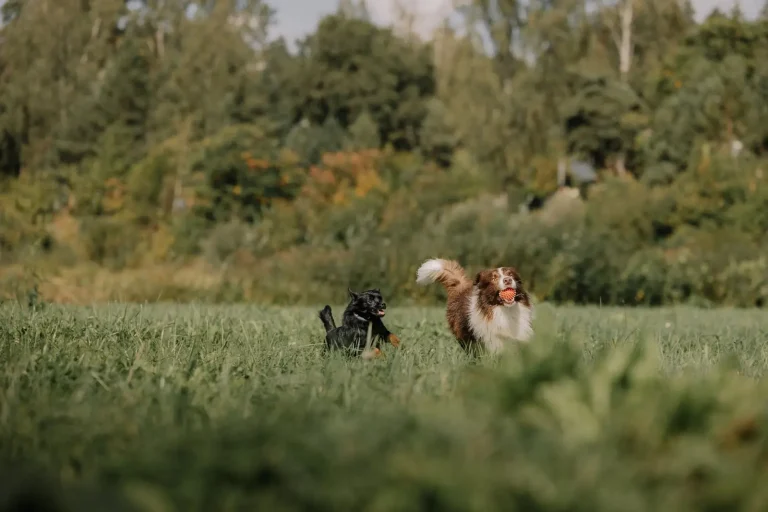
Aussies love to chase, but unstructured chasing in an open field can actually frustrate them because there’s no objective. What works better is structured chase play where they’re pursuing something with a defined purpose or endpoint. Games like “chase me” work well when you establish clear boundaries and rules – you’re the prey, they’re the predator, and the game ends when they catch you or when you call it. The appeal here is that they’re reading your movements, predicting where you’ll go, and adjusting their pursuit strategy. It’s interactive in a way that mindless running isn’t.
Some Aussies enjoy chase games with other dogs, but this requires careful observation. Not all of them do, and some become overstimulated or develop problematic patterns. I’ve seen Aussies that play beautifully with one dog but become obsessive or aggressive with another. The key is watching their body language – whether they’re taking turns chasing, whether they’re checking in with you, whether they seem to be enjoying the interaction or becoming fixated. Chase games between dogs can work, but they’re not a substitute for structured play with you, and they need monitoring.
Puzzle and Problem-Solving Games
Mental engagement matters as much as physical exertion for Aussies, sometimes more. Puzzle toys and games that require them to figure something out hold their attention in ways that pure physical exercise doesn’t. A puzzle toy that requires them to move pieces, flip compartments, or manipulate something to access a treat engages their problem-solving drive. I’ve watched Aussies work on a puzzle toy for twenty minutes straight, completely focused, in a way they’d never focus on a simple game of fetch.
Hide-and-seek games work well too, but again, with structure. Hide yourself or a toy, then send them to find it. Start with easy hides where they can see or smell the target quickly, then gradually increase difficulty. Some Aussies develop an almost obsessive drive to search once they understand the game. This is valuable because it channels their intensity toward a specific task. The searching itself becomes the reward, not just the discovery of the object.
Scent work games are particularly effective because they align with how Aussies naturally process their environment. They’re already using their nose constantly; giving them a structured task around scent taps into an existing strength. Hide treats or a specific scent in a box or under one of several cups, then let them find it. The game is simple, but it’s deeply engaging because it uses their primary sensory tool in a purposeful way.
What Doesn’t Work and Why
Repetitive fetch in an open space often bores Aussies quickly. It’s too simple and too predictable. They’ll do it because they’re obedient, but you won’t see the same engagement you get from games that require strategy or decision-making. Toys that just sit there – balls, squeakers, standard toys – don’t hold their attention unless there’s interaction involved. They need something that moves unpredictably, responds to their actions, or presents a challenge.
Games that don’t allow them to use their herding instinct or problem-solving ability tend to feel hollow to them. A Frisbee can work if you’re making sharp, unpredictable throws that require them to anticipate and adjust, but casual Frisbee tossing in a yard is usually underwhelming. The game needs to demand something of them – reading your movements, adjusting mid-flight, making decisions about approach angle.
One observation I’ve made repeatedly: Aussies lose interest quickly in games where they always win or always fail. Games need to be calibrated so that success is achievable but not guaranteed. If a puzzle is too easy, they solve it once and move on. If it’s too hard, they give up. The sweet spot is where they have to work for success, fail occasionally, then figure out a solution. That’s where genuine engagement happens.
The reality with Australian Shepherds is that play is work for them. They’re not looking for mindless fun; they’re looking for purpose. The games that stick are the ones that feel like a job – one with clear objectives, variable difficulty, and the sense that they’re solving something or accomplishing something real. Once you understand that, the games that work become obvious.