

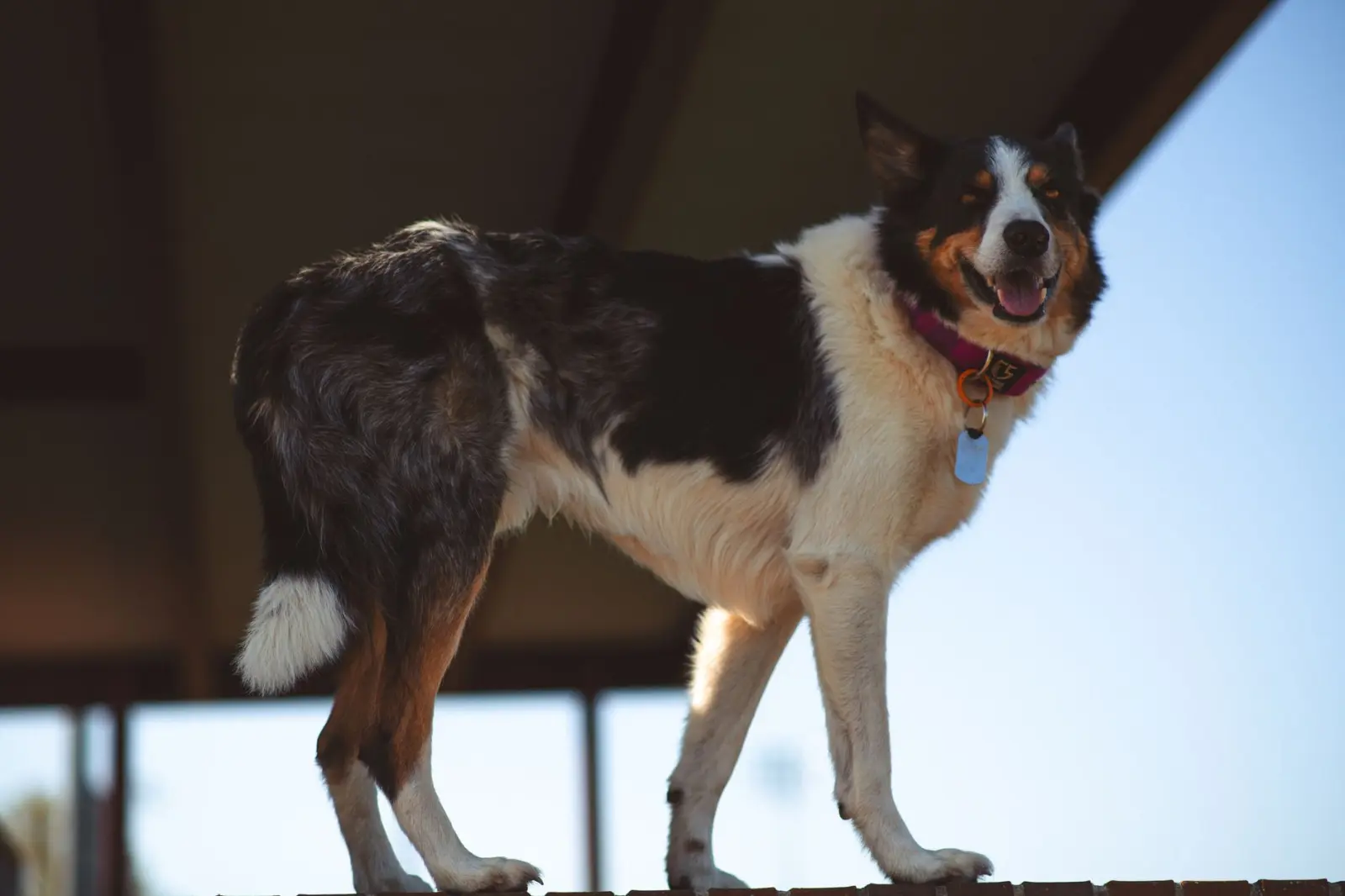
Australian Shepherds carry their weight differently than many other breeds. Their thick double coat and muscular build can mask significant weight gain until the problem becomes fairly advanced. I’ve worked with enough of these dogs over the years to know that owners often miss the early signs, partly because the breed’s natural athleticism makes them look sturdy even when they’re carrying extra pounds.
The most reliable way to assess whether your Australian Shepherd is overweight involves a hands-on approach rather than relying on the scale alone. Weight charts exist, but they’re less useful for this breed because frame size varies considerably. A 55-pound Australian Shepherd might be perfectly healthy or overweight depending on bone structure and muscle composition. This is why you need to feel the dog directly.
Run your hands along your dog’s ribcage. You should be able to feel the ribs without pressing hard, and you should feel them as distinct structures rather than a solid wall of fat. When you place your palms flat against the sides of the chest, your fingers should slip easily into the spaces between the ribs. If you can’t feel individual ribs at all, or if there’s a thick layer of soft tissue between your hand and the bone, your dog is carrying excess weight. This test works regardless of coat thickness because you’re feeling underneath the fur.
The Waist and Abdominal Profile
Looking at your dog from above is equally important. A healthy Australian Shepherd should have a visible waist – a narrowing of the body when viewed from directly above. The area between the ribcage and the hip bones should taper inward rather than bulge outward or remain cylindrical. If your dog looks like a rectangle from above, weight is the likely culprit.
From the side, the abdomen should not sag or hang. Some dogs develop what looks like a pendulum of loose skin and fat that swings when they move. This is particularly noticeable when they’re standing still or walking slowly. Australian Shepherds with ideal weight show a slight tuck to the abdomen, a gentle slope from the ribcage toward the rear legs. If your dog’s belly appears level with the ribcage or extends beyond it, that’s a sign of weight gain.
Movement and Energy Patterns
Behavioral changes often appear before the physical signs become obvious. Australian Shepherds are inherently active dogs. They were bred to work livestock all day, and even modern pets retain that drive. When a dog begins to tire more easily during normal activity, it’s worth paying attention. This doesn’t mean occasional laziness on a hot day – that’s normal. I’m talking about a consistent pattern where the dog seems less interested in walks, play sessions, or even mental stimulation activities.
Overweight Australian Shepherds often develop a reluctance to jump, climb stairs, or engage in the quick directional changes the breed naturally enjoys. You might notice them declining invitations to play that they previously accepted without hesitation. Some owners attribute this to aging or changing temperament, but it’s frequently weight-related. The extra pounds place stress on joints and reduce stamina.
Breathing changes can accompany weight gain. A dog that pants heavily after minimal exertion, or that seems to breathe harder at rest, may be carrying too much weight. This is separate from normal panting after exercise – it’s an observable increase in respiratory effort during everyday activities.
Coat and Skin Condition
The quality of the coat often declines when a dog is overweight. Overweight Australian Shepherds sometimes develop a dull, coarse coat despite regular grooming. This happens because excess weight stresses the body’s systems and can interfere with nutrient distribution. You might also notice increased shedding or patches where the coat appears less dense than it should be.
Skin issues become more common in overweight dogs. Moisture and friction in skin folds create environments where yeast or bacterial infections develop. Australian Shepherds don’t naturally have prominent skin folds, but weight gain can create them, particularly in the abdominal area and where the legs meet the body. If you notice your dog scratching more than usual or developing odor, weight could be contributing to the problem.
When to Act on Your Assessment
If your hands-on examination reveals ribs you can’t feel, a missing waist, or a sagging abdomen, your Australian Shepherd is overweight. This isn’t a judgment – it’s a practical observation that warrants action. The sooner you address it, the easier the adjustment tends to be.
A conversation with your veterinarian is the logical next step. They can rule out underlying health conditions that might be contributing to weight gain, such as thyroid problems or metabolic issues. They can also help you establish a realistic weight target and a plan to reach it. For Australian Shepherds, gradual weight loss is better than rapid loss because it preserves muscle mass and makes the transition easier on the joints.
The breed’s energy level and intelligence make them good candidates for weight management through both dietary adjustment and increased activity. Many overweight Australian Shepherds improve significantly once their weight normalizes because they regain the capacity to move more freely. The dog you see at a healthy weight is often noticeably different in temperament and behavior from the heavier version, and not always in ways you’d expect if you’ve only known the dog overweight.