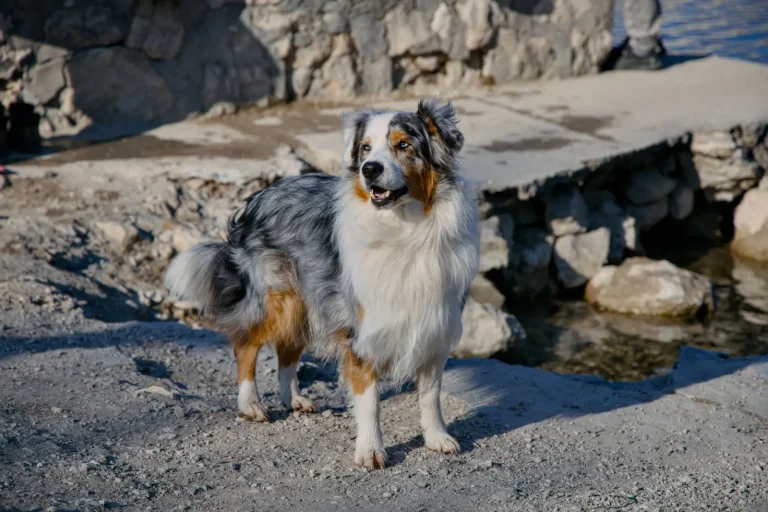

After years of working with both Australian Shepherds and German Shepherds, I’ve noticed that most people assume these two are variations on the same theme. They’re both herding dogs, both intelligent, both capable of serious work. But the differences in how they think and operate are significant enough that choosing between them should depend less on preference and more on what your actual situation demands.
The most immediate distinction is how each breed approaches a task. German Shepherds tend to work with a clear sense of hierarchy and direction. They’re responsive to a handler’s lead in a way that feels almost automatic. An Australian Shepherd, by contrast, operates with more independence. They’ll take initiative, problem-solve on their own, and often seem to be running their own mental checklist alongside yours. This isn’t stubbornness – it’s a different kind of intelligence. The Australian was bred to work stock across vast, open terrain with minimal human direction. The German was developed for more structured, handler-dependent roles.
Energy and Space Requirements
Australian Shepherds are relentless. I’ve seen them work cattle for hours without apparent fatigue, and then come home and look for more to do. They need consistent mental and physical stimulation, and they’re not the type to settle quietly in a yard. German Shepherds are also high-energy, but their drive tends to be more focused and directional. They can channel intensity into specific tasks – protection work, tracking, obedience – and once that outlet is satisfied, they’re more likely to rest.
In practical terms, an Australian Shepherd in a suburban setting without adequate work will develop behavioral issues faster than a German Shepherd. The Australian will become destructive, obsessive, or neurotic. A German Shepherd in the same situation might develop anxiety, but it often manifests differently – sometimes as reactivity or hypervigilance rather than pure restlessness. Both need space and activity, but the Australian’s need is less negotiable.
Trainability and Handler Relationship
German Shepherds are easier to train in the conventional sense. They want to understand what you want and deliver it precisely. They’re responsive to correction and reward in straightforward ways. Australian Shepherds require a different approach. They learn quickly, but they also question. If they don’t understand the logic of a command or if they perceive a better way to accomplish the goal, they’ll push back. This makes them frustrating for some handlers and ideal for others. If you want a dog that will execute your vision exactly, the German Shepherd is the cleaner choice.
The relationship dynamic differs too. German Shepherds bond intensely with their handler and often view other people with reserve. They’re protective by nature and suspicious of strangers until given clear signals that trust is appropriate. Australian Shepherds are friendlier in a more casual way. They’re not aloof, but they’re less likely to form that singular, intense bond with one person. They’re more social with other dogs and people generally, though they can still be wary of genuine threats.
Herding Instinct in Daily Life
Both breeds carry herding drive into their everyday behavior, but it shows up differently. German Shepherds rarely nip or chase family members. Their herding instinct is more controlled and typically only emerges in work contexts. Australian Shepherds will herd anything that moves – children, other pets, even people walking past the fence. This is deeply ingrained and difficult to suppress entirely. I’ve worked with Australian Shepherds that were well-trained and still couldn’t resist a quick nip at a child’s heels during play. It’s not aggression; it’s instinct overriding training.
For families with young children or multiple pets, this distinction matters. A German Shepherd’s protective instinct is usually predictable and can be shaped through socialization. An Australian Shepherd’s herding drive is less predictable and more persistent. You’re managing an impulse rather than preventing a behavior.
Health and Longevity
Australian Shepherds generally live longer, often into their mid-to-late teens. German Shepherds typically live 9 to 13 years. Both breeds are prone to hip dysplasia, but the German Shepherd’s larger frame and the breed’s popularity have led to more widespread genetic issues in some lines. Australian Shepherds can carry merle-related deafness or blindness if two merle-coated dogs are bred together, but responsible breeders screen for this.
Structurally, German Shepherds have developed some problematic traits over decades of selective breeding for specific show characteristics. The extreme rear angulation seen in many modern lines can contribute to joint stress and early arthritis. Australian Shepherds have maintained more balanced structure overall, though individual lines vary considerably.
Practical Considerations for Living Situations
A German Shepherd adapts better to apartment living than an Australian Shepherd, provided they get regular exercise and mental work. They can settle in confined spaces more readily. An Australian Shepherd in an apartment without significant daily activity will deteriorate behaviorally. They need room to move and work, ideally with access to open space.
If you’re looking for a dog that will be content as a family pet with moderate exercise, neither is ideal, but the German Shepherd is more forgiving. If you have land, regular work or sport activities, and the time to engage a dog’s mind consistently, either can thrive. The Australian Shepherd will thrive with more enthusiasm and less need for structured obedience.
The choice between these two ultimately depends on what you’re actually prepared to provide and what kind of relationship you want. A German Shepherd wants clear leadership and purpose. An Australian Shepherd wants a job and the autonomy to figure parts of it out. Both are capable, intelligent dogs, but they’re asking different things from their handlers.