
Australian Shepherds present a particular challenge when it comes to emergency recall. They’re intelligent enough to understand commands perfectly well in controlled settings, yet driven enough to ignore you completely when something captures their attention. I’ve worked with dozens of these dogs over the years, and the pattern is consistent: owners often assume that because their Aussie knows “come” in the backyard, the dog will respond in a genuine emergency. That’s rarely the case, and the gap between obedience and reliability is where most training fails.
The core issue isn’t that Australian Shepherds can’t learn recall. It’s that their herding instinct and problem-solving nature create competing motivations. When a dog spots movement – a rabbit, another dog, a cyclist – their brain is actively engaged in something that feels more important than returning to you. A standard recall command, practiced casually, doesn’t stand a chance against that. Building something genuinely reliable requires understanding what “emergency” means to the dog and structuring training around that reality.
Why Standard Recall Training Falls Short
Most people teach recall the way they teach sit or down: repetition in a low-distraction environment, followed by occasional practice in the yard. The dog learns the word. They respond when nothing else is happening. Then one day, the dog bolts after something, you call, and they don’t come back. The owner is shocked. The dog isn’t being stubborn – they’re simply responding to a stimulus that’s more compelling than the recall cue.
Australian Shepherds are particularly susceptible to this because they were bred to work independently. A herding dog needs to make decisions without constant input from a handler. That independence is baked into their temperament. When you call a dog back from something genuinely interesting to them, you’re asking them to override an instinct. A weak recall command won’t do that. The dog needs to have learned, through consistent experience, that responding to you is more rewarding than whatever else is available.
Building Value Around the Recall Word
The first shift I make with any Aussie owner is moving away from the idea that recall is a command and toward the idea that it’s a transaction. The dog needs to believe that coming to you produces something better than staying where they are. For many dogs, this is food. For Australian Shepherds, it’s often more nuanced. Some respond better to play, some to a specific toy, some to the simple fact of being near their person. You have to observe what actually motivates your individual dog.
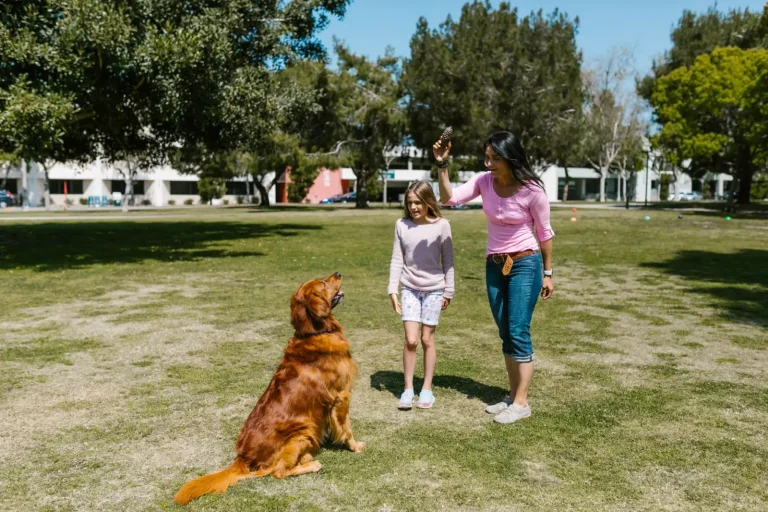
I spend weeks building this value before I ever test recall in a high-distraction setting. In the house, I practice calling the dog from one room to another, always with a reward that matters. Not a generic treat – something the dog genuinely wants. I vary the reward so the dog never knows exactly what they’re getting, which keeps them engaged. This isn’t about drilling the word. It’s about creating an association so strong that the dog’s brain lights up when they hear it.
The timing of the reward is critical. The dog needs to understand that the reward comes for responding quickly, not just for eventually showing up. I mark the moment they turn toward me with a word like “yes” or a clicker, then deliver the reward. This teaches the dog that speed matters. An Australian Shepherd that saunters back after five minutes has learned that coming back is optional. One that sprints back immediately has learned that the recall is a high-value event.
Training in Progressively Challenging Environments
Once the dog reliably responds indoors, I move to the yard. But not the empty yard at a quiet time of day. I start in the yard when there are mild distractions – maybe a neighbor visible, maybe some wind moving leaves. The dog learns to respond to recall even when other things are happening. I practice multiple times a day, in different parts of the yard, with varying levels of background activity.
The progression matters more than speed. Rushing to train recall around serious distractions before the dog has solid foundation work is one of the most common mistakes I see. The dog fails, learns that sometimes they can ignore the recall, and you’ve just made the problem worse. Instead, I increase distraction gradually. A dog that’s practiced recall a hundred times with mild distractions is far more likely to respond when something genuinely exciting appears.
I also vary the context constantly. I call the dog back while they’re playing with toys, while they’re investigating something on the ground, while they’re looking at the fence. I practice in different locations – the park, a friend’s yard, a quiet street. The dog learns that the recall word means the same thing everywhere, not just in their home environment. This is where many owners plateau. They train in one location and assume the behavior will transfer. It doesn’t, not reliably.
The Role of Long-Line Training
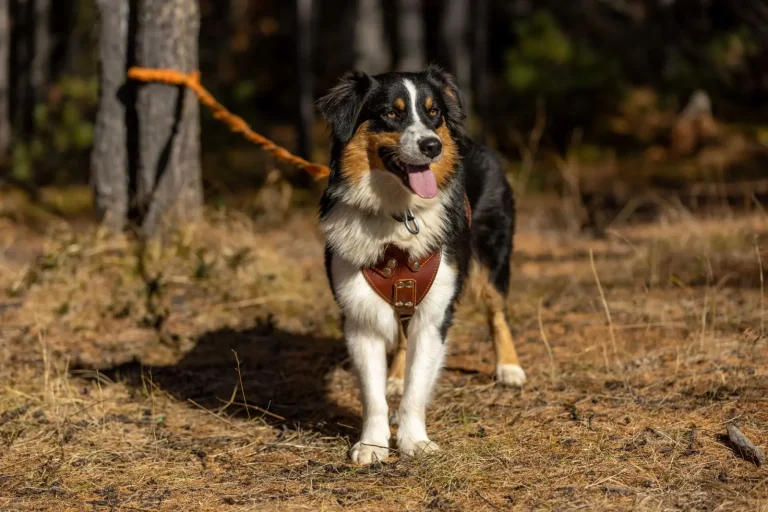
Long-line training is where I bridge the gap between controlled practice and real-world reliability. A long line – typically 20 to 50 feet – gives the dog the experience of being at a distance while still giving you the ability to enforce the recall if needed. The line is never yanked or used punitively. Instead, it’s a safety net that allows you to practice recall in genuinely distracting environments without the risk of the dog running away.
I use the long line in parks, on trails, anywhere the dog might encounter real distractions. The dog gets to experience the freedom of distance while learning that the recall still applies. If the dog doesn’t respond immediately, I calmly reel them in, reward them anyway, and try again. Over time, the dog learns that responding to recall is inevitable, and it’s far better to do it voluntarily than to be brought back by the line.
The long line also teaches me something crucial: it shows me the exact threshold where my dog’s training breaks down. Maybe the dog responds perfectly until a squirrel appears. Maybe they’re fine with squirrels but lose it when another dog is present. Knowing these specific triggers lets me target training more effectively. I’m not just practicing recall in general. I’m building reliability around the exact situations that matter most.
The Emergency Marker and Consistency
Many owners benefit from having a distinct recall word or marker that’s reserved specifically for emergencies. I use a different word than the casual “come” I practice daily. Something sharp and unusual – a whistle, a specific phrase, something the dog hasn’t heard used for anything else. This creates a clear distinction in the dog’s mind between “please come back when you get a chance” and “I need you now.”
The emergency marker only gets used when you mean it. You practice it regularly, but always with the understanding that when you use it, something serious is happening. An Australian Shepherd is smart enough to pick up on this distinction. If you use the emergency recall only when you actually need the dog back immediately, and you always reward it heavily, the dog learns that this particular cue overrides everything else.
Consistency is where most training breaks down. One person in the household practices recall seriously while another calls the dog casually and lets them ignore it. The dog learns that the recall is negotiable depending on who’s calling. Everyone in the household needs to be on the same page about what recall means and when it’s enforced. This is often harder than the actual training.
I’ve seen Australian Shepherds with genuinely reliable emergency recall. They’re dogs whose owners have invested months in building value around the recall cue, practiced in progressively challenging environments, used long-line training to enforce consistency, and maintained that consistency over years. It’s not a quick fix, and it requires ongoing practice. But it’s absolutely achievable, and it’s one of the most valuable things you can teach a dog with a strong prey drive and independent streak.