

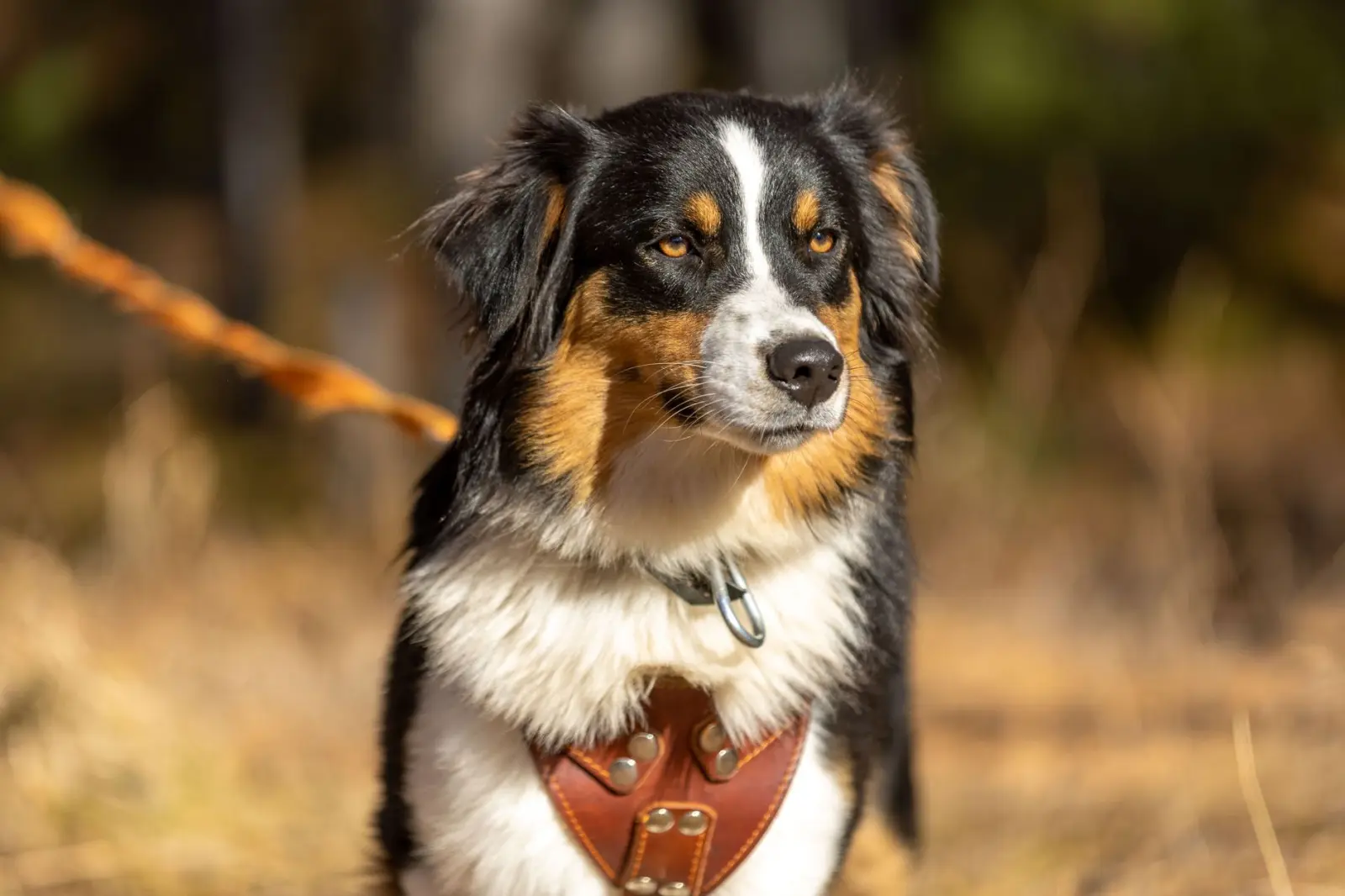
Australian Shepherds are built to think independently. They were bred to make decisions about livestock movement without constant direction, which means they’re naturally inclined to problem-solve on their own terms. This trait makes them rewarding to work with, but it also means the standard approach to teaching tricks often falls flat. I’ve watched owners get frustrated because their Aussie “knows” a command in the kitchen but ignores it in the yard. That’s not disobedience – it’s the dog’s working brain assessing whether the command makes sense in that particular context.
The first thing to understand is that an Australian Shepherd doesn’t learn tricks the way a Golden Retriever does. Goldens tend to be eager to please and will repeat behaviors because you’re happy. Aussies learn because the behavior itself solves a problem or makes sense to them. When you’re teaching anything – sit, down, leave it – you’re not just conditioning a response. You’re convincing the dog that this particular action is the right choice in this particular situation. That distinction changes everything about how you approach training.
Motivation matters, but it’s not what most people assume. Food works, but only if the dog is genuinely hungry or if the reward is genuinely better than whatever else is happening around them. I’ve seen owners wonder why their Aussie won’t take treats during training when there’s a squirrel visible fifty yards away. The dog isn’t being stubborn. The squirrel is objectively more interesting than a piece of chicken. This is why timing and environment are so critical. Training in a quiet space early in the session, before the dog’s attention is fragmented, produces faster learning than trying to drill commands in a distracting setting.
The Real Work Happens Between Sessions
Most people think training happens when you’re actively working with the dog. In reality, the learning consolidates when the dog is resting. I’ve noticed that Aussies often seem to “get it” the day after a training session, not during it. Their brains are processing and organizing what happened. If you train intensively every single day, you’re not giving that consolidation time. Shorter, more frequent sessions spread across the week tend to produce better retention than marathon training days. Three ten-minute sessions beat one thirty-minute session almost every time.
The consistency piece is where most training breaks down. An Aussie will absolutely learn that “sit” means something different in different contexts if you’re inconsistent about what you reward. If sit gets a treat sometimes, gets ignored other times, and gets redirected when the dog sits at the wrong moment, the dog learns a fuzzy rule instead of a clear one. They’re not confused – they’re accurately reflecting the inconsistency they’re experiencing. This is why multiple people in the household need to use the same cue and reward the same behavior, or the dog ends up with conflicting information.
Building on What They Already Know
Australian Shepherds are herding dogs, which means they already understand movement, pressure, and release. You can use these instincts as a foundation. Teaching “down” is easier if you understand that the dog already knows how to drop low and stay still when working stock. You’re not inventing a new behavior – you’re naming something they already do and attaching it to a cue. The same goes with “wait” or “stay.” These aren’t foreign concepts. You’re giving language to behaviors that exist in their working repertoire.
I’ve found that Aussies engage more fully with training when there’s a clear purpose to what they’re learning. Teaching sit for no reason is abstract. Teaching sit so they wait calmly before going through a door, or before getting their leash on, gives the behavior context. The dog understands the functional outcome. This is why trick training often feels hollow with this breed. They’re not motivated by performing tricks for applause. They’re motivated by behaviors that solve problems or accomplish something tangible.
Distance and duration are separate skills, and many people conflate them. A dog might sit reliably at your feet but fail to sit when you’re across the room. That’s not the dog forgetting the command. It’s a different challenge. Building distance requires starting close, succeeding consistently, then gradually increasing space. Similarly, holding a down-stay for thirty seconds is different from holding it for five minutes. You need to build duration separately, in small increments. Expecting both distance and duration simultaneously sets up failure.
When Things Stop Working
There’s a point in training where progress plateaus. The dog knows the command, does it reliably in familiar settings, but seems stuck. This usually means the reward has lost its value or the dog has figured out that the behavior is optional. An Aussie will test boundaries constantly. If they discover that ignoring a recall sometimes works, they’ll keep testing that hypothesis. The fix isn’t to get frustrated or increase corrections. It’s to make the reward genuinely worth the effort and to never let the dog win by ignoring the cue.
Environmental distractions are real, and acknowledging them is important. A dog isn’t being defiant when they won’t leave a dead bird to come to you. The dead bird is objectively more interesting. Training in low-distraction environments first, then gradually introducing distractions, is the only way to build reliable behavior. You can’t skip the foundation and expect the dog to perform in chaos.
Australian Shepherds also respond poorly to repetitive, boring drills. They get mentally fatigued faster than some breeds, not because they’re less intelligent but because their brains are more active. Doing the same exercise ten times in a row often produces worse results than doing it two or three times and then moving to something different. Variety keeps them engaged. Mixing up where you train, what you reward with, and what behaviors you work on maintains their interest and accelerates learning.
The dogs that seem to “know everything” aren’t necessarily trained more intensively than others. They’re usually trained more thoughtfully. Their owners have understood that an Aussie needs clarity, consistency, and a reason to care. They’ve built behaviors on the dog’s natural strengths rather than fighting against them. They’ve given the dog time to consolidate learning and they’ve resisted the urge to rush into complex behaviors before simpler ones are solid. That’s the real foundation, and it’s something that takes experience to recognize.