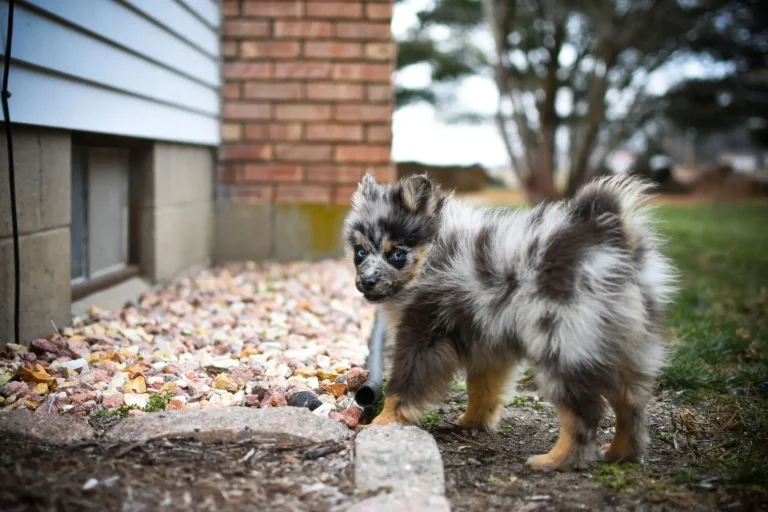


Australian Shepherds have a particular relationship with the word “leave it.” They’re bred to move, chase, and react – herding instinct runs deep in their nervous system. Teaching them to ignore something they want requires understanding that you’re not fighting laziness or stubbornness. You’re asking them to override a biological impulse that has been selected for over generations. This makes the process different from training a breed with lower prey drive, and it also makes it worth doing properly.
Most people start leave it in the wrong context. They wait until the dog is already fixated on something – a dropped piece of food, another dog, a squirrel – and then they try to introduce the command. At that point, you’re competing with real-time arousal and motivation. The dog’s attention is already committed. What tends to work better is building the concept in a controlled space first, where nothing is actually that interesting, so the dog can learn the mechanics without fighting their own instincts.
Starting with Low-Value Items
I’ve found that beginning with something the dog genuinely doesn’t care about is essential. A piece of kibble on the floor works better than a high-value treat. A toy they’ve seen a hundred times is better than a new toy. The goal at this stage isn’t to test their discipline – it’s to teach them the pattern of what “leave it” means. Australian Shepherds are smart enough to learn the association quickly if the scenario is simple. Once they understand the concept, the difficulty can increase.
The sequence is straightforward: place a low-value item on the ground, let the dog notice it, and the moment they show interest, cover it with your foot or hand. Wait. Don’t say anything yet. Most handlers make the mistake of repeating “leave it” over and over while the dog is still trying to get the item. That just becomes noise. Instead, wait until the dog pulls away or looks at you, then immediately mark that behavior with a word like “yes” and reward with something better from your hand. The dog learns that looking away from the item and checking in with you is the winning strategy.
Building Duration Without Frustration
Once the dog understands the basic pattern, duration comes naturally if you don’t rush it. Australian Shepherds can become frustrated quickly if they feel trapped or if the rules change without warning. I’ve seen dogs that were doing well with leave it suddenly start to struggle because someone decided to make the test harder without preparation. The dog gets confused about what the new expectation is, and frustration sets in.
Gradually increase the time the item sits on the ground before you reward the dog for leaving it. Start with a second or two. Then three seconds. Then five. The dog should never feel like they’re being tested unfairly. If you see them starting to fixate hard or show signs of frustration – whining, pawing, trying to circle around your hand – you’ve probably moved too fast. Back up to a duration they can handle, build confidence there, and then progress more slowly.
The Real Test: Distractions That Matter
The gap between leaving a piece of kibble on your kitchen floor and leaving a dropped hot dog at a picnic is enormous. This is where most leave it training falls apart. The dog learned the command in a sterile environment, and now you’re expecting it to work when there’s actual motivation, other people around, and competing stimuli. That’s not a failure of the training – it’s a failure to generalize it.
Work through different environments and different objects gradually. Practice in the backyard before the park. Practice with treats that are more interesting before you test it with food at a gathering. Practice when the dog is calm before you practice when they’re aroused. Australian Shepherds will transfer the command across contexts, but only if you build that bridge deliberately. I’ve trained dogs that had rock-solid leave it on a leash in a quiet setting but would ignore it completely at a dog park. The command wasn’t broken – the generalization wasn’t complete.
One thing I’ve noticed with this breed specifically: they respond better to leave it when they feel like they have agency. If you’re always physically blocking them from getting something, they can start to resent the command. But if you’ve taught them that *they* control whether they get rewarded by choosing to look away, they tend to be more willing participants. This is subtle, but it matters with a dog that has as much drive and independence as an Australian Shepherd.
When Leave It Isn’t Working
If a dog that seemed to understand leave it suddenly stops responding, something has usually changed. Sometimes it’s that the motivation is now too high – the item is genuinely more rewarding than anything you can offer. Sometimes it’s that the dog is stressed or overstimulated and can’t access the thinking part of their brain. Sometimes it’s that they’ve learned the command only applies in certain contexts and haven’t generalized it to new situations.
I’ve also seen cases where dogs are confused because leave it is being used inconsistently. One person uses it to mean “don’t touch this,” another uses it to mean “drop what you have,” and another uses it to mean “stop doing that behavior.” The dog ends up uncertain about what the word actually means. Consistency across everyone who handles the dog matters more than most people realize.
Australian Shepherds are responsive to clear communication and fair rules. They’re not naturally defiant. If leave it isn’t working reliably, the issue is usually in the training process, not the dog. Going back to basics – simpler scenarios, lower-value items, more frequent rewards for success – typically reveals where the gap is and allows you to rebuild from there.