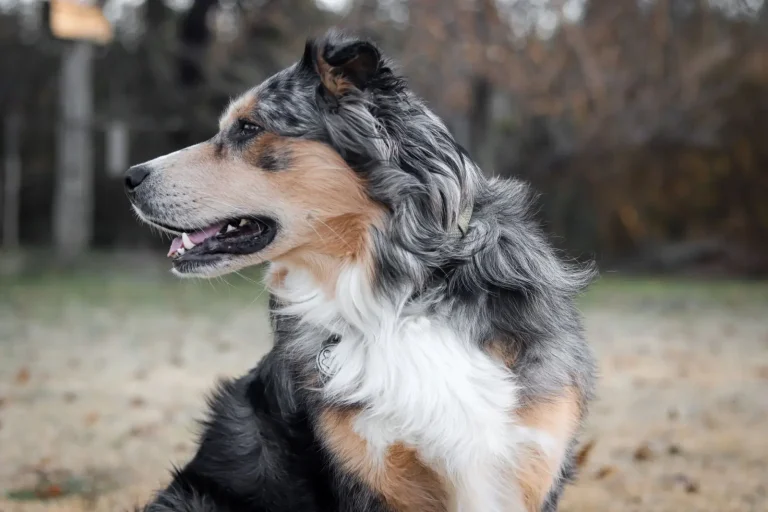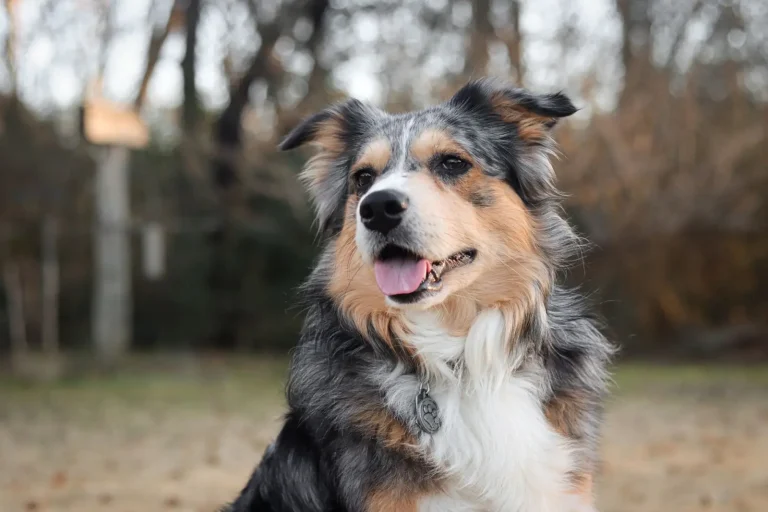


Australian Shepherds herd. It’s what they were built to do, and no amount of wishing changes that fundamental drive. After years of working with this breed, I’ve learned that the herding impulse isn’t something you eliminate – it’s something you understand and redirect. The dogs that end up causing real friction in households are often the ones whose owners treat herding behavior as a simple obedience problem, when it’s actually a deeply rooted instinct that needs a different approach.
The herding behavior directed at people usually emerges between six months and two years, though I’ve seen it start earlier in particularly driven dogs. It manifests in different ways depending on the individual: nipping at heels and ankles, circling family members, blocking doorways, or positioning themselves between people and movement. Some dogs are subtle about it – just a persistent body block or a stare. Others are more intense, especially if they’ve never learned to channel the behavior appropriately. The behavior itself isn’t aggression or dominance, despite what some people assume. It’s a dog doing exactly what its breeding selected for, applied to the wrong context.
Why It Happens and When It Escalates
The herding impulse activates when the dog perceives movement, unpredictability, or lack of structure. A child running through the house, someone walking toward the door, or even just the general chaos of multiple people moving around the home can trigger it. I’ve noticed that herding intensifies in dogs who don’t have adequate outlets for their energy and mental engagement. A tired Australian Shepherd is far less likely to be nipping at ankles than one who’s spent the day indoors with minimal stimulation.
The behavior also escalates when owners respond inconsistently. If a dog gets attention – any attention, including correction – for herding, the behavior gets reinforced. I’ve seen owners who laugh the first time their puppy nips at a guest’s heel, then get frustrated months later when the same dog is doing it to their kids. By then, the dog has learned that herding produces a response, which is often all the reinforcement needed to keep the behavior going.
Exercise and Mental Work as Foundation
Before addressing the herding directly, the dog needs a legitimate outlet. This isn’t about casual walks. Australian Shepherds need work that engages their problem-solving ability and gives them something to focus on. Herding trials, agility, dock diving, or structured fetch games with rules and boundaries all work. Even a solid daily routine of training sessions, puzzle toys, and nose work can make a significant difference. I’ve found that dogs given consistent mental engagement show less compulsive herding behavior simply because they’re not looking for something to do.
The exercise piece is non-negotiable, but it’s also not the whole picture. A dog can be physically tired and still have the herding drive active. The mental engagement matters more than raw tiredness. A dog that’s spent an hour problem-solving in a training session will show less herding behavior than one who’s been running around a yard for two hours with nothing specific to do.
Redirecting the Instinct in Real Time
When herding behavior appears, the goal is to interrupt it and redirect it to something appropriate. This is different from punishing it. I don’t correct herding – I redirect it. If a dog starts circling a family member, I interrupt with a specific command the dog knows well, then immediately engage them in something else. A game of fetch, a training session, or even just a focused heel walk can work. The key is that the redirection happens fast and consistently every single time.
Some owners find success with designated herding games. Teaching a dog to herd a ball or a toy on command gives the herding drive a sanctioned outlet. The dog learns that herding is allowed, but only when invited and only with appropriate targets. This doesn’t eliminate the instinct, but it creates a framework where the dog understands when and where herding is appropriate.
What doesn’t work is trying to suppress the behavior entirely through correction. I’ve seen owners use leashes indoors, restrict movement, or correct the dog every time it shows herding behavior. These approaches often backfire. The dog either becomes anxious, or the herding behavior goes underground and resurfaces in different contexts. The drive doesn’t disappear – it just finds new expressions.
Management During the Learning Phase
While you’re building better habits, management matters. Keeping the dog on a leash indoors during high-activity times, using baby gates to separate the dog from areas where herding is most likely to happen, or keeping the dog in a different room when guests arrive can all reduce the frequency of the behavior. This isn’t a permanent solution, but it prevents the dog from practicing the behavior repeatedly while you’re working on redirection.
I’ve also found that establishing clear structure in the household helps. Dogs that know the routine – when they exercise, when they train, when they rest – tend to show less random herding behavior. Predictability seems to settle them. The herding impulse is still there, but without the trigger of chaos and unpredictability, it doesn’t activate as often.
Some owners benefit from teaching their Australian Shepherd to go to a specific place – a bed, a crate, or a mat – when people are moving around or when guests are present. The dog learns that when movement happens, the appropriate response is to settle in a designated spot rather than to participate in the movement. This takes time and consistent practice, but it gives the dog a job that’s compatible with the household environment.
Consistency across all family members and anyone who spends time with the dog is critical. If one person redirects herding behavior and another person ignores it or encourages it, the dog gets confused signals. Australian Shepherds are smart enough to recognize these inconsistencies, and they’ll herd the person who’s least likely to interrupt them. Everyone in the household needs to respond the same way every time.
The reality is that most Australian Shepherds will retain some level of herding behavior throughout their lives. The goal isn’t to create a dog with no herding instinct – that’s not realistic for the breed. The goal is to manage it so that it doesn’t create problems in daily life. A well-exercised, mentally engaged Australian Shepherd with clear boundaries and consistent redirection will show herding behavior far less frequently, and when it does appear, it’s easier to redirect because the dog has learned acceptable alternatives. That’s the outcome that actually works.