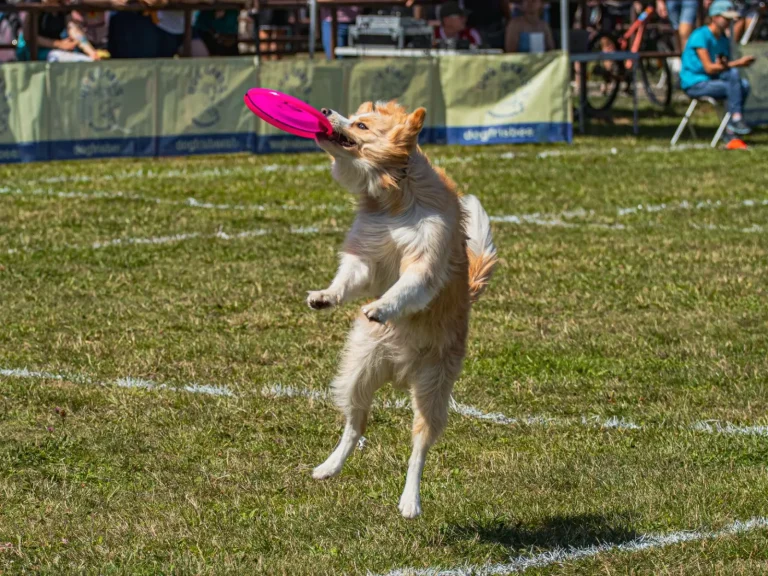


Australian Shepherds have a reputation for being responsive to sound and movement, which makes doorbell training seem straightforward on the surface. In practice, it’s more complicated than it appears. I’ve worked with dozens of these dogs over the years, and the ones that develop reliable doorbell responses tend to share certain patterns in how they were introduced to the concept. The ones that struggle usually have owners who misunderstood what the dog was actually doing when it barked at the door.
The first thing to understand is that Australian Shepherds are herding dogs with a strong impulse to control movement and respond to changes in their environment. When a doorbell rings, they’re not simply reacting to noise. They’re processing a boundary event – something is happening at the perimeter of their territory, and their breed history tells them to pay attention. This is different from a dog that barks because it’s startled or anxious. An Aussie’s response is rooted in their working background, which means it can be shaped more reliably than you might expect, but only if you work with that instinct rather than against it.
Why Standard Approaches Often Fail
Most people start by ringing the doorbell repeatedly and rewarding the dog when it barks. This works initially, but it creates a problem: the dog learns that the doorbell means “bark until something happens,” not “alert me and wait for my direction.” After a few weeks, you end up with a dog that won’t stop barking, that barks before the doorbell even rings because it anticipates the sound, or that barks at every noise that remotely resembles a doorbell.
The issue is timing and clarity. Australian Shepherds are smart enough to notice patterns, and they’re observant enough to anticipate events. If you reward them for barking during doorbell training, they start to predict when the doorbell will ring based on subtle cues – your movement toward the door, a visitor’s car pulling up, footsteps on the porch. They’re not being difficult; they’re being logical within the framework you’ve created.
I’ve also seen owners make the mistake of correcting the dog for barking at the door, then later trying to train a doorbell alert. The dog gets confused about whether the door is a place where barking is acceptable. Australian Shepherds are sensitive to these inconsistencies, and they often respond by either shutting down their alert behavior entirely or becoming more reactive because they’re uncertain about the rules.
Building a Reliable Alert Without the Chaos
The approach that works best starts with separating the alert from the response. Instead of training “bark at the doorbell,” you’re training “notice the doorbell, then look at me.” This requires patience and a clear understanding of what you actually want the dog to do.
Begin by desensitizing the dog to the doorbell sound itself. Ring it softly while the dog is doing something else – eating, playing, resting. The goal is for the sound to become neutral background noise, not an automatic trigger for arousal. This takes longer than people expect, usually several weeks of casual exposure. Australian Shepherds notice everything, so they’ll still register the sound, but it won’t create the same spike in excitement that leads to excessive barking.
Once the dog is calm around the doorbell sound, you can introduce the alert behavior. Ring the doorbell and immediately mark the moment the dog’s attention shifts toward it. Use a marker word like “yes” or a clicker, then reward. You’re not waiting for barking. You’re rewarding the moment of awareness. This is subtle work, and it requires you to be genuinely attentive to what your dog is doing.
After the dog consistently looks toward the sound or moves toward the door when the bell rings, you can add a second layer: teach a specific behavior that happens after the alert. Some people train a sit or a down near the door. Others train the dog to go to a specific spot and wait. The key is that the dog learns there’s a sequence: doorbell rings, I notice it, I do this specific thing, then something happens next. This gives the dog a job and prevents the escalation into uncontrolled barking.
The Role of Consistency and Environment
Australian Shepherds respond well to consistency, but they also notice when rules change depending on context. If you reward barking at the doorbell during training but scold the dog for barking when a friend arrives, the dog learns that the situation is unpredictable. This often makes them more reactive, not less, because they’re trying to figure out the correct response.
The environment matters too. A dog trained in a quiet house might behave very differently when there’s background noise, multiple people present, or high energy at the door. I’ve seen dogs that had solid doorbell training suddenly regress when the family had guests over or when a delivery driver knocked loudly. This isn’t the dog forgetting the training. It’s the dog responding to a changed context. Building reliability means practicing in different scenarios – with different people, at different times of day, with varying levels of activity happening simultaneously.
Another practical consideration is the dog’s age and energy level. A young Australian Shepherd under two years old has a lot of arousal to manage, and doorbell training can become chaotic if the dog doesn’t have adequate physical and mental exercise. I’ve found that dogs with insufficient outlet for their herding drive tend to put more intensity into doorbell responses. They’re not misbehaving; they’re channeling pent-up energy. Ensuring the dog gets enough work – whether that’s herding practice, fetch sessions, or structured training – makes doorbell training significantly easier.
What Actually Signals Success
A well-trained Australian Shepherd doesn’t necessarily alert silently. Some do, but many will give a bark or two – that’s part of their nature. The difference between a trained alert and an untrained reaction is that the trained dog stops when the situation is clear. The doorbell rings, the dog barks once or twice, looks at you for direction, and then settles when you indicate everything is fine. The untrained dog barks continuously, escalates when someone enters, or barks at every similar sound for the next hour.
I’ve also noticed that Australian Shepherds that have been trained with clarity tend to be more relaxed overall. They know their job at the door, they understand what’s expected, and they’re confident in that role. This often carries over to other areas – they’re less reactive in general, more responsive to direction, and seem to have less anxiety about unexpected sounds or visitors.
The reality of doorbell training with this breed is that it’s less about preventing barking and more about channeling their natural alertness into a manageable, predictable behavior. Australian Shepherds want to do their job. If you give them a clear job and reward them consistently for doing it, they’ll do it reliably. The dogs that struggle are usually the ones whose owners haven’t decided what the job actually is.