

Smart. Loyal. Intense. Very Aussie.
Australian Shepherd temperament was shaped by work: noticing movement, reading situations, learning quickly and cooperating closely with people. Those qualities can make the Aussie an extraordinary companion — and a dog that expects to be involved.
The personality is the real breed.
Australian Shepherds were developed as versatile herding dogs. Their work demanded intelligence, awareness, responsiveness and enough initiative to make decisions while remaining connected to a handler.
Those traits did not disappear when Aussies moved from ranches and farms into family homes. They simply found new places to appear.
The dog that once watched livestock may now watch your children, follow you from room to room, notice every visitor, anticipate routines and learn which cupboard contains the treats.
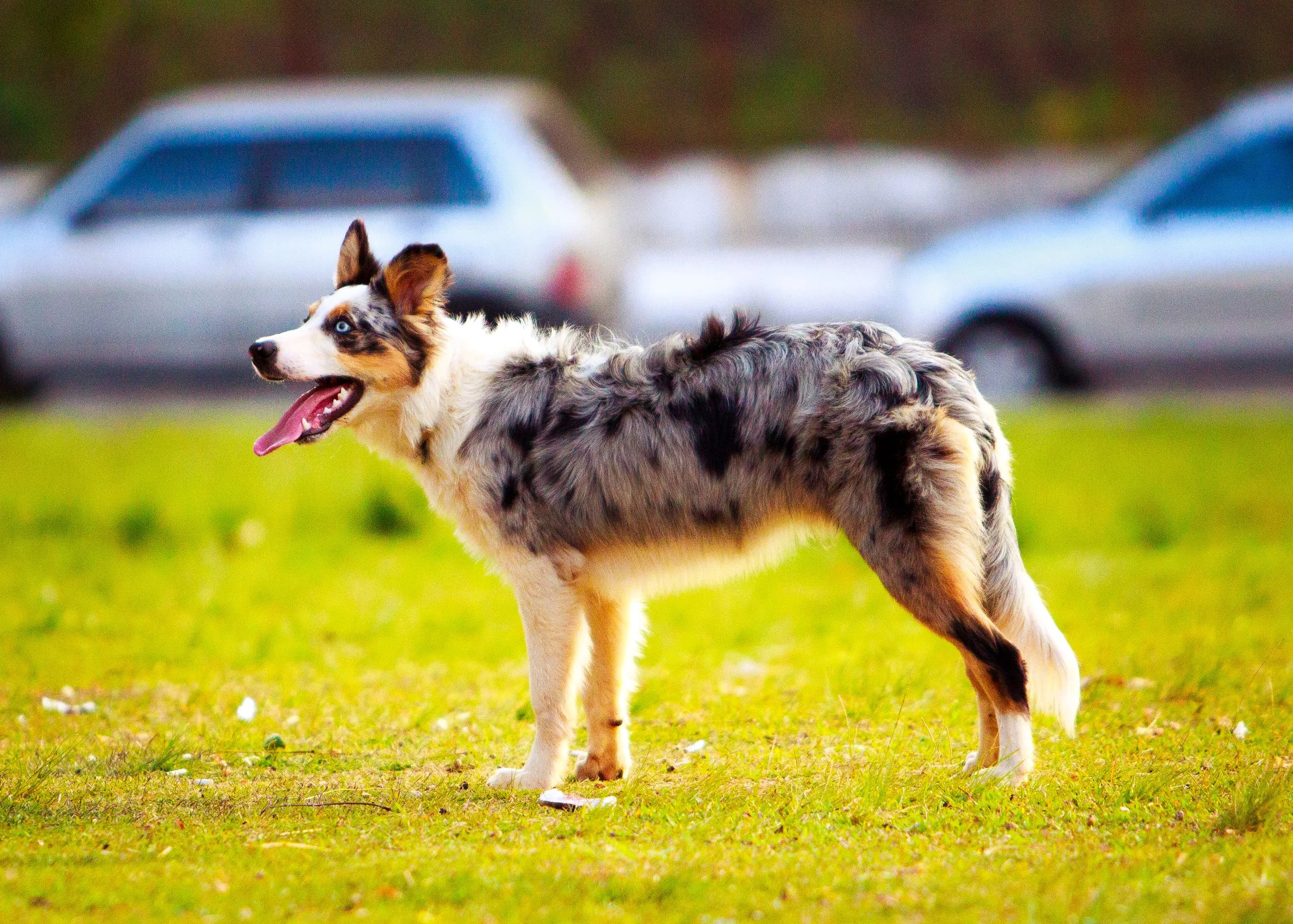
Easy to train doesn't mean easy to live with.
Australian Shepherds are highly intelligent and generally very trainable. They can learn quickly, notice patterns and become remarkably responsive to people.
That sounds entirely convenient — until the same intelligence has nothing useful to do.
A clever dog learns desirable behaviour quickly. A clever dog can also learn exactly when you are distracted, which rules are negotiable and what produces an interesting reaction.
Training therefore should not be viewed simply as fixing problems. For an Aussie, learning itself can be part of a satisfying life.
Explore trainingWhat does an Aussie feel like to live with?
Individual dogs vary, and genetics, upbringing, socialisation and experience all matter. But several themes appear repeatedly in the breed.
Loyal
Aussies often form strong relationships with their people and prefer being involved in family life rather than living at its edges.
Observant
This is a breed built to notice. Movement, routines, people arriving and subtle changes in the environment rarely go unnoticed.
Responsive
Many Aussies enjoy cooperation and respond strongly to interaction, training and clear communication with their person.
Enthusiastic
Whether the activity is training, walking, sport or simply joining the family, Aussies tend to approach involvement with commitment.
Busy-minded
Physical exercise matters, but an Aussie often benefits just as much from opportunities to think, solve and learn.
Instinctive
Herding heritage can influence how an Aussie reacts to movement, excitement, other animals and sometimes people.
Aussies were bred for partnership.
A stock dog had to work in cooperation with a person while also remaining aware of everything happening around it. That history helps explain why many Australian Shepherds form such close, attentive relationships with their owners.
They may follow you through the house, watch what you are doing, anticipate routines and prefer being included in everyday life.
Affection does not always mean constant cuddling. Some Aussies express attachment by simply being nearby, watching and waiting for the next thing you will do together.
When the job disappears, the instinct may remain.
Even dogs that have never seen livestock may show behaviours influenced by generations of selection for herding work.
Circling
Some Aussies naturally move around people, animals or activity rather than simply moving toward it.
Chasing movement
Running children, bicycles, wildlife or other dogs can activate interest in controlling or following movement.
Nipping
Herding-related nipping can occur, particularly around fast movement or excitement. It needs appropriate management and training.
Monitoring
An Aussie may spend surprising amounts of time keeping track of where everyone is and what everyone is doing.
Reserved doesn't mean fearful or aggressive.
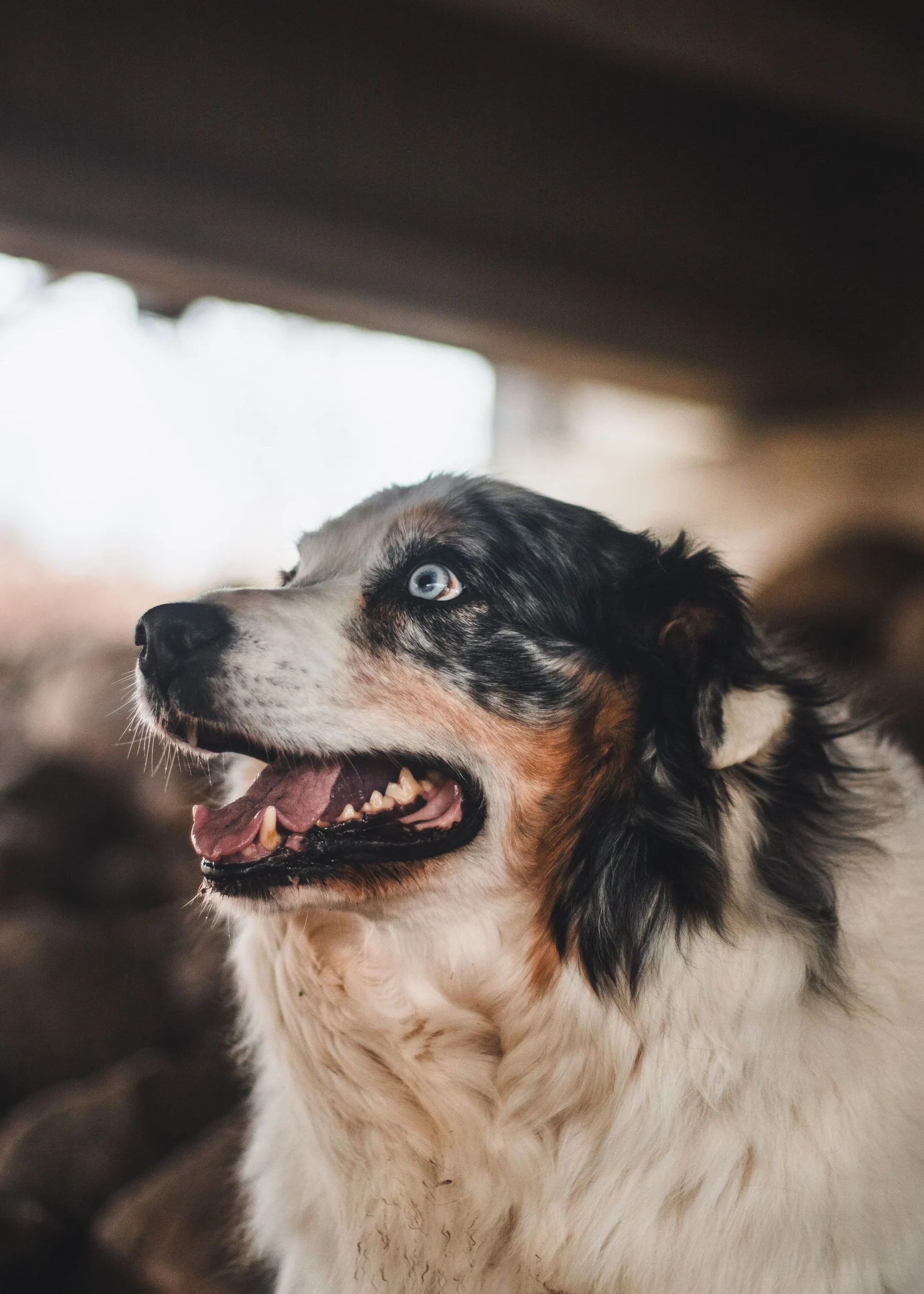
Australian Shepherds may be naturally reserved with strangers. A well-adjusted Aussie does not necessarily need to greet every unfamiliar person as a future best friend.
Reserve can simply mean the dog is initially unconcerned, observant or selective about interaction.
That is different from a dog that is frightened, unable to cope with normal social situations or displaying inappropriate aggression.
Because the breed can be watchful and discerning, thoughtful socialisation during puppyhood is particularly valuable.
Children, dogs and other animals.
Australian Shepherds can live very successfully in busy family households, but breed instinct, individual temperament, training and supervision all matter.
Children
Aussies can be wonderful family dogs. Running and noisy play, however, may trigger chasing, circling or herding behaviour. Children and dogs should learn how to interact appropriately, with adults supervising where needed.
Other dogs
Many Aussies live happily with other dogs. Compatibility depends on individual temperament, social experience and the other dog. Some individuals may be selective rather than universally social.
Other pets
Aussies can share homes with other animals, particularly with thoughtful introductions and clear boundaries. Movement-sensitive behaviour still needs consideration around smaller animals.
Unfortunately, you don't get to approve the project brief.
A bored Aussie can become remarkably creative.
Intelligent, active dogs need appropriate outlets. When those outlets are missing, behaviour can become the dog's way of creating stimulation.
Barking, digging, chewing, garden redesign, obsessive behaviours or finding ways around household rules may all become more likely when physical and mental needs are consistently unmet.
This does not mean an Aussie must be exercised for hours without rest. In fact, teaching calm behaviour and an ability to switch off is also important.
The goal is balance: movement, thinking, interaction, training and the ability to settle.
An Aussie needs a job. “Job” can mean many things.
Your dog does not need a flock of sheep to have purposeful activity. A job is simply a constructive way to use attention, intelligence, movement and cooperation.
Training
Skills, tricks and everyday communication give the Aussie brain a constructive task.
Dog sports
Agility, obedience, tracking, herding and other activities can combine thinking with movement.
Daily routines
Structured walks, recall practice and participation in everyday activities can provide purpose.
Mental work
Scent games, problem solving and learning can tire a busy mind without endless physical exercise.
A little nuance matters.
Breed traits help us understand tendencies, but they should not become shortcuts for explaining every individual dog.
“Aussies need to run all day.”
They need appropriate physical activity, but simply creating a fitter dog through endless exercise does not replace training, mental engagement or learning to settle.
“Smart means naturally obedient.”
Intelligence makes learning possible. It does not automatically teach the behaviours humans prefer. Training still matters.
“Reserved means unfriendly.”
An Aussie can be socially appropriate without wanting to interact enthusiastically with every unfamiliar person.
“Herding instinct only matters on farms.”
The same sensitivity to movement can appear around children, dogs, bicycles and everyday activity far away from livestock.
The Aussie in six lines.
Individual dogs differ, but this is the broad temperament picture prospective owners should understand.
Brains are only the beginning.
Australian Shepherd temperament is a combination of intelligence, loyalty, awareness, enthusiasm and working instinct. Give those qualities direction and partnership, and you begin to understand why people become so deeply attached to this breed.
Explore the breed