

The history of the Australian Shepherd
The name points to Australia. The breed was developed in the United States. And somewhere between travelling shepherds, livestock and the ranches of the American West, the story becomes much more interesting than the name suggests.
A history written in movement.
Unlike breeds whose origins can be traced neatly to one estate, one breeder or one carefully documented foundation, the early story of the Australian Shepherd is less tidy.
Shepherds moved. Sheep moved. Dogs moved with them. Working dogs were valued for what they could do rather than for pedigrees recorded for future historians.
Several explanations have therefore been proposed for the ancestry behind the dogs that eventually became the modern Australian Shepherd. Australia appears in that story, but exactly how remains a subject of historical discussion.
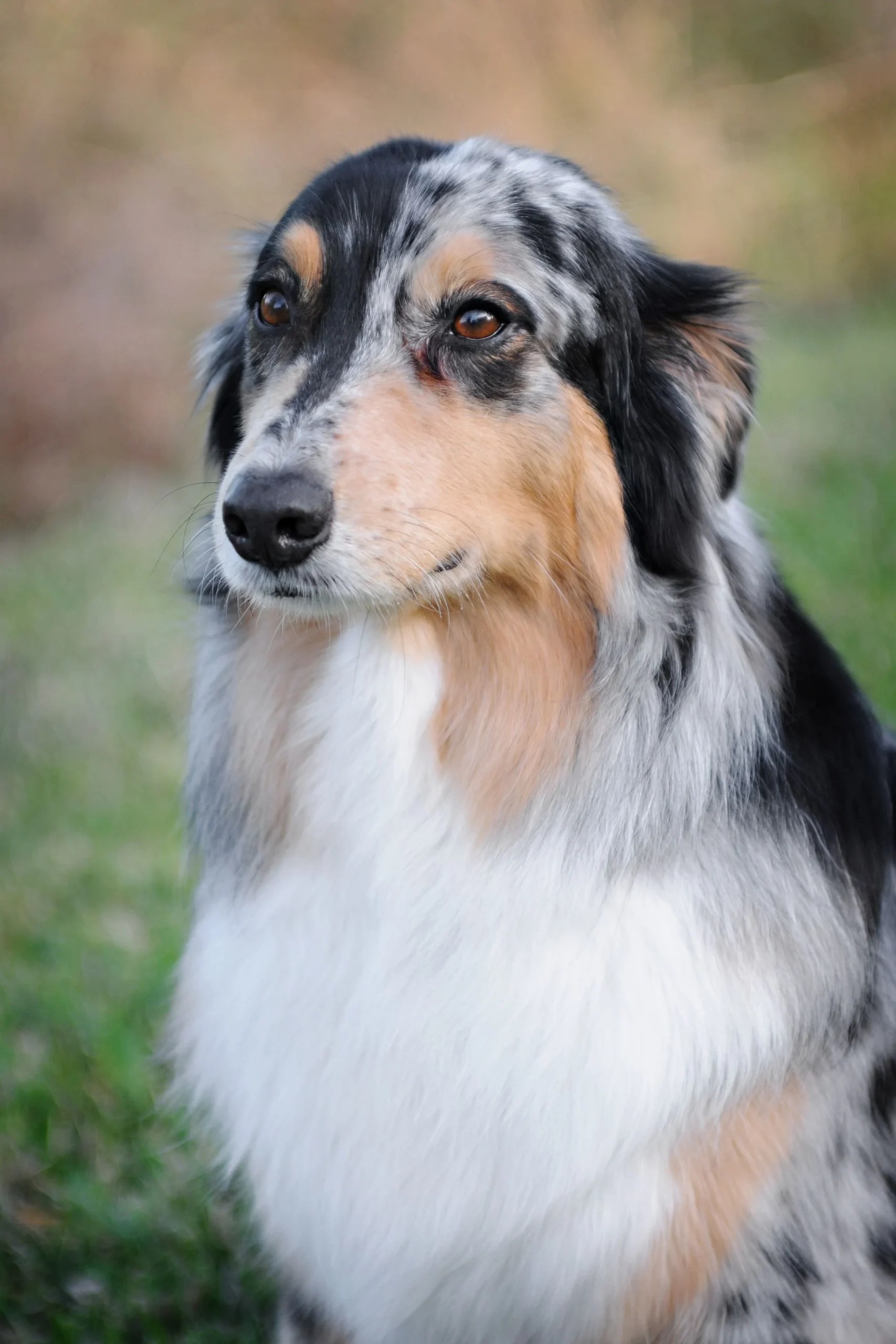
Start with work, not appearance.
The Australian Shepherd's story is closely tied to the movement of livestock and the shepherds responsible for managing them.
As sheep populations moved between Europe, Australia and North America, practical working dogs travelled through the same pastoral world. These dogs were selected primarily for usefulness: intelligence, endurance, responsiveness to the handler and the ability to control livestock.
That makes the search for one single ancestral breed difficult. The dogs behind the Aussie may have represented several related working populations rather than one neat predecessor with a modern breed name.
What eventually emerged in the United States was shaped by generations of selection for the conditions and work found there.
One breed. Several historical theories.
Older accounts of Aussie history offer different routes for the foundation dogs. Rather than turning uncertainty into a tidy legend, it is more useful to see these as parts of an evolving historical picture.
Europe → Australia → America
One long-standing idea connects shepherds and their dogs with Merino sheep moving from Europe to Australia and later across the Pacific to North America.
Australian working dogs
Another explanation suggests dogs developed in Australia from imported British and European working stock contributed to dogs later associated with the Australian Shepherd name.
Europe → America
Other interpretations place more emphasis on European herding dogs reaching the Americas without Australia necessarily serving as the central step in their journey.
The name may preserve a journey, not a birthplace.
The breed's name has traditionally been connected with dogs arriving in the United States alongside sheep or shepherds associated with Australia. Over time, those dogs became known as Australian Shepherds.
Historical accounts also describe working dogs of a similar type in Australia, and dogs continued moving between countries long after the earliest foundation period.
Where the Aussie became the Aussie.
Whatever routes the foundation dogs followed, the Australian Shepherd as we recognise it today was developed in the United States.
On American farms and ranches, the dogs were valued as versatile stock dogs. They worked sheep and later cattle, where intelligence, agility, stamina and the ability to respond closely to a handler mattered far more than appearance alone.
The American West provided an environment in which a practical, adaptable herding dog could earn a reputation. Dogs that could handle different livestock and different jobs were useful — and usefulness shaped the breed.
This working identity remains central to understanding Australian Shepherd temperament today. The modern family companion may never meet livestock, but the breed was built around awareness, cooperation and purposeful activity.

Versatility became part of the breed.
Herding livestock requires more than energy. A useful stock dog has to read movement, respond to a handler, make rapid decisions and keep working when the environment changes. Those pressures help explain many characteristics Aussie owners recognise today.
Awareness
Stock work rewards a dog that notices movement, environment and subtle changes quickly.
Trainability
Close cooperation with people favoured dogs able to learn, respond and adapt.
Athleticism
Working across open country demanded balance, endurance and physical versatility.
Purpose
The breed developed around having something to do, not simply occupying space beside people.
Some stories survive because they are memorable.
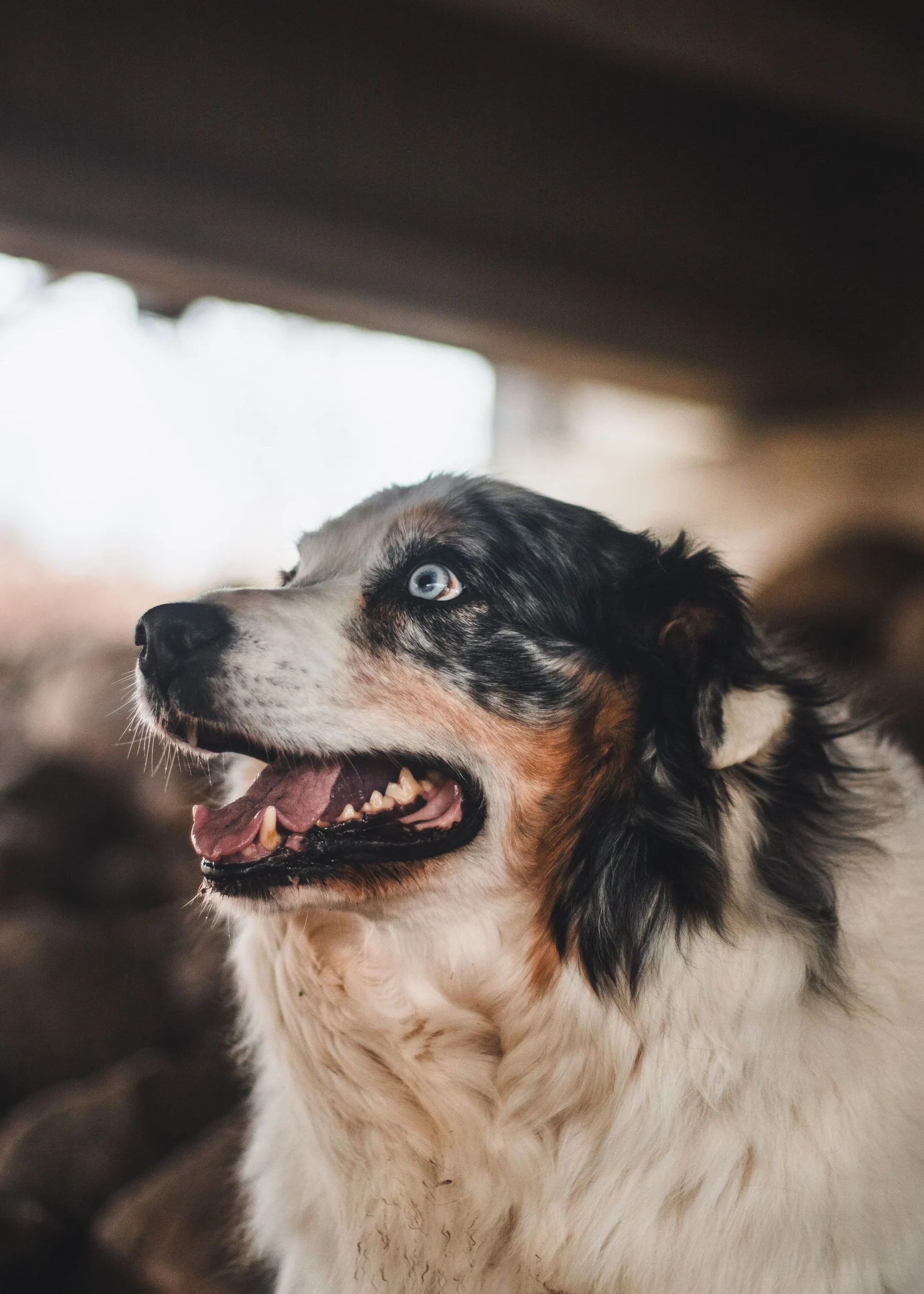
One story repeated in older accounts of Australian Shepherd history says that Native American people regarded dogs with unusual, often blue eyes with particular reverence and referred to them as “ghost-eyed” dogs.
It is an evocative part of Aussie folklore and has been repeated for many years. But memorable tradition and documented history are not always the same thing.
What is certainly true is that striking eyes and merle coats became highly recognisable features associated with the Australian Shepherd — though neither defines the breed by itself.
Explore Aussie coloursFrom working reputation to recognised breed.
The Aussie existed as a working and competitive breed long before every major kennel organisation formally recognised it. Recognition brought the breed into another chapter — one in which preserving function while defining conformation became an important conversation.
American Kennel Club recognition
The Australian Shepherd received full recognition from the American Kennel Club in 1993. Earlier resistance within parts of the breed community had included concern that an increased focus on the conformation ring could weaken the working qualities for which the Aussie had been developed.
Australian recognition
The breed was fully recognised in Australia by the Australian National Kennel Council on 1 January 1994, marking an important step in the Aussie's relatively modern establishment as a recognised breed in Australia.
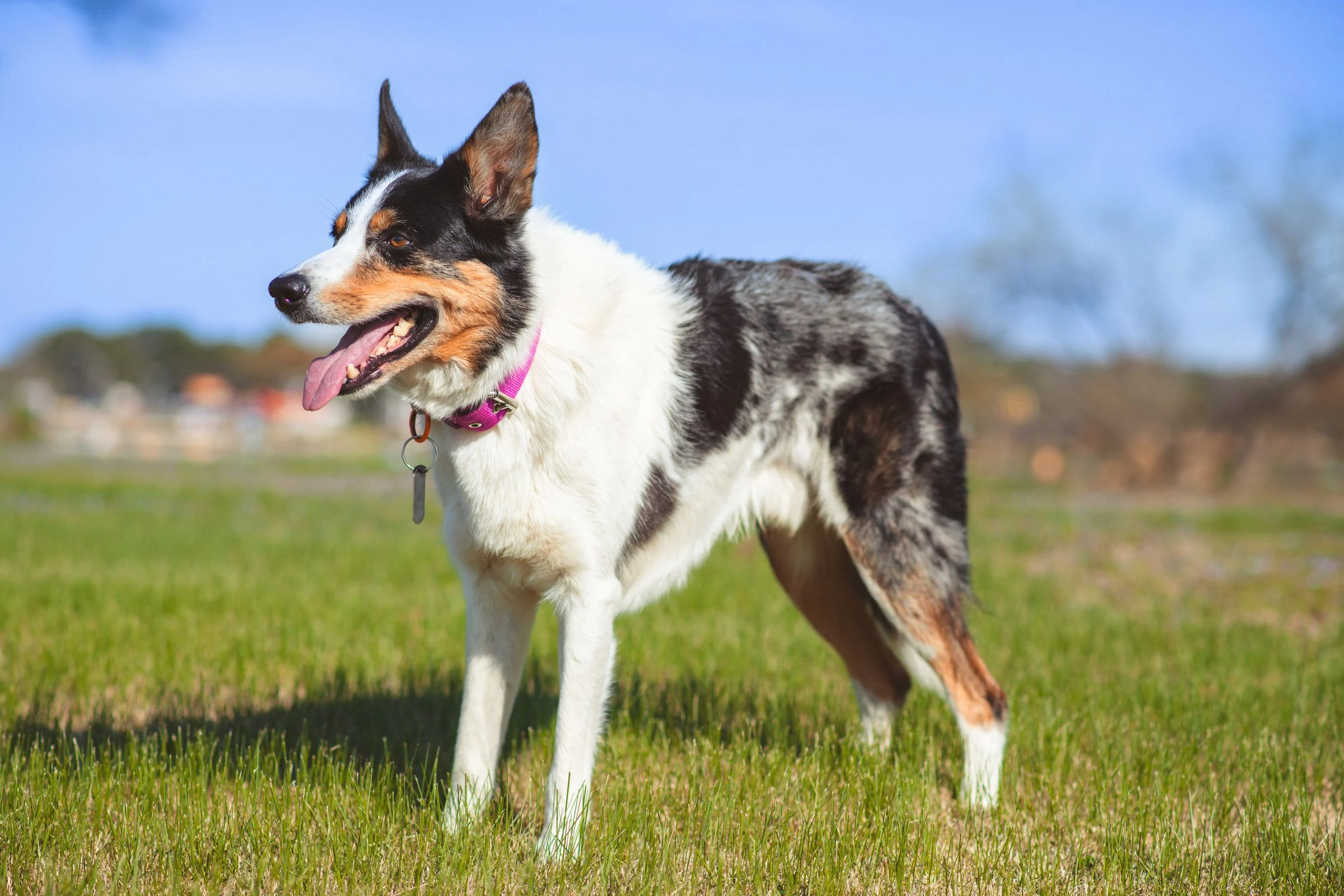
An Australian name. A surprisingly recent homecoming.
The Australian Shepherd's modern presence in Australia is comparatively recent.
In 1990, Shirley Ford emigrated from England with her family and four Australian Shepherds, helping establish the modern breed in Australia. Further imports followed, expanding the breeding population and introducing Aussies to more parts of the country.
By 1994 the breed had received full national recognition. From those early modern foundations, Australian Shepherds became increasingly visible across Australian dog sports, conformation and family homes.
There is an appealing historical circle here: a breed whose name had long suggested an Australian connection was now developing a formal community in Australia in its recognised, modern form.
Australian Aussie guidesThe job expanded. The versatility stayed.
Today's Australian Shepherd may work livestock, compete, accompany an active family or do several of those things at once. The settings have changed dramatically since the breed's ranching development, but versatility remains one of its defining themes.
Herding
The original purpose remains alive in working dogs, trials and breed instinct.
Dog sports
Aussies compete in agility, obedience, tracking, endurance and other disciplines.
Conformation
The show ring became another arena for the breed after formal recognition.
Companionship
For many Aussies today, the most important role is being an engaged family member.
History explains the dog in front of you.
Breed history matters because the past did not disappear when Aussies moved from ranches into modern homes.
Why they watch everything
Awareness of movement and environment made sense for a dog expected to manage livestock.
Why training matters
The breed was selected to cooperate with people. Giving that intelligence direction remains valuable.
Why movement can trigger behaviour
Chasing, circling and controlling movement make more sense through the breed's herding background.
Why partnership feels central
Aussies were developed around working with a person — a relationship still visible today.
Before the Aussie was a look, it was a working partner.
Continents changed. Jobs expanded. The breed entered show rings, sports and family homes. But intelligence, versatility and close cooperation with people remain the thread connecting the modern Australian Shepherd with the dogs that shaped its past.
Explore the breed