

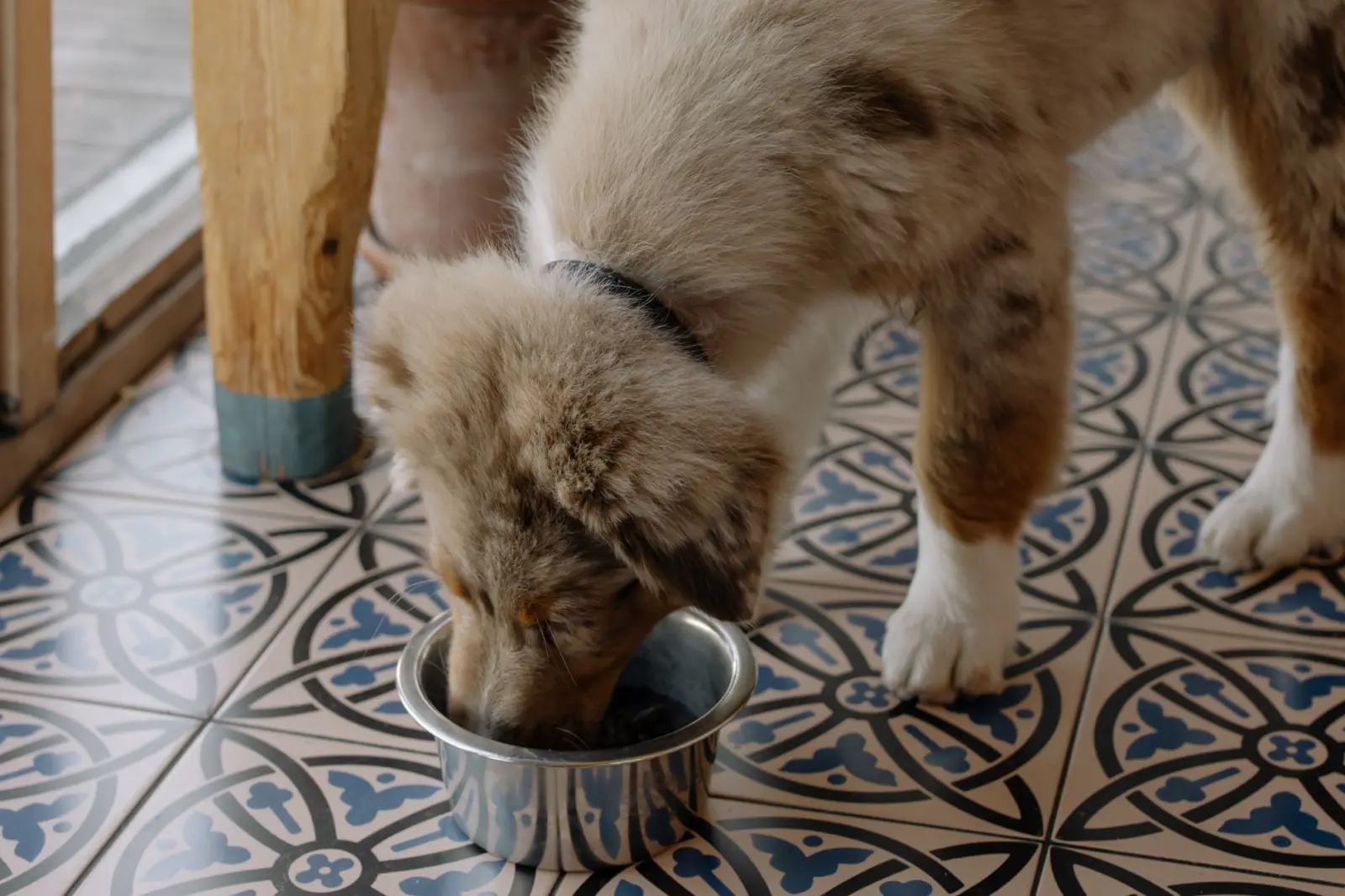
Australian Shepherd puppies grow fast, and their feeding needs change almost monthly during the first year. I’ve worked with enough of these dogs to recognize the patterns that lead to healthy development versus the problems that crop up when feeding isn’t dialed in properly. The breed has a reputation for high energy, but that doesn’t mean unlimited food or constant snacking. In fact, overfeeding is one of the most common mistakes I see, and it creates problems that linger well into adulthood.
The foundation of good feeding starts with understanding that Australian Shepherds are a medium-to-large breed with a moderate growth rate. They’re not as massive as Great Danes, but they’re not toy dogs either. This matters because growth plates close at different times depending on size, and feeding too much protein or calories too quickly can stress developing bones and joints. I’ve seen puppies that were fed like small dogs develop orthopedic issues by eighteen months simply because their owners didn’t adjust portions as they grew.
Portion Size and Frequency in the Early Months
From eight weeks to about three months, most Australian Shepherd puppies do well on four meals a day. The amount per meal depends on the food itself – a high-quality kibble is more nutrient-dense than a budget brand, so portions won’t be as large. I typically start with what the bag recommends for their current weight, then adjust based on what I observe. A puppy that finishes quickly and looks for more isn’t necessarily underfed. Puppies are enthusiastic eaters by nature. What matters is the body condition: you should be able to feel their ribs without pressing hard, and they should have a visible waist when viewed from above.
By three to four months, most puppies transition to three meals a day. This is where I start seeing variation in individual appetite. Some Australian Shepherds are naturally lean and eat less; others are more food-motivated. Neither is wrong, but it’s important to feed the individual dog, not just follow a chart. I’ve found that puppies fed on a consistent schedule tend to develop better digestion and more predictable bathroom habits, which makes house training easier. Feeding at the same times each day – morning, midday, and evening – works better than grazing or random feeding.
The Transition to Two Meals
Around six to seven months, most Australian Shepherd puppies can move to two meals a day. Some owners rush this transition, thinking their puppy is ready earlier, but I’ve noticed that puppies fed twice daily before six months sometimes develop digestive upset or become less interested in food. The timing matters. By six months, the puppy’s digestive system is more mature, and they can handle larger, less frequent meals without issues.
The total daily amount of food actually doesn’t increase dramatically at this point. What changes is the concentration per meal. A puppy eating three cups a day split into three meals is getting one cup per meal. When you move to two meals, that becomes 1.5 cups per meal. Some puppies notice the difference and seem hungrier, but this is usually psychological. Their calorie intake remains similar.
Protein, Fat, and Ingredient Considerations
Australian Shepherd puppies benefit from a food with moderate protein – somewhere between 22 and 26 percent is reasonable for large-breed puppies. Higher protein diets don’t hurt, but they’re not necessary and can contribute to faster growth, which isn’t ideal for joint development. Fat content should be around 12 to 15 percent. These numbers matter less than consistency. Switching foods frequently or trying multiple brands confuses the digestive system and often leads to loose stools.
I’ve worked with owners who rotate foods thinking it provides variety or prevents allergies, but this usually backfires. A puppy’s gut bacteria adapt to a specific food over time. Constant changes mean constant adaptation, which often manifests as digestive issues. If you need to change foods – because of availability, cost, or a genuine nutritional concern – do it gradually over seven to ten days, mixing increasing amounts of the new food with the old.
Grain-free diets became trendy, but I haven’t seen evidence that they’re superior for Australian Shepherd puppies. If a puppy has a genuine grain sensitivity, that’s different, but it’s rare. Most puppies do fine on foods that include grains. What I do pay attention to is the ingredient list: meat should be the first ingredient, and the food should be formulated specifically for large-breed puppies, not adult dogs.
Treats, Table Food, and Extras
Treats should make up no more than 10 percent of daily calories. I’ve seen puppies whose owners give them frequent training treats, dental chews, and table scraps without accounting for the total intake. The puppy ends up overweight or develops digestive issues from inconsistent nutrition. If you’re training heavily – which you should be with Australian Shepherds – use small, low-calorie treats or pieces of their regular kibble as rewards.
Table food is a complicated subject. A small piece of cooked chicken or carrot occasionally won’t hurt, but it’s easy to slip into a pattern where the puppy expects food from your plate. This creates behavioral issues and makes it harder to control their nutrition. I’ve found that puppies fed exclusively from their bowl develop better manners around food and are less likely to beg or steal.
Monitoring Growth and Adjusting as Needed
The best tool for assessing whether a puppy is fed correctly is your hands and eyes, not a scale. Weigh your puppy monthly if you want to track growth, but don’t obsess over the exact number. What matters is that they’re growing steadily without being overweight. A lean puppy at six months might look thin to someone unfamiliar with the breed, but that’s normal. Australian Shepherds shouldn’t have a barrel chest or a rounded belly as puppies.
Around twelve months, most Australian Shepherds are close to their adult size, though they may continue filling out until eighteen months. This is when you transition to adult food and can move to once-daily feeding if that works for your schedule, though twice daily is still fine. Some owners prefer sticking with two meals because it helps with digestion and behavior management.
One issue I’ve encountered repeatedly is owners assuming their puppy has a food allergy when the real problem is overfeeding or feeding a poor-quality food. Itchy skin, ear infections, or loose stools often resolve simply by switching to a better food and controlling portions. True allergies do happen, but they’re less common than people think. If you suspect a real issue, work with your vet rather than experimenting with elimination diets on your own.
Feeding an Australian Shepherd puppy well isn’t complicated, but it does require paying attention. The breed tends toward good health, and consistent, appropriate nutrition during the growth phase sets them up for a long, active life. What I’ve learned over years of working with these dogs is that the owners who succeed are the ones who treat feeding as a routine part of care, not something to overthink or constantly adjust.