
Australian Shepherds and frisbees seem like a natural pairing. The breed has the athleticism, the focus, and the prey drive that makes catching a disc appealing. But after working with dozens of these dogs over the years, I’ve found that the relationship between an Aussie and a frisbee is more complicated than just throwing and letting instinct take over. The dogs that excel at this activity are almost always the ones whose owners understood something fundamental about the breed first: Aussies need structure, not just stimulation.
What strikes me most when I watch an Australian Shepherd encounter a frisbee for the first time is how quickly they lock onto it. The visual tracking is almost preternatural. They’ll follow the disc through the air with an intensity that looks like they’ve been doing this their whole lives. But that intensity can work against you if you haven’t laid groundwork. A dog that’s too excited, too unfocused, or too prone to independent decision-making will chase the frisbee on their own terms, not yours. They’ll run past it, ignore your recalls, or decide that keeping the disc is more rewarding than bringing it back. This is where patience matters more than most people expect.
Starting Without the Disc
The dogs I’ve seen succeed at frisbee work almost always spent weeks or months on foundation before ever seeing a disc. That means solid recall, reliable sit-stays, and an understanding of what “drop it” actually means in a high-drive situation. An Aussie’s intelligence works both ways. They’re quick to learn what you want, but they’re equally quick to figure out loopholes. If you haven’t established that you control the reward – that bringing the toy back to you is more valuable than keeping it – you’re fighting against their nature rather than working with it.
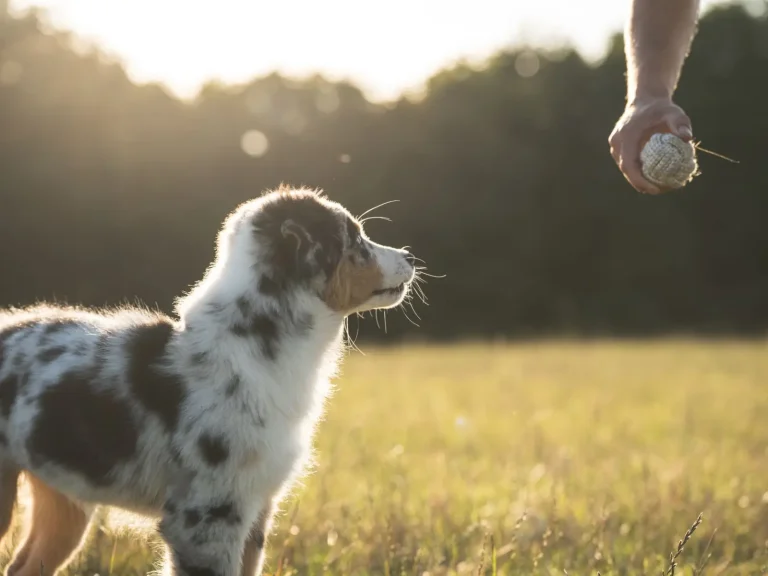
I typically start with a rope toy or a ball on a long line. The dog learns to chase, to come back on command, and to release on cue. This happens in a confined space, usually a fenced yard or a long line in an open field. The frisbee itself is almost incidental at this stage. What matters is the pattern: chase, return, release, reward. Repeat that cycle hundreds of times before introducing the disc. When you finally do throw a frisbee, the dog already understands the game isn’t about keeping the object – it’s about the interaction with you.
The Physical Reality of the Breed
Australian Shepherds are built for work, but they’re not built like Border Collies or Salukis. They’re stockier, more muscular, with shorter legs relative to their body length. This matters for frisbee work because it affects how they move through the air and how they land. An Aussie jumping for a disc is different from a Whippet or a Vizsla doing the same thing. They’re capable of impressive height, but the mechanics are different. Their center of gravity is lower. Their joints absorb impact differently.
I’ve seen injuries happen when people push young Aussies into frisbee work too early or too intensively. A dog that’s still growing – and Aussies don’t fully mature until around two years old – shouldn’t be doing explosive vertical jumps repeatedly. The growth plates in their legs are still closing. Ligaments are still developing. It’s not that they can’t jump or catch. It’s that the timing matters. A twelve-month-old Aussie might look physically mature, but their skeletal system isn’t ready for the repetitive impact of serious frisbee training.
Drive and Frustration
One pattern I notice consistently with this breed is how quickly frustration can build. An Aussie that misses a catch, that doesn’t understand why you’re not throwing the disc again, or that sees another dog catching discs will often escalate their behavior. They might nip at the air, chase you instead of the frisbee, or become fixated on the disc in a way that stops being playful. This is the moment where many handlers lose control of the situation. They either throw more discs to keep the dog happy or they get frustrated themselves, and the whole dynamic shifts.
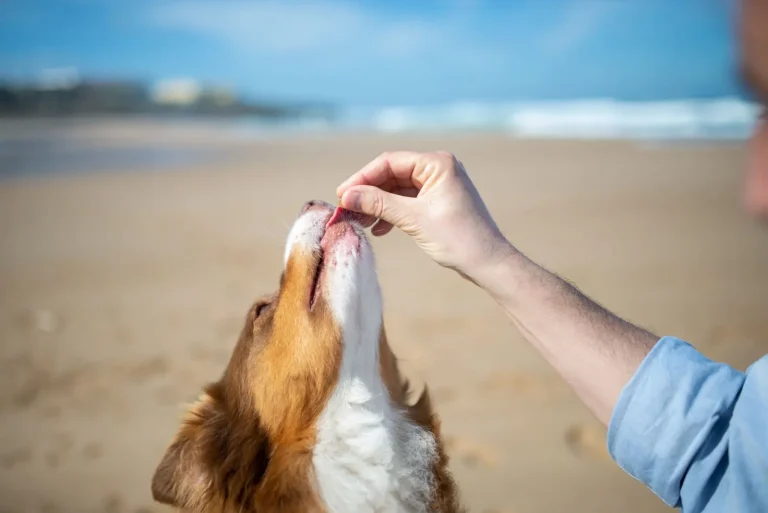
The dogs that handle frisbee work well are the ones whose handlers have learned to recognize that moment and step back. One throw, the dog catches it, you reward heavily, and you’re done for that session. That might be five minutes of work. It might be three throws. It doesn’t matter. What matters is that the dog ends on a good note, understands that the game has boundaries, and learns that restraint and focus are what earn access to the frisbee, not desperation or intensity.
Environmental Variables
I’ve trained Aussies in open fields, in parks, in backyards, and in formal disc dog venues. The environment changes everything about how the dog responds. A dog that’s reliable in your backyard might completely fall apart in a new location with distractions. Aussies are sensitive to environmental changes in ways that people often underestimate. A shift in the wind, another dog nearby, or unfamiliar terrain can disrupt their focus entirely.
Consistency in location during early training is worth more than variety. Pick a space where you can control variables, where the dog is comfortable, and where you can safely work on the fundamentals. Once the dog understands the game in that environment, then you can introduce new locations gradually. I’ve found that Aussies actually prefer routine. They like knowing where they’re going to work and what the expectations are. That predictability helps them focus on learning the task rather than processing the environment.
Weather affects things too. Heat is a real concern with this breed. Their coat is designed for temperature regulation, but during intense physical activity in warm weather, they can overheat quickly. I never push frisbee work during the hottest part of the day, and I always have water available. A dog that’s overheating isn’t learning anything. They’re just getting tired and potentially at risk.
The Relationship Between Handler and Dog
After years of watching this, I think the quality of frisbee work mirrors the quality of the relationship between the handler and the dog. An Aussie that trusts their handler, that respects their judgment, and that genuinely wants to work with them will engage with frisbee training in a fundamentally different way than a dog that’s just chasing because the handler threw something. The difference shows up in small things: the dog’s willingness to wait for the throw, their responsiveness to directional cues, their ability to focus despite distractions.
This is why I don’t think frisbee training is something you can separate from general training and handling. It’s an extension of everything else you’ve built with the dog. If your recall is shaky, it’ll be shaky during frisbee work. If your dog doesn’t respect your space or your boundaries in daily life, they won’t respect them when a disc is involved. The frisbee just makes those dynamics more visible because the stakes feel higher and the dog’s drive is fully activated.
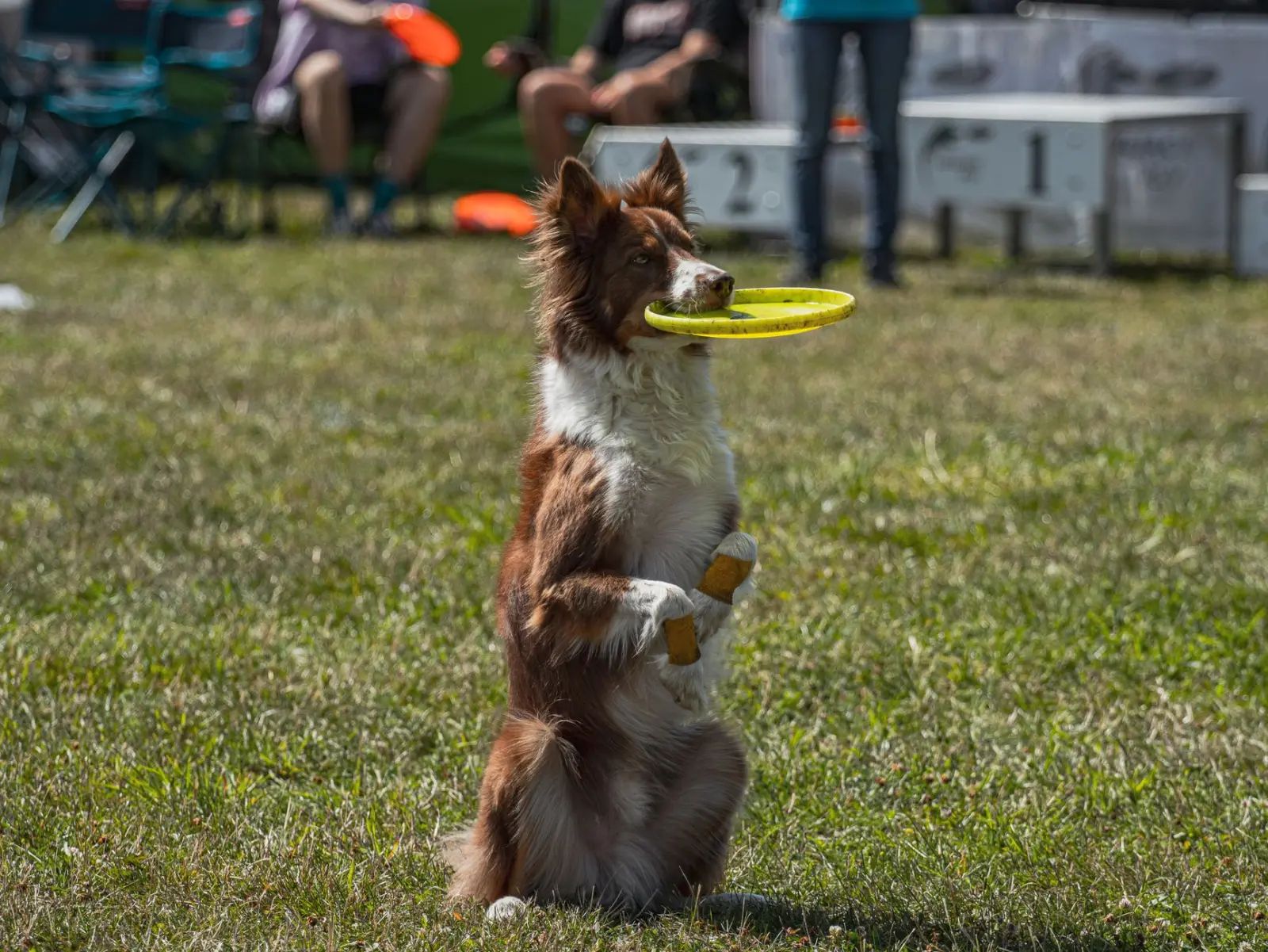
Australian Shepherds are capable of excellent frisbee work. I’ve seen them catch discs mid-air with precision, navigate complex field work, and maintain focus in competitive settings. But that capability emerges from months of groundwork, clear communication, physical maturity, and a handler who understands that the dog’s intelligence and drive need direction, not just outlets. The frisbee is just the tool. The real work happens in everything that comes before you ever throw it.