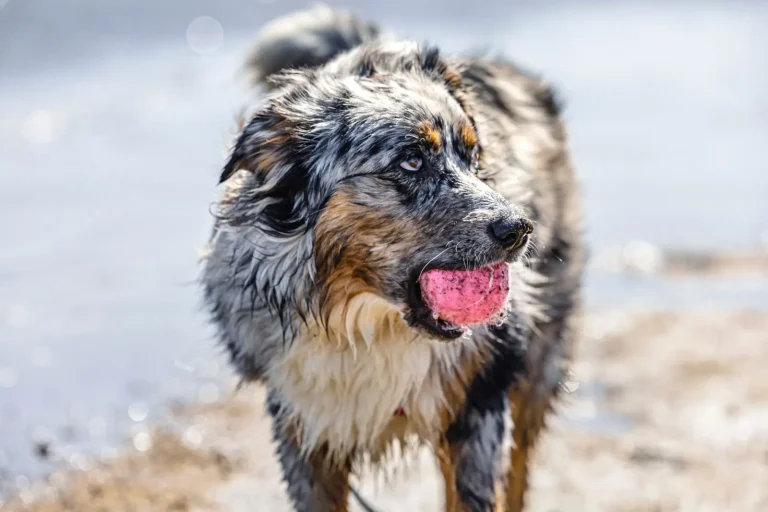

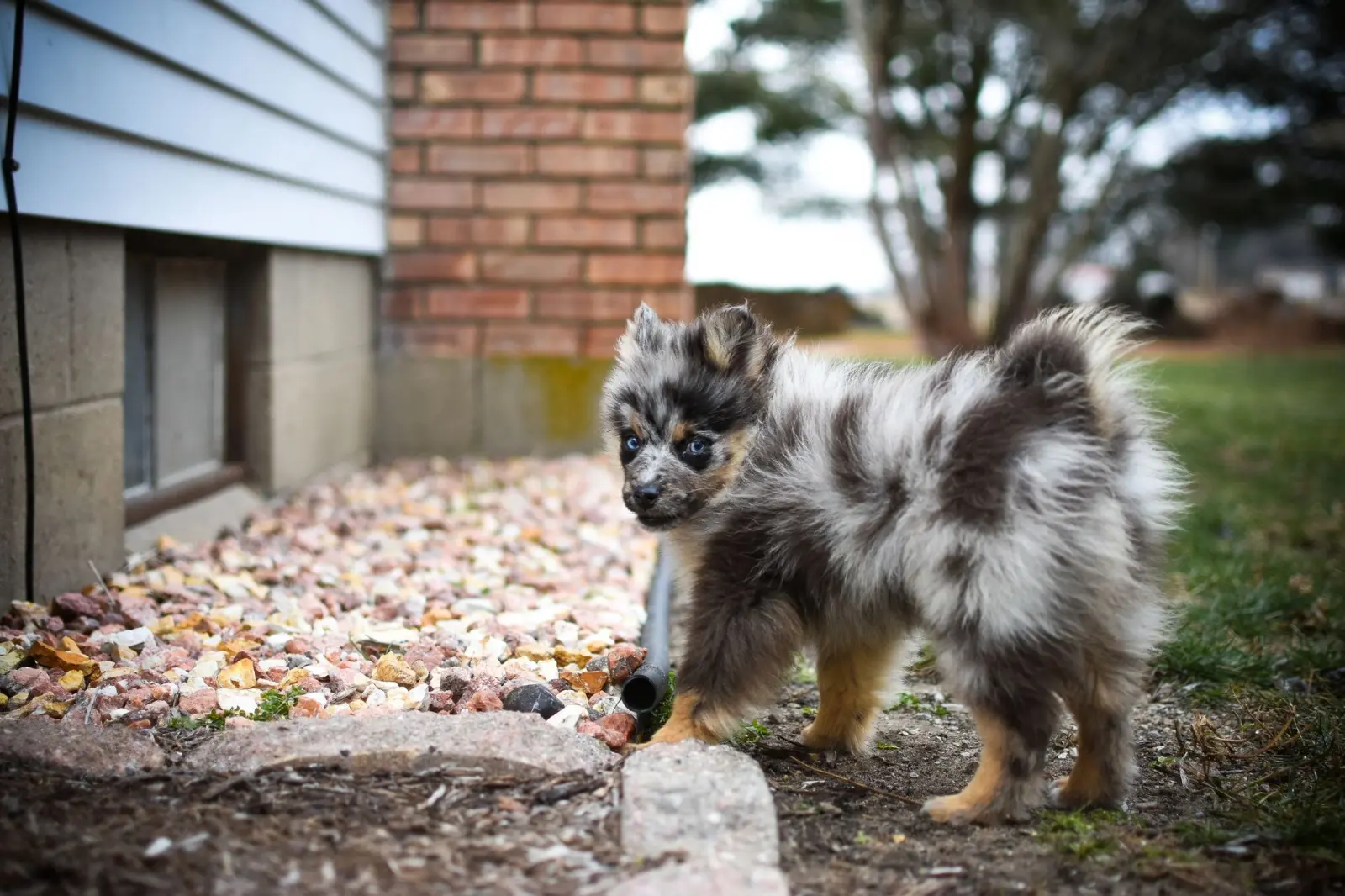
Australian Shepherds in a backyard without direction tend to create their own jobs, and those jobs are rarely what you want them to do. I’ve watched enough of these dogs develop obsessive behaviors – fence running, obsessive ball chasing, nipping at shadows – to recognize that a large yard alone solves nothing. What matters is what they actually do with that space.
The breed’s reputation as tireless workers is accurate, but it’s often misunderstood. These dogs were developed to move livestock across rough terrain for hours, making independent decisions about how to respond to changing conditions. That’s not the same as mindless exercise. A tired Australian Shepherd isn’t necessarily a satisfied one. You can wear them out physically and still have a dog that’s mentally restless, frustrated, or worse – bored in a way that manifests as destructive or obsessive behavior.
The backyard activities that actually work are the ones that engage both their body and their problem-solving capacity. This doesn’t require special equipment or elaborate setups. It requires understanding what these dogs are built to do and translating that into the space you have available.
Herding and Movement Patterns
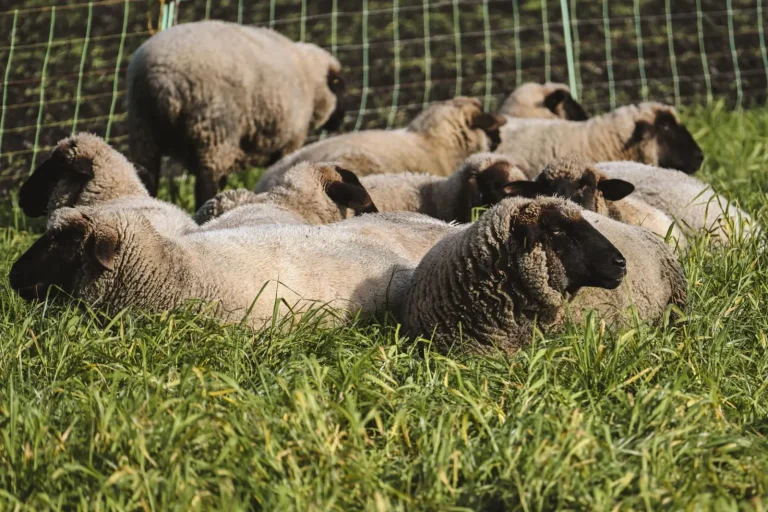
If you have the space and interest, actual herding work with sheep, ducks, or goats is the most direct match for what these dogs were bred to do. But most people don’t have livestock, and that’s fine. What matters is replicating the movement patterns and decision-making that herding demands.
Flirt poles – a rope with a lure attached to a pole – give Australian Shepherds a way to practice the chase-and-redirect sequences that are central to herding. Unlike fetch, which is a simple retrieve-and-return loop, a flirt pole requires the dog to track a moving target, anticipate direction changes, and adjust their body position. You control the lure’s movement, and the dog has to problem-solve how to catch it. Sessions of 10 to 15 minutes are usually enough; these dogs will work themselves hard and then need recovery time.
Tug games serve a similar function if you structure them properly. Australian Shepherds often have a strong grip drive, and tug allows them to use that without the frustration of a toy that’s just thrown and retrieved endlessly. The back-and-forth engagement, the resistance they feel, and the clear win when they get the toy all satisfy something deeper than simple exercise.
Scent Work and Foraging
Nose work is underrated with this breed. These dogs have good scenting ability, and more importantly, scent-based activities engage their brain in a way that running laps does not. Hide treats or toys around the yard and let them search. Start simple – visible hides in obvious spots – and gradually increase difficulty by hiding things under objects, in boxes, or in less obvious locations.
The work is self-paced, which matters. A dog can take as long as they need to solve the problem without the pressure of keeping up with a ball or a handler’s expectations. I’ve noticed that Australian Shepherds often seem calmer after scent work sessions than after fetch, even if the scent work took less time. The mental effort appears to satisfy something that pure running doesn’t.
Foraging setups – puzzle feeders, snuffle mats, or even just scattering kibble in grass – turn eating into an activity. This is especially useful on days when weather or schedule limits more intensive play. A dog spending 20 minutes searching for scattered food is engaged in a way that eating from a bowl never accomplishes.
Obstacle Navigation and Spatial Problem-Solving
Australian Shepherds are naturally agile and responsive to spatial challenges. You don’t need a formal agility course. Weaving through poles (even PVC pipes stuck in the ground), jumping low jumps, walking balance beams, or navigating tunnels all engage their coordination and their willingness to follow your direction through a sequence.
What makes this different from just running is that it requires attention to you and responsiveness to cues. The dog has to think about foot placement, timing, and what comes next. Even simple sequences – weave three poles, jump a low obstacle, weave back – create a mental and physical demand that’s more complete than fetch.
The key observation I’ve made is that Australian Shepherds seem to enjoy having a job to do more than they enjoy mindless activity. Obstacles and sequences give them a job. They’re not just burning energy; they’re accomplishing something specific.
Chase and Redirect Games
Structured chase games are different from letting a dog run freely. In a structured chase, you set boundaries, rules, and direction. You might have the dog chase you in a specific pattern, or you might play a version of tag where the dog has to catch you within a certain area.
These games satisfy the chase drive that Australian Shepherds have without the problems that come with unstructured chasing. A dog that’s allowed to chase anything that moves – shadows, leaves, other animals – can develop obsessive patterns. A dog that chases you on cue, in a defined space, with clear rules, is engaging in appropriate outlet for that drive.
The intensity and duration matter. Short, high-intensity bursts followed by calm time is more appropriate than extended running sessions. Australian Shepherds can overheat and exhaust themselves, and they don’t always know when to stop. Your job is to manage the activity so it’s satisfying but not excessive.
Training and Skill Work
Backyard training sessions – teaching new commands, refining existing ones, or working on specific behaviors – engage these dogs in a way that pure exercise doesn’t. Australian Shepherds are responsive to training and seem to find the mental engagement satisfying.
This doesn’t mean formal obedience classes, though those are fine. It means regular, short sessions where you’re asking the dog to think, respond, and problem-solve. Teaching them to navigate obstacles on cue, to wait at a distance, to follow directional cues, or to perform sequences all provide the kind of mental engagement that these dogs need.
The consistency matters more than the complexity. A dog that has a 10-minute training session three or four times a week is often more settled than one that gets one long play session and nothing else. The regular engagement, the predictability, and the mental demand all contribute to a more balanced dog.
What I’ve observed over years of working with this breed is that backyard activity works best when it matches their actual nature rather than fighting against it. These are dogs that were bred to work, to make decisions, to move with purpose. Activities that allow them to do those things – whether it’s herding, scent work, training, or structured games – tend to produce calmer, more satisfied dogs than activities that are purely about burning energy. The backyard is a tool for that engagement, not a substitute for understanding what the dog actually needs.