
Red Australian Shepherds stand out in a breed known for its striking visual diversity. Over years of working with these dogs, I’ve noticed that red coloring in Aussies generates more questions than almost any other aspect of their appearance. People often arrive with assumptions about what “red” means, or they’re uncertain whether their dog’s coat is developing normally. The reality is more nuanced than a simple color category.
The red coat in Australian Shepherds exists on a spectrum. What breeders and breed standards call “red” can range from a deep mahogany or liver tone to a lighter, almost copper-colored shade. This variation isn’t random – it’s determined by genetics, and it’s also influenced by age, sunlight exposure, and overall health. A puppy’s red coat often looks quite different from what it will be at two or three years old. The pigment deepens and settles, and sometimes the undertones shift in ways that surprise owners who’ve only known their dog as a younger animal.
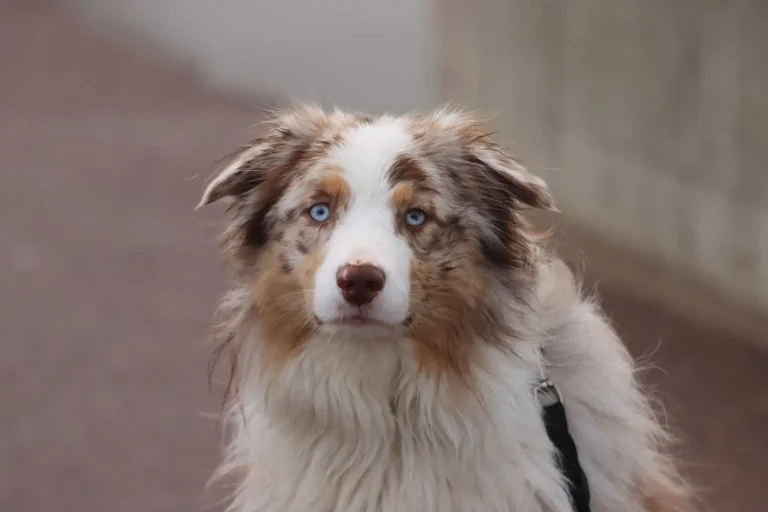
The Australian Shepherd breed standard recognizes red and red merle as legitimate coat colors, alongside black, black merle, and blue merle. Red dogs can appear solid, or they can carry the merle gene, which creates a mottled, marbled pattern across the coat. This is where things get visually interesting and genetically important. A red merle Aussie will have patches of lighter and darker red, often with gray or silver undertones mixed throughout. Some red merles are so heavily marked that they appear almost blue-gray in certain light, but they’re still classified as red merle because the base color is red rather than black.
Markings and White Patterns
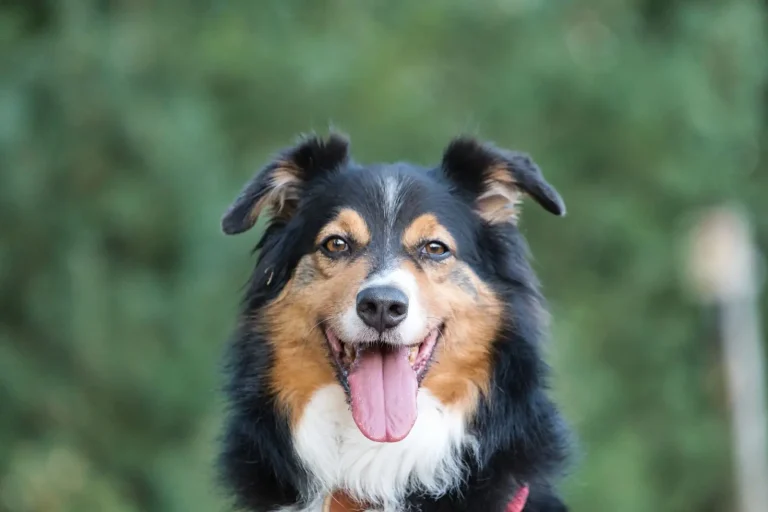
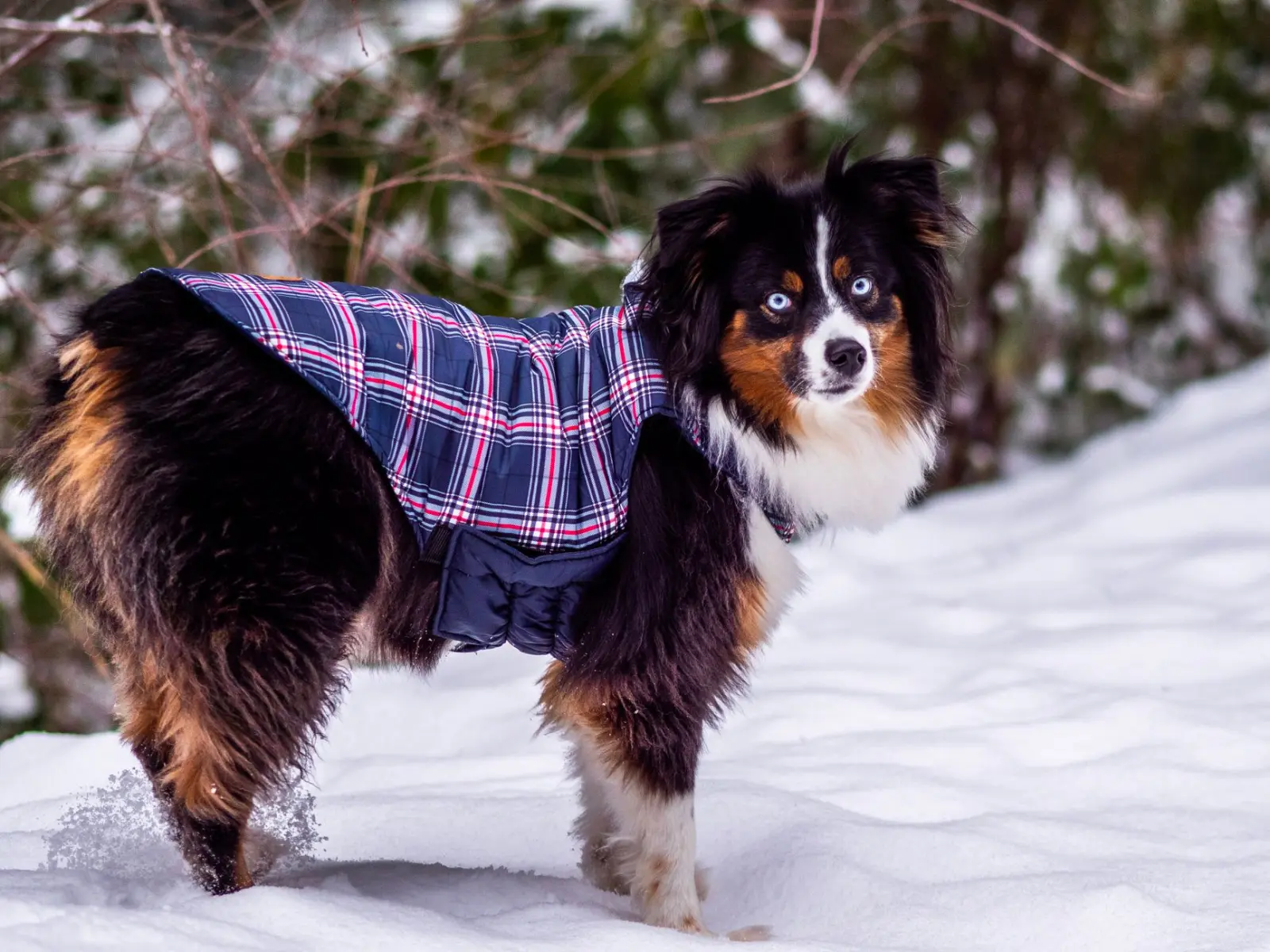
Beyond the base color, Australian Shepherds carry white and tan markings that are largely independent of whether they’re red or black. These markings follow their own genetic patterns. The most common configuration in red dogs includes white blazes on the face, white on the chest and neck, and white on the legs and paws. Tan or copper points often appear above the eyes, on the cheeks, and on the legs – these are sometimes called “eyebrows” and “stockings” in breed circles. A red Aussie might be solid red with minimal white, or predominantly white with red patches; both can be within breed standard depending on the specific markings.
I’ve worked with red Aussies that have almost no white at all, appearing nearly solid except for small tan points. Others are so heavily white that red is almost secondary, with large white patches on the body and face. The distribution of these colors doesn’t follow a predictable pattern in the way that, say, a Boxer’s brindle does. Two red Aussie parents can produce litters with vastly different marking patterns. This variability is one reason why breeders who care about consistency spend considerable time studying pedigrees and understanding which bloodlines tend to produce certain marking combinations.
Merle Patterns in Red Coats
The merle gene creates the most dramatic visual effects in red Australian Shepherds. When present, it breaks up the solid red color with patches of gray, silver, or darker red. The pattern is unique to each dog – no two merles look identical. Some red merles have very fine, intricate mottling that gives the coat an almost speckled appearance. Others have larger patches of color, creating a more obviously patterned look. The intensity of the merle effect can vary; some dogs show it prominently while others have a subtler version.
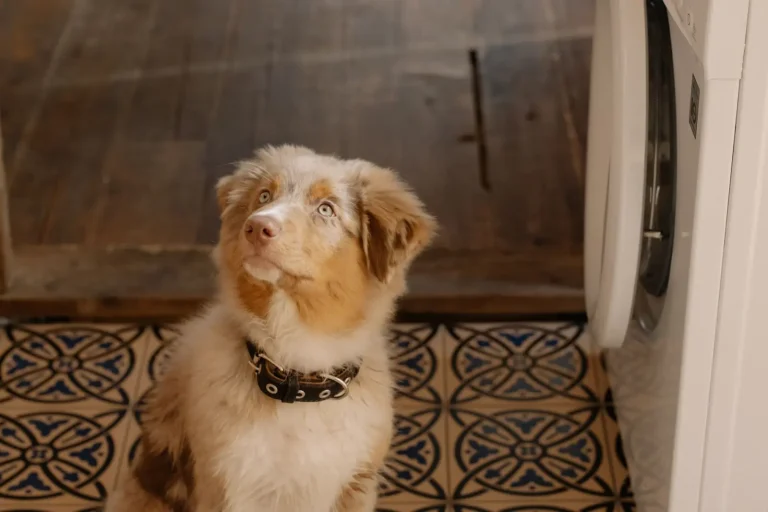
One thing that often catches people off guard is that merle patterns can change slightly over a dog’s lifetime. The mottling might become more pronounced as the dog matures, or certain patches might appear to shift in tone. This isn’t the coat changing color in the dramatic sense – the pigment itself remains stable – but rather the way light interacts with the hair and the way the pattern becomes more visible as the coat grows in fully. Puppies sometimes look almost solid red, and the merle pattern emerges more clearly as they develop.
The merle gene carries genetic considerations that responsible breeders take seriously. Two merle dogs bred together can produce double-merle offspring, which often come with vision and hearing problems. This is why ethical breeding practices involve careful selection, and why you’ll rarely see a reputable breeder intentionally pairing two merles. Understanding a dog’s genetic makeup matters not just for appearance but for health outcomes.
Coat Development and Color Changes
Australian Shepherd coats don’t reach their final appearance until the dog is at least two to three years old. A red puppy’s coat is typically lighter and softer than what you’ll see in an adult. The pigment deepens considerably during the first year, and the guard hairs that give the coat its characteristic texture and sheen come in more fully over time. I’ve seen red Aussies that looked almost orange as puppies darken to a rich mahogany by adulthood. This isn’t abnormal – it’s expected development.
Sun exposure plays a visible role in how red coats appear. Dogs that spend significant time outdoors in strong sunlight often develop lighter or more faded-looking coats compared to their littermates who spend more time indoors. This is particularly noticeable in red dogs; the sun bleaches the coat somewhat, creating a lighter, sometimes more golden appearance. It’s not a permanent change to the underlying pigment, but it’s real enough that show dogs and dogs being photographed for breeding records are sometimes kept out of intense sun to maintain coat color consistency.
Nutritional status also affects coat appearance. Dogs on suboptimal diets sometimes have duller, less vibrant coats. Red is a color that shows this particularly well – a well-nourished red Aussie’s coat has a glossy, rich appearance, while a dog lacking proper nutrition might have a coat that looks dull or washed out. This is one of the subtle ways that health manifests in appearance.
Breed Standard Considerations
For anyone involved in showing or breeding, understanding how red coats are evaluated matters. The breed standard emphasizes that color itself is secondary to structure and temperament, but within the red category, judges look for clarity of color and appropriate distribution of markings. A red dog should have distinct color definition – the red should be visibly red, not muddy or unclear. The merle pattern, when present, should be distinct enough to be recognizable as merle.
Disqualifying faults in red Aussies are rare but do exist. All-white dogs or dogs with excessive white that obscures the base color can be penalized. Dogs with very poor pigmentation or color that’s so faded it’s indistinct might also be viewed unfavorably in a show context. These standards exist to maintain the breed’s visual identity and to encourage breeders to select for clarity and health rather than extreme or unusual appearances.
Working with red Australian Shepherds over time, I’ve come to appreciate that their coat color is far more complex than it initially appears. The genetics underlying red pigmentation, the merle patterns, the white markings, and the way all of these develop and change across a dog’s lifetime create a rich visual landscape. Understanding these patterns helps explain why two red Aussies can look remarkably different, and why a dog’s appearance at six months might be quite unlike what you see at three years old. It’s one of the aspects of the breed that rewards close observation.