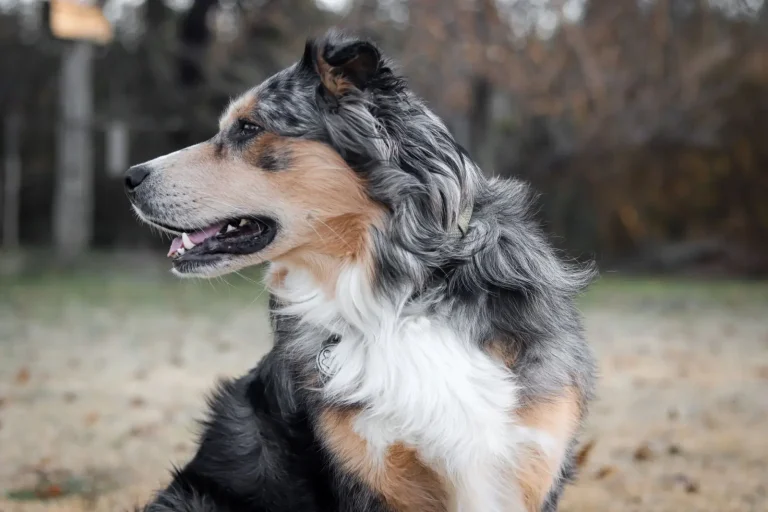

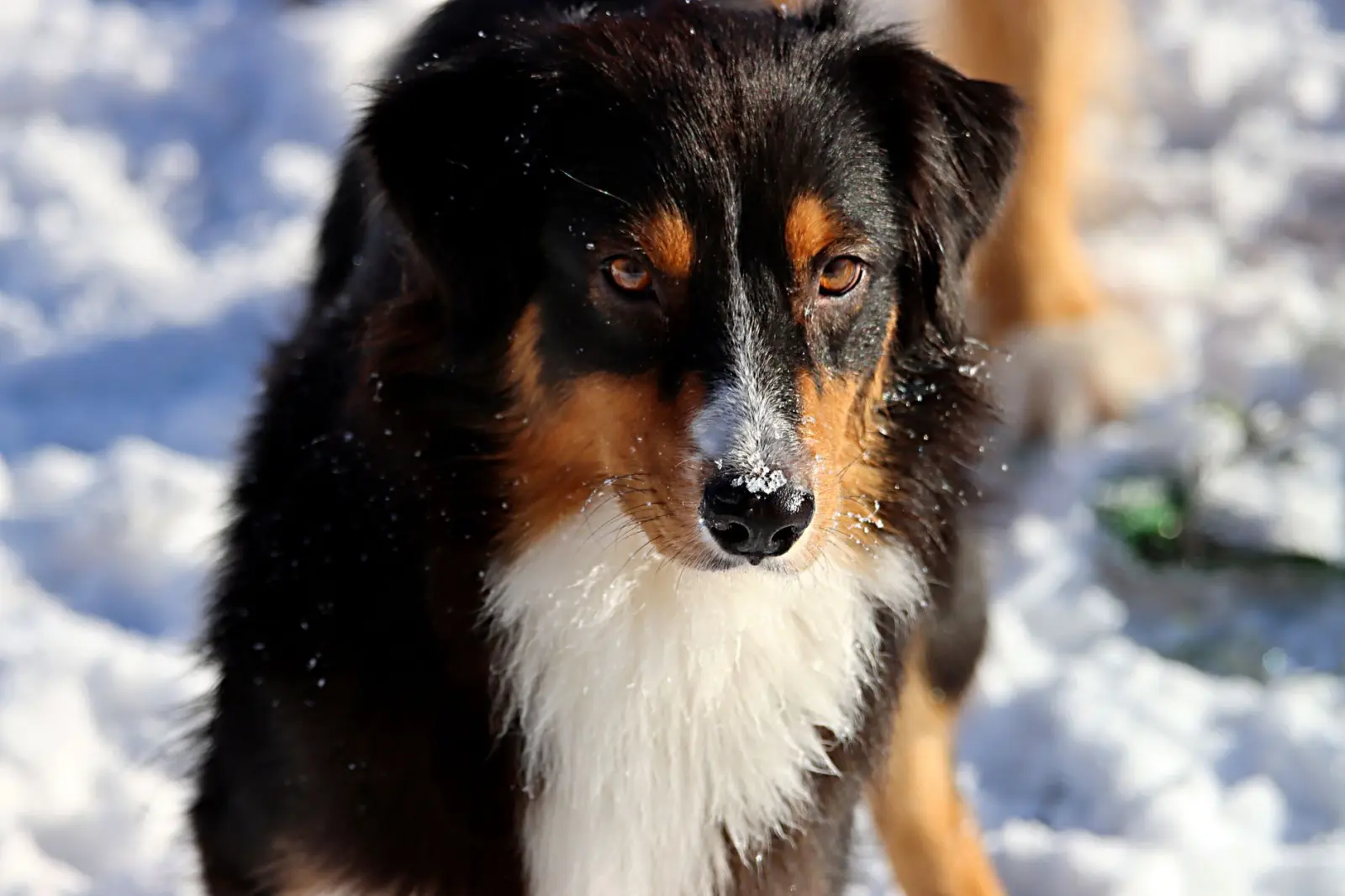
Black Australian Shepherds are striking dogs, but the term “black” covers far more variation than most people realize when they first encounter the breed. I’ve worked with dozens of these dogs over the years, and the coat color and pattern differences are one of the first things that catches your attention once you start paying attention to the details. What looks uniformly dark from across a room often reveals itself as a complex interplay of base color, markings, and texture the moment you’re working with the dog up close.
The foundation color in a black Australian Shepherd is typically a deep, rich black that extends across the back, sides, and upper body. This isn’t always a pure jet black, though. Many dogs carry what breeders call “blue merle” genetics even when they appear solid black, and the actual pigment can range from true black to a very dark brown that reads as black in most lighting. The variation happens at the genetic level, and it’s one reason why two black Aussies from different lines can look noticeably different in their base coat color.
The real story of a black Australian Shepherd’s appearance lies in the markings. Tan or copper points are the most common secondary color, appearing above the eyes, on the cheeks, inside the ears, on the chest, and down the legs. These markings aren’t random. They follow a predictable pattern that’s been consistent across the breed for decades. Some dogs have very crisp, well-defined tan patches, while others have more diffuse or lighter coloring in these areas. The intensity of the tan seems to vary independently of the base black color, and I’ve seen littermates with identical black base coats display quite different tan coloration.
White markings add another layer to the coat pattern. A blaze down the face, white on the chest, white socks on the feet, and a white tip on the tail are all common in black Aussies. Some dogs have extensive white – a full white collar, for instance – while others have minimal white. The breed standard allows for considerable variation here, and it doesn’t affect the dog’s working ability or health in any meaningful way. What matters more is that the white markings don’t obscure the dog’s expression or create patches that make the dog harder to see in certain lighting conditions.
Coat Texture and How It Affects Appearance
The actual texture of the coat plays a significant role in how the color and markings appear. Australian Shepherds have a double coat, and the length and density of both layers influence how light reflects off the fur and how the colors read to the eye. A dog with a thick, well-developed undercoat will appear darker and more saturated in color than a dog with a thinner coat, even if the guard hairs are identical in pigment. The undercoat is often lighter than the guard hairs, and when it’s visible through a thinner outer coat, it can make the dog look grizzled or less purely black.
Feathering on the legs, chest, and tail also affects the visual presentation of the markings. Dogs with longer feathering can appear to have more extensive white markings simply because the longer hair shows off the white coloring more prominently. The same dog with a shorter, tighter coat might look like it has less white. This is purely visual; the actual extent of the white doesn’t change, but how you perceive it does.
Variation Within the Black Coloring
One thing that surprises people who haven’t spent much time around the breed is how much the black itself can vary. Some black Aussies have a coat that looks almost blue-black in certain light, with a silvery sheen that suggests merle genetics even though the dog is registered as solid black. Others have a warm, almost brownish-black tone. This variation comes down to the specific genes the dog inherited for pigment production, and it’s completely normal. Neither is better or worse; they’re just different expressions of the black coloring.
The undercoat color also varies. In some dogs, the undercoat is nearly as dark as the guard hairs. In others, it’s noticeably lighter, ranging from gray to tan. When you brush a black Aussie and see the undercoat, you might be surprised at how much lighter it is than the surface color. This is expected and healthy. The lighter undercoat doesn’t indicate any problem with pigmentation or health.
Age and Seasonal Changes
Black Australian Shepherds don’t typically fade dramatically as they age, but subtle changes do occur. A young dog’s coat often appears darker and more vibrant than an older dog’s coat. By the time a dog reaches senior years, the black may have taken on a slightly grayer or duller appearance. This is normal aging of the coat and doesn’t indicate any health issue. The tan markings can also lighten somewhat with age, becoming less saturated than they were in the dog’s prime.
Seasonal coat blowing also affects how the colors appear. During heavy shedding periods, the coat can look thinner and less vibrant as the old coat comes out and the new coat grows in. Once the new coat is fully developed, the color depth and richness return. This cycle happens roughly twice a year in most Australian Shepherds, and it’s one reason why a dog’s appearance can shift noticeably from season to season.
Grooming and maintenance practices also influence how the coat color appears. A well-maintained coat that’s brushed regularly and bathed appropriately will look richer and more saturated than a neglected coat. Mats and tangles trap dirt and can make the coat look dull. Regular brushing removes loose undercoat and keeps the guard hairs lying smoothly, which affects how light reflects off the coat and how vibrant the colors appear to the eye.
The black coat and markings of an Australian Shepherd are part of what makes the breed visually distinctive, but they’re also just one aspect of the dog’s overall health and function. What matters most is that the dog has a healthy, dense double coat with good pigmentation. The exact shade of black, the intensity of the tan points, or the distribution of white markings are cosmetic variations that fall well within normal range. Understanding these variations helps you appreciate the diversity within the breed and recognize that two black Australian Shepherds can look quite different while both being perfectly typical examples of their breed.