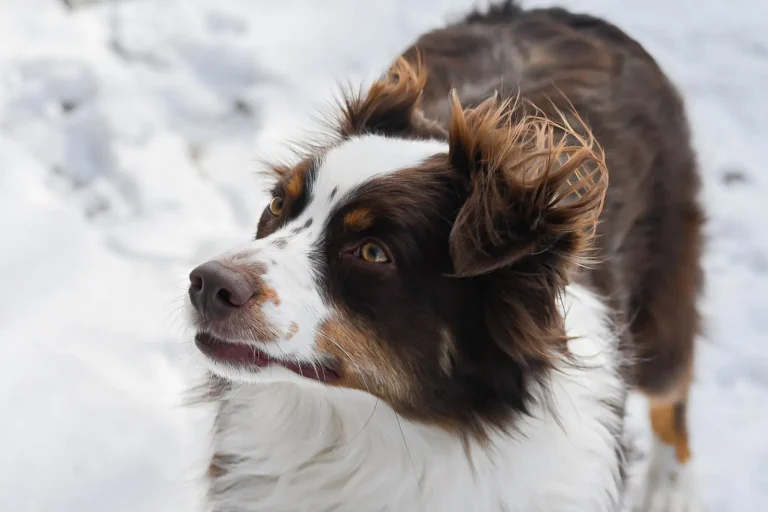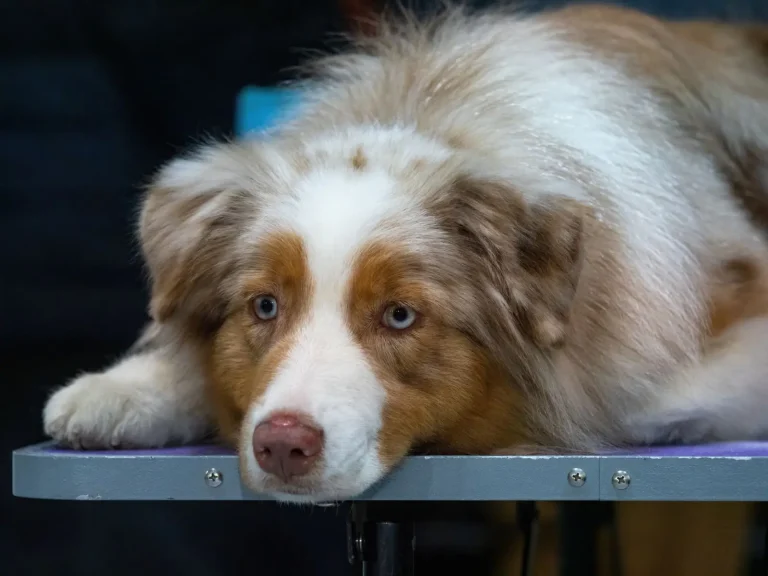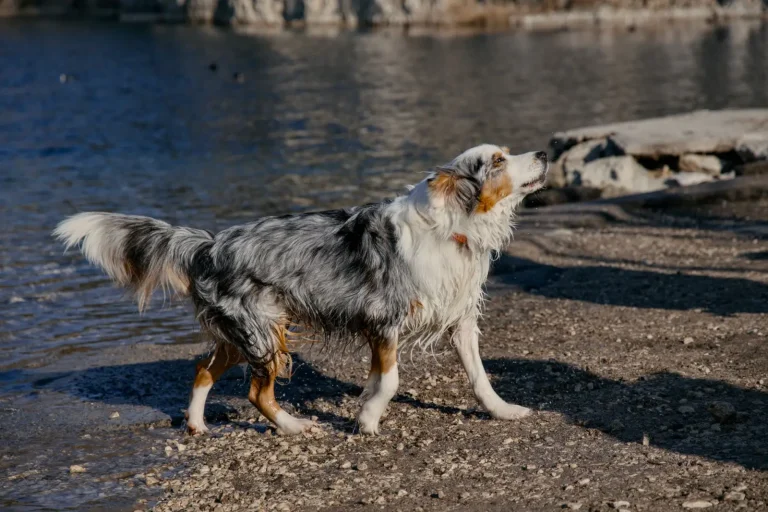

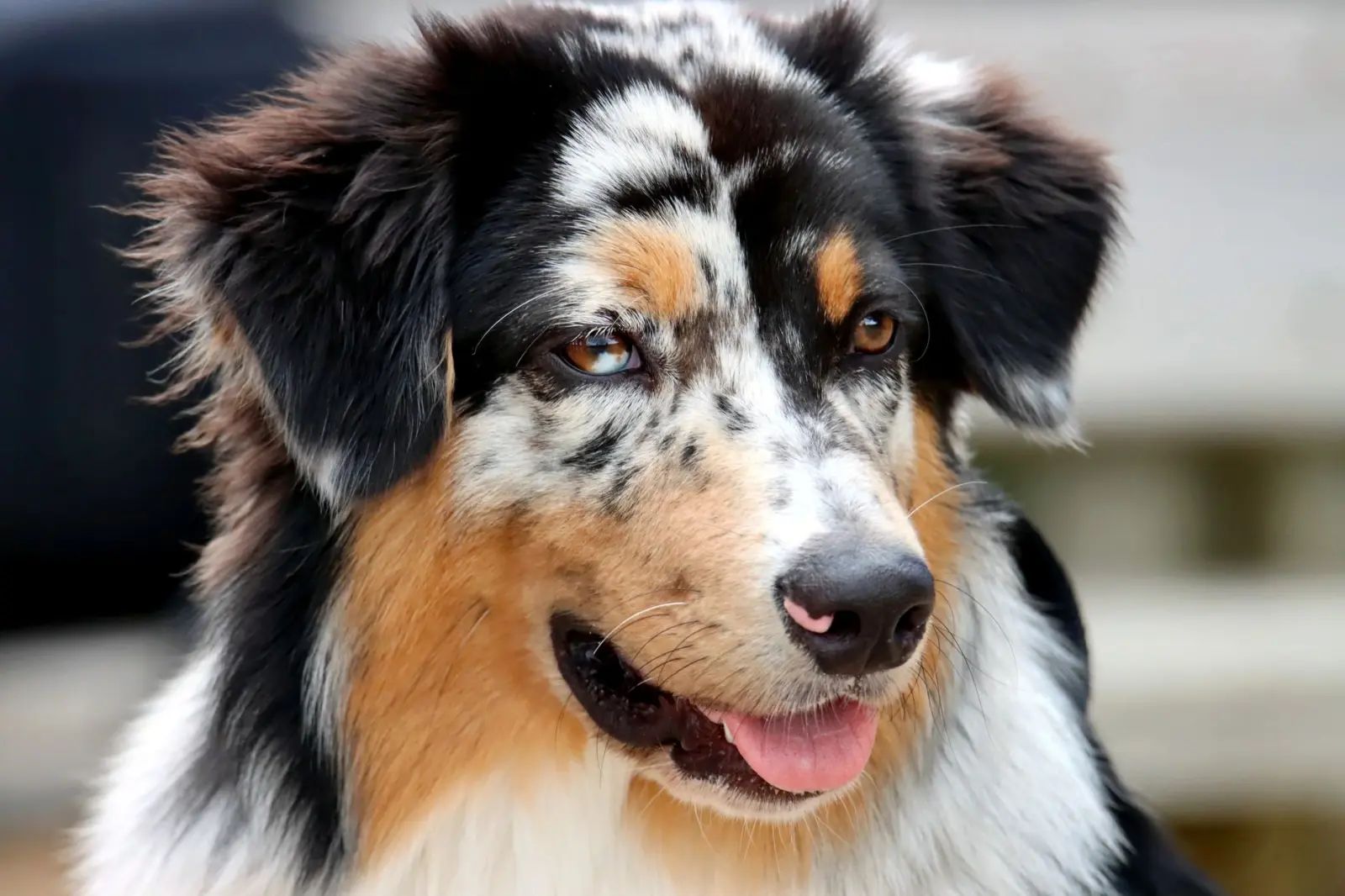
Australian Shepherds herd people because it’s what they were bred to do. This isn’t a quirk or a learned habit picked up from watching sheep on a farm. It’s a deeply embedded instinct that shows up in their daily interactions with family members, and once you’ve lived with one, you start noticing it everywhere.
I’ve worked with dozens of these dogs over the years, and the herding behavior toward humans is remarkably consistent across individuals. A young Aussie in an apartment will display the same impulses as one working on a ranch. The environment changes, but the drive remains. What varies is how obvious it becomes and how much it affects the household dynamic.
The behavior stems from their original purpose. Australian Shepherds were developed to move and control livestock across open terrain, often independently and without constant handler direction. That work required quick decision-making, intense focus, and the ability to anticipate movement. When you remove the sheep but keep the dog, that instinct doesn’t simply disappear. It redirects toward whatever moving targets are available, which in a home setting means family members.
How herding manifests with people
The most obvious sign is nipping at heels or ankles, particularly when someone is walking away or moving quickly. An Aussie may circle around a person, position themselves in their path, or make sudden directional movements designed to redirect movement. Some owners describe it as the dog trying to “cut” family members the way it would cut livestock. This is textbook herding behavior, just applied to humans instead of cattle.
What’s less obvious but equally telling is the constant monitoring. Many Australian Shepherds will track family members visually as they move through the house. They’ll position themselves strategically – at doorways, in hallways, or in spots where they can see multiple rooms. This isn’t protective behavior in the traditional sense. It’s a herding dog maintaining awareness of where the “herd” is positioned. Some owners interpret this as neediness or separation anxiety, but it’s often just the dog doing what its breed was designed to do: keeping tabs on movement.
Eye contact and staring are another component. Australian Shepherds use intense, focused eye contact to control livestock movement. That same stare appears when they’re watching family members. A dog might fix its gaze on someone moving toward the door, or watch intently as a child runs across the yard. It looks like the dog is concentrating hard, and in a sense it is – it’s assessing movement patterns and anticipating what comes next.
Why some dogs show it more than others
Not every Australian Shepherd displays herding behavior with equal intensity. Some are more subtle about it, while others are relentless. The difference often comes down to individual temperament and how much the behavior has been reinforced or redirected over time.
A dog that has been consistently redirected away from herding people – through training, exercise, and engagement with appropriate outlets – will show less of it. But even well-trained Aussies retain the instinct. They simply learn to channel it elsewhere or control the impulse in certain contexts. A dog that has never received clear boundaries about herding family members may become increasingly persistent, especially if the behavior has occasionally “worked” (someone moved in the direction the dog was pushing them).
Age plays a role too. Younger dogs, particularly adolescents, tend to display herding behavior more openly and with less impulse control. As they mature, some dogs become more selective about when they herd, though the instinct never truly goes away. An older Australian Shepherd might herd occasionally during high-energy moments but remain calm during routine daily life.
Exercise and mental stimulation also affect how much herding behavior shows up. A dog that has had adequate physical and mental engagement tends to display fewer herding impulses toward family members. This isn’t because the instinct has been eliminated – it’s because the dog has had legitimate outlets for that drive. A dog that hasn’t had enough stimulation may become more persistent about herding people, almost as if looking for something to do.
The role of genetics and early experience
Some Australian Shepherds come from lines with particularly strong herding drives. Breeders who select for working ability tend to produce dogs with intense, focused instincts. Dogs from show lines or companion-focused breeders may have somewhat lower herding intensity, though the behavior still appears. Genetics load the gun, but environment and experience determine how often it fires.
Early socialization and exposure matter as well. A puppy raised around children and taught appropriate behavior will generally display herding impulses differently than a dog raised in isolation. But again, this doesn’t eliminate the behavior. It shapes how it’s expressed and how readily the dog engages in it.
Living with the behavior
Understanding that herding people is not disobedience or anxiety is important for owners. The dog isn’t being stubborn or difficult when it circles a family member or nips at ankles. It’s expressing a fundamental part of its nature. This distinction matters because it changes how you respond to the behavior.
Effective management typically involves redirection rather than punishment. When a dog begins herding, channeling that energy into appropriate activities – fetch, agility work, or structured play – gives the instinct an outlet. Some owners use herding balls or other toys designed to satisfy the herding drive. Others find that regular, intense exercise reduces how often the behavior appears in daily life.
Training can teach an Australian Shepherd to inhibit herding behavior in specific contexts, such as during family mealtimes or when guests are present. But the underlying drive remains. A well-trained Aussie may stop herding on command, but it will still be monitoring movement and maintaining that characteristic intense focus.
For families with young children, the herding behavior can become problematic. A dog nipping at a toddler’s heels or cutting off their movement creates safety concerns. In these cases, management becomes more active – keeping the dog and small children separated during high-energy times, providing consistent training, and ensuring the dog has adequate outlets for its herding instinct.
Australian Shepherds are excellent family dogs, but they come with specific behavioral expectations rooted in their working heritage. Recognizing herding behavior for what it is – not a flaw, but a breed characteristic – allows owners to work with the dog’s nature rather than against it. The behavior doesn’t disappear, but it can be shaped, redirected, and managed in ways that work for the household.