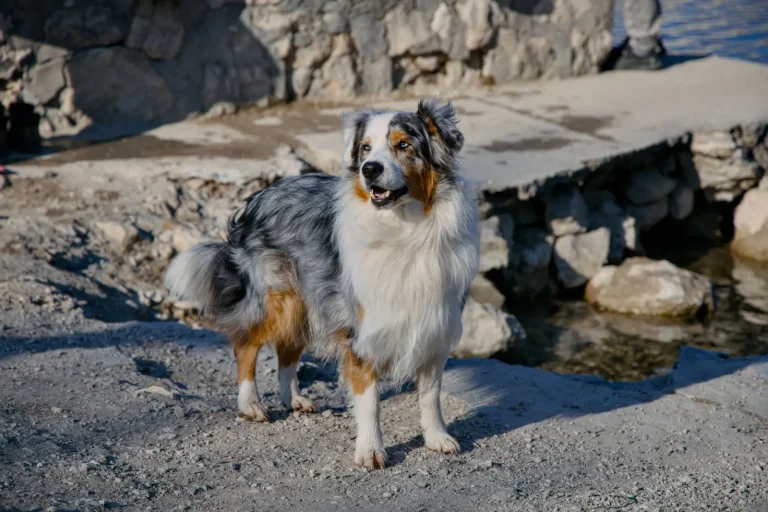

I’ve spent enough time on the road with Australian Shepherds to know that their reputation for high energy is not exaggerated. These dogs don’t simply tolerate travel – they experience it intensely. The moment the car door opens, they’re scanning the environment, processing movement, and mentally cataloging everything. This trait makes them both rewarding and demanding travel companions. What works for a laid-back breed often fails spectacularly with an Aussie, and what seems like a simple road trip can become complicated if you haven’t anticipated how their mind and body respond to hours confined in a vehicle.
The first thing to understand is that an Australian Shepherd in a car is not the same dog you have at home. Confinement changes their behavior. Some become anxious. Others develop a kind of restless hypervigilance, constantly shifting position, whining, or fixating on windows. A few remain calm, but those tend to be the exception rather than the rule. The difference usually comes down to prior conditioning and individual temperament, but also – and this is often overlooked – the dog’s physical and mental state before the trip even begins.
Pre-Trip Conditioning Matters More Than You’d Think
Starting short drives weeks before a long trip isn’t busywork. Australian Shepherds are pattern-sensitive dogs. They notice when something is different, and they need time to build positive associations with being in the car for extended periods. I’ve seen dogs that were fine for fifteen-minute drives become genuinely distressed on a three-hour journey simply because the duration broke their expectation of what “car time” meant.
The conditioning works best when it’s low-pressure. Short drives to neutral locations – not just the vet clinic – help. A ten-minute drive to a park, then back home. Another day, twenty minutes to a quiet area where you can get out and walk. The goal is teaching the dog that the car is a normal part of the day, not an aberration. Australian Shepherds respond well to routine, and establishing that the car is part of the routine removes a layer of uncertainty that often translates to anxiety or misbehavior.
Vehicle Setup: Containment Without Restriction
How you set up the car matters significantly. A loose dog in a moving vehicle is dangerous for everyone, but an overly confined dog becomes stressed. I’ve found that a well-fitted barrier or crate in the back works better than loose roaming. The dog needs to see out – Australian Shepherds are visually driven – but they also need boundaries. A crate with a window view, or a barrier that allows them to see forward, keeps them oriented without the distraction overload of unrestricted sightlines.
Ventilation is non-negotiable. Even with air conditioning running, a dog in the back of a car can overheat faster than you’d expect, especially during stops. I always ensure there’s adequate airflow and never leave the car unattended with the dog inside, regardless of temperature. Tinted windows help reduce glare and heat buildup, and they also seem to reduce the stimulation some dogs experience from constant visual input.
The surface matters too. A non-slip mat or towel prevents the dog from sliding during turns and braking, which causes unnecessary stress and can lead to injury. Australian Shepherds have decent muscle control, but the constant micro-adjustments needed to stay stable in a moving vehicle are fatiguing. A stable surface lets them rest more genuinely.
Exercise and the Exhaustion Misconception
There’s a common belief that you should exhaust an Australian Shepherd before a long drive so they’ll sleep. This is partially true and partially problematic. A dog that’s moderately exercised tends to settle better than one that’s completely fresh, but an over-exercised dog becomes stressed rather than calm. The difference is subtle but real. An exhausted dog is often an anxious dog – their nervous system is already taxed, and confinement adds to that load.
What works better is a structured walk or play session an hour or two before departure. Not a sprint. A purposeful walk with some mental engagement – letting them sniff, navigate terrain, maybe a short training session. This satisfies their need for activity without pushing them into an overtired state. During the drive itself, they’ll likely rest more genuinely because their immediate needs have been met, not because they’re too depleted to stay awake.
Stops during the drive are equally important. Every two to three hours, a fifteen-minute break where the dog can get out, move around, and eliminate is essential. This isn’t just about bathroom needs. It’s about allowing them to reset their nervous system. An Australian Shepherd that’s been sitting for four hours straight will be noticeably more anxious and reactive than one that’s had regular movement breaks.
Behavioral Patterns on Long Drives
Australian Shepherds often develop specific behaviors during travel that aren’t necessarily signs of distress but rather ways of coping with the situation. Panting, pacing within their confined space, whining, or fixating on windows are common. Some dogs become vocal – not aggressive, just talkative. Others develop a kind of repetitive behavior, like repeatedly shifting position or pawing at the crate.
These behaviors usually diminish with experience and proper conditioning, but they don’t always disappear entirely. I’ve worked with dogs that settled significantly after three or four long trips but still showed minor anxiety signals. That’s normal. The goal isn’t necessarily to eliminate all signs of stress but to manage them and ensure they don’t escalate into genuine behavioral problems like aggression, destructiveness, or panic.
Medication is sometimes necessary, particularly for dogs with genuine anxiety. A conversation with your veterinarian before the trip can clarify whether your dog might benefit from something like trazodone or acepromazine. This isn’t about sedating the dog into submission – it’s about taking the edge off so they can actually rest rather than spend eight hours in a state of low-level panic.
Practical Considerations for Multi-Day Trips
If you’re traveling for more than a day, the dog’s routine becomes even more important. Australian Shepherds thrive on consistency. Feeding times, walk times, and sleep patterns matter. A dog that normally eats at 7 AM and gets a walk at 6 PM will be noticeably more settled if you maintain that schedule, even while traveling. It’s one of the few things in their environment that remains predictable.
Accommodation matters too. A hotel room or rental where the dog has space to move around is significantly better than keeping them confined to a small space all evening. Some dogs will settle in an unfamiliar room if they’ve had adequate exercise and mental stimulation during the day. Others remain alert and restless. Knowing your dog’s temperament helps you choose accommodations accordingly.
Water access during the drive should be available but managed. A dog that drinks constantly while moving will need frequent bathroom breaks, which can become impractical on a long stretch of highway. Offering water at stops rather than continuously is usually more practical. Similarly, feeding during travel isn’t ideal – a dog with a full stomach is more prone to motion sickness and digestive upset.
The reality of traveling with an Australian Shepherd is that it requires more planning and attention than traveling with many other breeds. Their intelligence and sensitivity mean they notice everything, and their energy means they can’t simply be ignored during the journey. But that same intelligence also means they’re capable of learning to travel well if you set them up properly and respect what the experience actually demands of them.