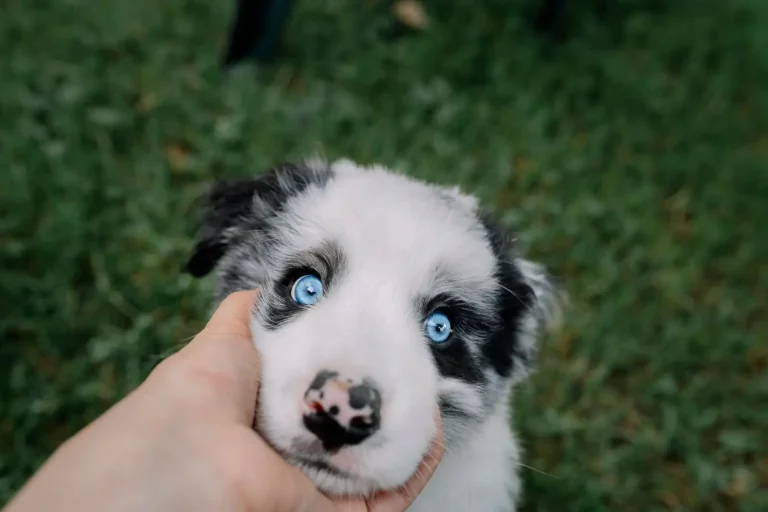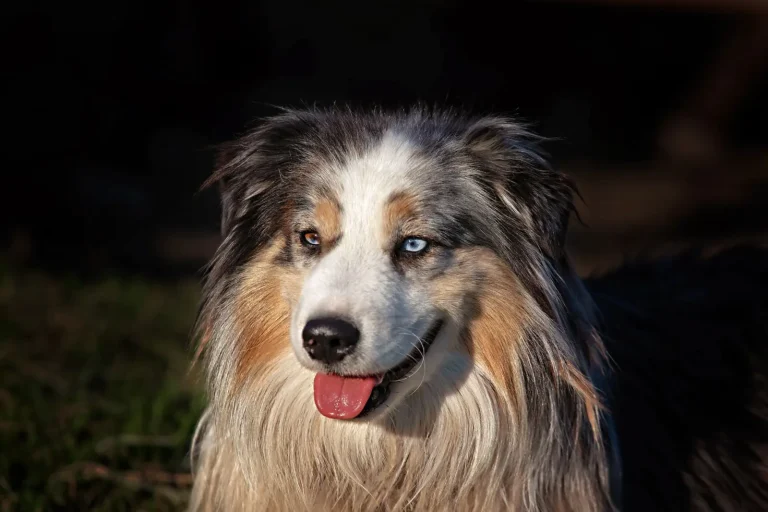

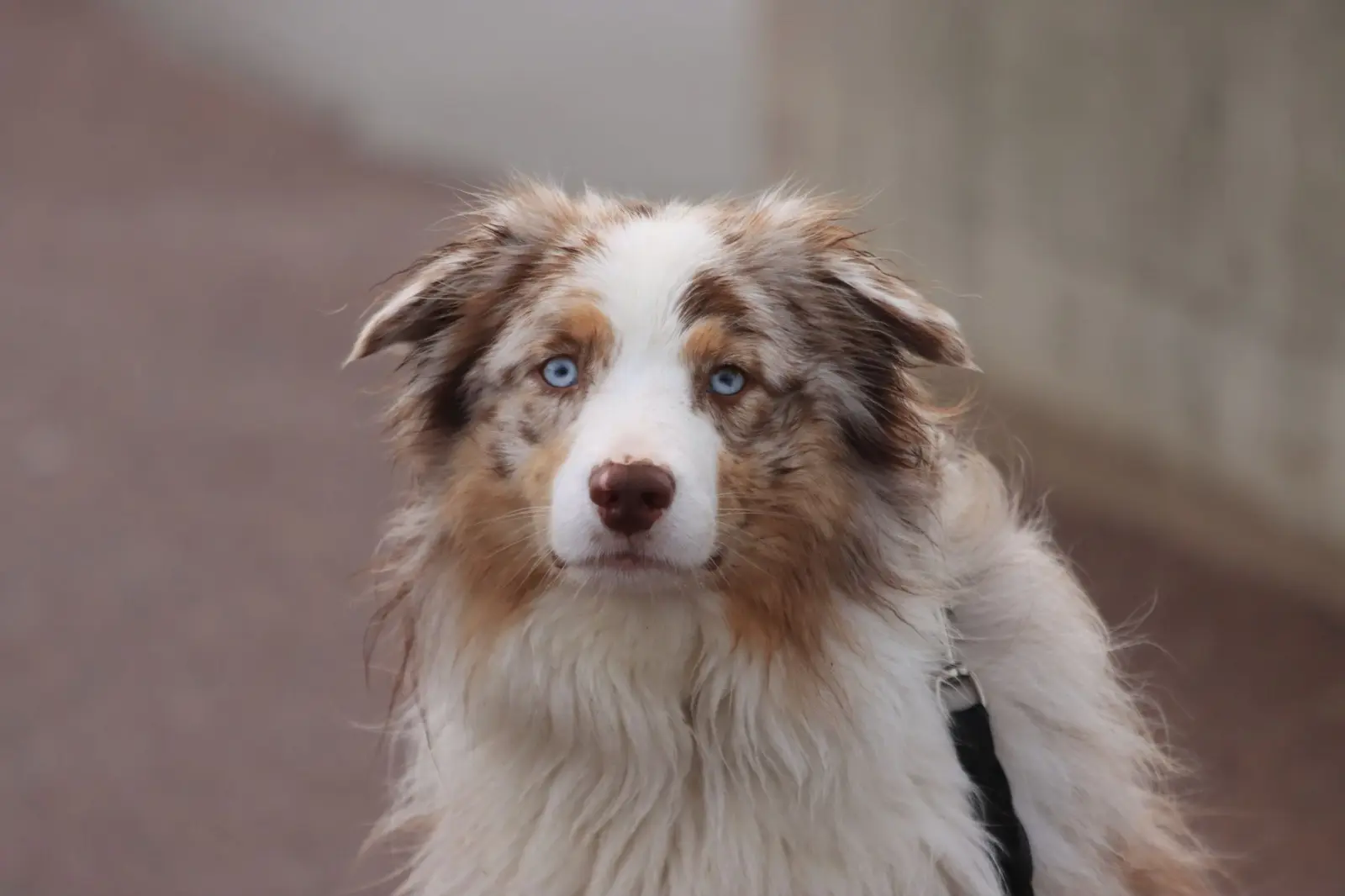
Australian Shepherds with blue eyes tend to stop people mid-conversation. That pale, almost translucent iris color is striking enough that it often becomes the first thing someone mentions when describing the dog. Over years of working with this breed, I’ve noticed that blue-eyed Aussies carry a particular mystique, though the actual genetics behind the trait is straightforward enough once you understand what’s happening at the cellular level.
The blue eye color in Australian Shepherds comes down to a single factor: the absence of pigment in the iris. Eye color in dogs, like in humans, is determined by melanin – the same pigment that colors skin and coat. When melanin is present in the iris, you get brown, amber, or darker eyes. When it’s absent or present in very low amounts, light scatters through the iris in a way that makes it appear blue. This is the same optical principle that makes the sky blue or water appear blue, even though neither is inherently that color.
In Australian Shepherds specifically, blue eyes are linked to the merle coat pattern. The merle gene, which creates those mottled gray and black patches in the coat, also affects pigment distribution elsewhere on the body, including the eyes. This isn’t a coincidence – they’re controlled by related genetic mechanisms. Dogs carrying the merle allele are more likely to have reduced pigmentation in their irises, which results in blue eyes. A dog with one copy of the merle gene might have blue eyes, amber eyes, or even one of each. Two copies of the merle gene (double merle) almost always produces blue eyes, sometimes paired with other pigmentation issues.
The Genetics Behind the Color
The inheritance pattern isn’t as simple as a single dominant or recessive gene. Multiple genes influence eye color in dogs, but in Australian Shepherds, the merle gene is the primary driver of blue eyes. When breeding Aussies, if you want blue-eyed puppies, you’re essentially looking at which parents carry the merle allele and how they pass it down. A merle dog bred to a non-merle dog will produce some merle offspring, and among those, blue eyes are common. Two merle parents will produce all merle puppies, with a high likelihood of blue eyes in most of them.
What I’ve seen happen more often than not is that breeders who don’t understand this relationship are surprised by eye color outcomes. A breeder might expect all puppies from a blue-eyed merle dam to have blue eyes, but if the sire carries no merle gene, the non-merle puppies will have normal brown or amber eyes. Conversely, breeding two merles together introduces the risk of double merle puppies, which can come with serious health complications including deafness and vision problems. This is why responsible breeders avoid double merle pairings entirely.
Health Considerations Worth Understanding
Blue eyes in Australian Shepherds are not inherently a health problem. A blue-eyed Aussie with normal hearing and vision is just as healthy as any other dog in the breed. The concern arises specifically with double merle dogs – those inheriting the merle gene from both parents. These dogs have a significantly elevated risk of congenital deafness and sometimes vision defects like microphthalmia (abnormally small eyes) or coloboma (a gap in the eye structure). This is why the double merle combination is considered irresponsible breeding practice.
I’ve worked with owners who adopted blue-eyed Aussies without knowing the genetic background, and in most cases, the dogs were perfectly sound. What matters is knowing what you’re getting. If you’re acquiring an Australian Shepherd with blue eyes, it’s worth asking the breeder or previous owner whether the dog’s parents were both merle. If they were, that dog should be evaluated by a veterinarian for hearing and vision, even if no problems are apparent. A simple BAER test (Brainstem Auditory Evoked Response) can detect deafness, and an eye exam can catch vision issues early.
What Blue Eyes Tell You About Breeding
In my experience, blue eyes in an Australian Shepherd are a reliable indicator that at least one parent carried the merle gene. This matters because it tells you something about the dog’s genetic background and what health screening should have been done. Reputable breeders of merle Aussies will test their breeding stock for hearing and vision before breeding, and they’ll never intentionally produce double merles. If a breeder is selling blue-eyed puppies without being able to explain the genetic basis or without having health-tested the parents, that’s a red flag worth taking seriously.
The blue eye color itself is simply a visible marker of the merle gene. It’s not a sign of better breeding or superior genetics – it’s just a trait that catches the eye. Some people prefer the look; others don’t care either way. What should matter more is whether the dog comes from health-tested parents and whether the breeding was done responsibly. A brown-eyed Aussie from two health-tested parents is a far better choice than a blue-eyed dog from a breeder who didn’t screen for deafness or vision problems.
Australian Shepherds with blue eyes are common enough in the breed that most people working with Aussies will encounter them regularly. The trait is predictable, explainable, and generally not a concern if the dog comes from responsible breeding. What’s worth remembering is that the blue color is just the visible part of a genetic story that includes merle coat patterning and certain health risks. Understanding that connection helps you make informed decisions about which dogs to breed or acquire, and it helps you know what health screening to prioritize if you end up with a blue-eyed Aussie in your life.