
Australian Shepherds arrive in the world with a striking range of eye colors, and I’ve watched enough litters develop to know that what you see at eight weeks rarely stays the same. The breed standard allows for brown, amber, or blue eyes, and sometimes you’ll encounter combinations that catch people off guard – parti-colored eyes or what breeders call “split” eyes where each iris carries two distinct shades. Understanding what’s normal and what might signal something worth monitoring takes time and repeated exposure to the breed.
The genetics behind eye color in Aussies involves multiple genes, not just one simple inheritance pattern. This is why two brown-eyed parents can produce a blue-eyed pup, or why a dog’s eyes might shift from one shade to another during their first year of life. Pigmentation develops gradually, and the amount of melanin in the iris determines the final color. A puppy born with pale blue eyes might develop amber tones as melanin deposits accumulate, or those blue eyes might deepen and hold their color into adulthood.
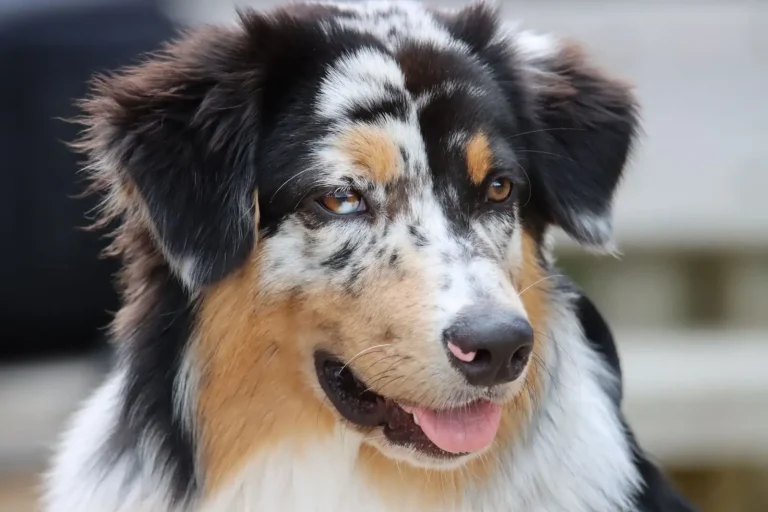
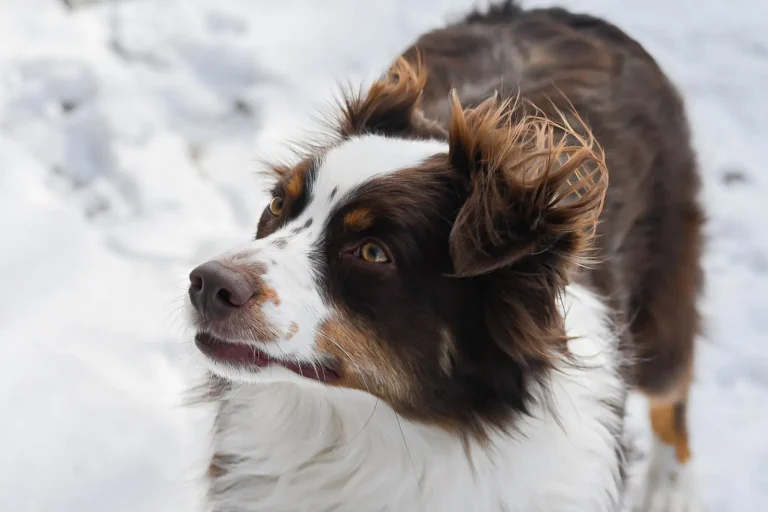
I’ve noticed that brown eyes tend to be the most stable from an early age. They’re typically present at birth and don’t change dramatically, though the exact shade can warm or deepen slightly as the dog matures. Amber eyes, which sit somewhere between brown and light gold, often develop over the first few weeks and months. These eyes have less melanin than true brown but more than you’d see in a blue-eyed dog. They’re common in Australian Shepherds and are perfectly acceptable under breed standards.
Blue Eyes and the Merle Connection
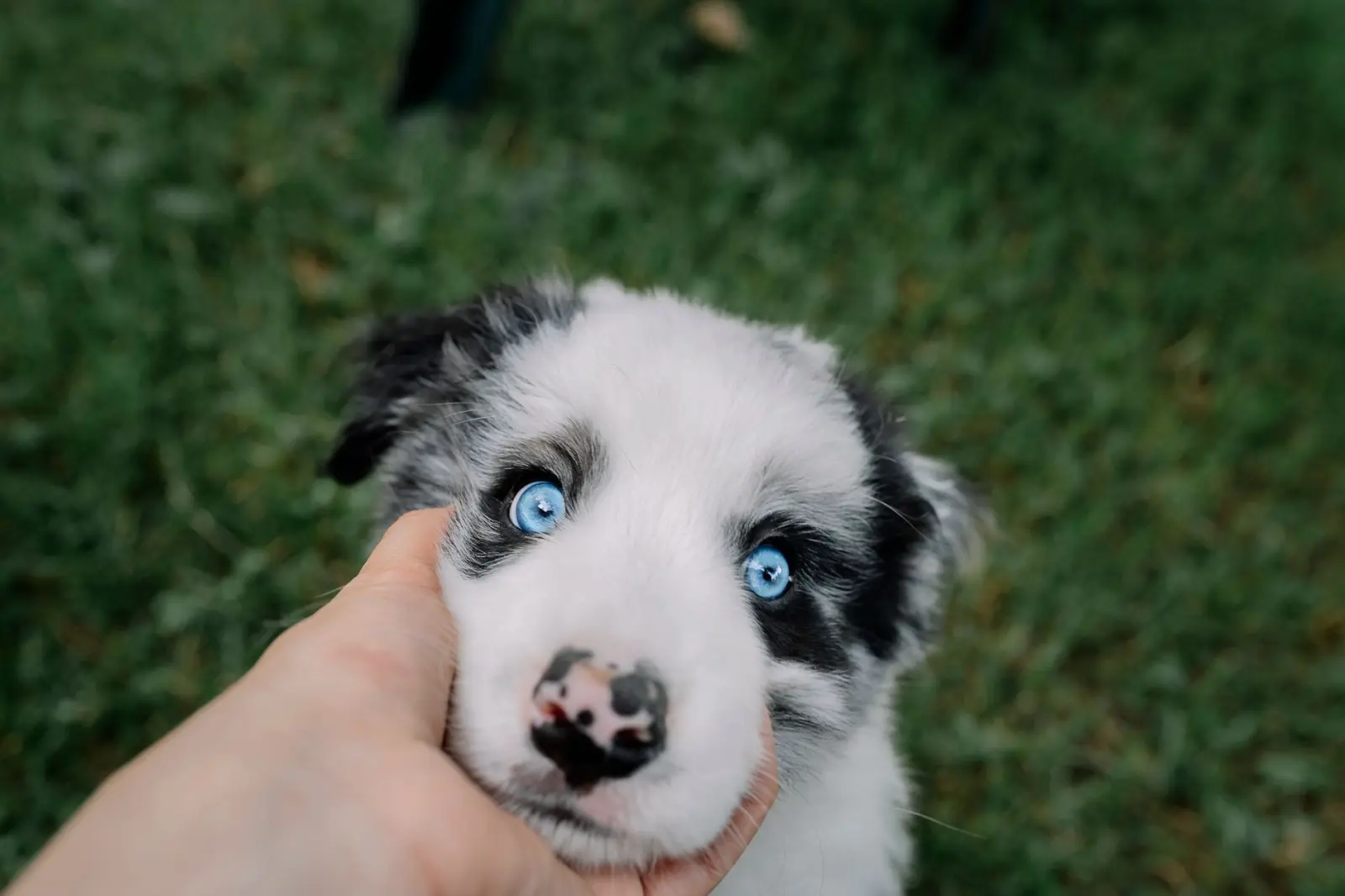
Blue eyes in Australian Shepherds almost always appear in dogs carrying the merle gene. I’ve seen this correlation hold up consistently across multiple breeding lines. The merle pattern dilutes pigmentation throughout the coat and eyes, which is why blue-eyed Aussies are typically merle-colored or parti-colored (merle with white). A solid-colored dog with blue eyes is rare in this breed, though not impossible.
What’s important to understand is that blue eyes don’t indicate a health problem on their own. They’re simply a pigmentation variation tied to genetics. However, the merle gene itself can carry complications when inherited from both parents. A dog that receives the merle allele from each parent – called a “double merle” – may have vision or hearing issues, though not always. This is why responsible breeders avoid merle-to-merle pairings. The eye color itself isn’t the concern; it’s the underlying genetic combination that matters.
Color Changes During the First Year
The most dramatic eye color shifts happen between birth and around twelve months. I’ve watched puppies with slate-blue eyes gradually develop brown tones, or seen amber eyes deepen into a rich chocolate shade. This isn’t unusual or problematic – it’s simply how pigmentation continues to develop as the dog grows.
The timing varies. Some dogs stabilize by four or five months; others continue shifting until closer to a year old. If you’re evaluating a young dog for show purposes or breeding, it’s worth waiting until at least six months before making final assessments about eye color. What looks like a light amber eye at ten weeks might be a deeper gold by six months. Conversely, a pale blue eye might remain blue or might darken slightly, but rarely will a true blue eye turn brown.
Parti-Colored and Split Eyes
Some Australian Shepherds have eyes that are genuinely two different colors – one brown and one blue, for example. This is called heterochromia, and it’s more common in merle or parti-colored dogs. I’ve seen it several times, and it’s always striking. The breed standard allows for this variation, and it doesn’t indicate any health concern. It’s simply an expression of how pigmentation distributed during development.
Then there are “split” eyes, where a single iris contains both colors – perhaps a brown sector and a blue sector in the same eye. These are less common than full heterochromia but do occur. Again, this is cosmetic variation with no functional impact on vision.
What Affects Eye Clarity and Appearance
Beyond color itself, the clarity and depth of an Aussie’s eyes can vary based on factors that have nothing to do with genetics. Lighting conditions dramatically change how an eye appears. A brown eye that looks almost black in dim indoor light might appear warm amber in natural sunlight. A blue eye can look pale or deep depending on the angle and light source. This is why breed evaluation and show assessment typically happen in consistent lighting conditions.
Age also plays a role. As Australian Shepherds reach their senior years, the lens can develop a slight cloudiness – a normal part of aging that affects all dogs. This doesn’t impair vision significantly in most cases, but it can make the eye appear slightly hazier than it did in youth. This is different from cataracts, which are a medical concern and would require veterinary attention.
Diet and overall health can subtly influence how vibrant or clear the eyes appear. A well-nourished dog with good coat condition typically has bright, clear eyes. Dehydration or systemic illness can make eyes appear slightly duller. These aren’t changes in the actual eye color, but they affect the overall appearance.
When Eye Color Variation Matters
For most owners, eye color is simply a cosmetic trait – part of what makes their individual dog distinctive. For breeders, it’s one of many factors in the breeding equation, but it shouldn’t be the primary driver of breeding decisions. What matters far more is health testing, temperament, structure, and working ability.
If you’re concerned about a sudden change in eye appearance – cloudiness that develops quickly, discharge, redness, or squinting – those are signs to contact a veterinarian. But normal color variation and the gradual changes that happen during a dog’s first year are simply part of how Australian Shepherds develop. The breed’s flexibility with eye color is one of its appealing characteristics, and it reflects the genetic diversity that keeps the breed healthy and functional.