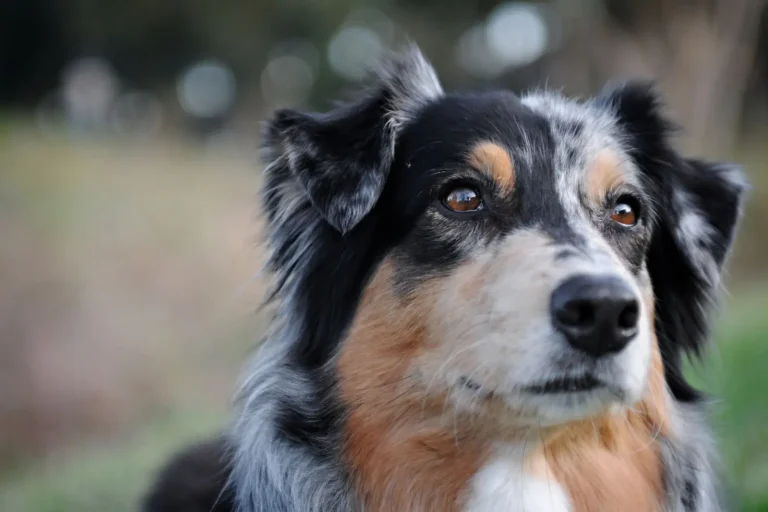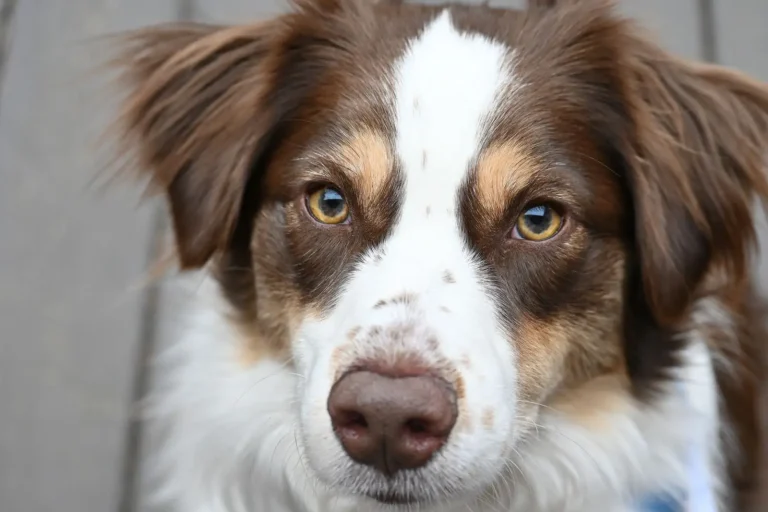

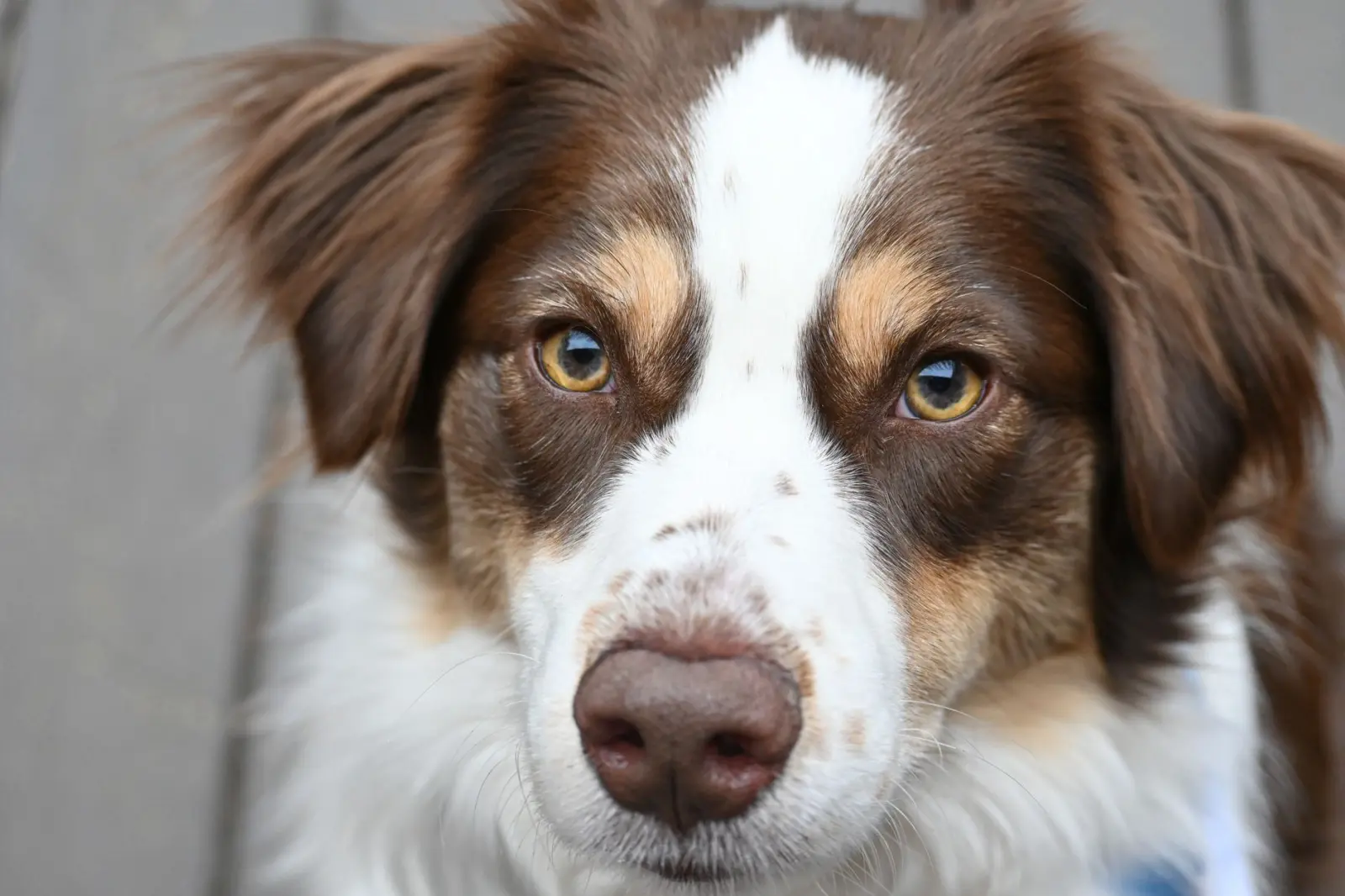
Australian Shepherds develop eye problems at a higher rate than many other breeds, and it’s something I’ve observed consistently across the dogs I’ve worked with over the years. These aren’t always obvious at first glance. An owner might notice their dog squinting in bright light or tilting their head slightly when looking at something, and assume it’s normal behavior. Often it’s not. The breed carries genetic predispositions to several conditions that can range from minor and manageable to serious and vision-threatening.
What makes this particularly important is that many of these conditions develop slowly. A dog doesn’t wake up one morning unable to see. Instead, vision degrades gradually, and owners sometimes don’t catch it until the problem has progressed significantly. This is why knowing what to watch for matters far more than waiting for symptoms to become obvious.
Collie Eye Anomaly and Its Spectrum
Collie Eye Anomaly, or CEA, is probably the most common inherited eye condition in Australian Shepherds. It’s present from birth, though it’s not always visible without proper examination. The condition involves abnormal development of the choroid – the layer of tissue beneath the retina that supplies blood to the eye. In mild cases, a dog may have no symptoms whatsoever and live a completely normal life with full vision. In more severe presentations, it can lead to retinal detachment and blindness.
What I’ve seen repeatedly is that dogs with mild CEA are often identified only during a routine eye screening, usually when an owner is considering breeding. The dog has been functioning perfectly fine, and the owner had no idea anything was present. This is actually a positive outcome – the condition was caught, documented, and the owner can make informed decisions about the dog’s care and breeding status.
The more severe forms are different. A dog might develop cloudiness in the eye, show sensitivity to light, or begin bumping into things in dimly lit areas. These signs typically appear in the first few years of life. The progression can be unpredictable. Some dogs stabilize at a certain level of vision loss, while others continue to deteriorate.
Progressive Retinal Atrophy
Progressive Retinal Atrophy, or PRA, is another inherited condition that Australian Shepherds carry. This one involves the gradual degeneration of the photoreceptor cells in the retina. Unlike CEA, which is present from birth, PRA typically develops later in life. I’ve seen it appear in dogs as young as three or four years old, and in others not until they’re seven or eight.
The early signs are subtle. A dog might be reluctant to go outside at dusk or in low light. They may move more cautiously in dimly lit rooms. Some owners interpret this as the dog simply preferring daylight, but it’s actually the beginning of vision loss. As the condition progresses, the dog’s pupils become permanently dilated, and the tapetum lucidum – that reflective layer in the back of the eye – takes on a different appearance during examination.
What’s important to understand is that PRA is progressive and irreversible. There’s no treatment that stops it. The dog will eventually lose vision entirely, though the timeline varies. Some dogs adapt remarkably well to blindness, especially if they’re in a familiar environment with consistent routines. Others struggle more. The breed’s intelligence and trainability actually work in their favor here – they can learn to navigate their world using other senses.
Cataracts and Age-Related Changes
Cataracts develop when the lens becomes cloudy. In Australian Shepherds, cataracts can be inherited or can develop as the dog ages. Juvenile cataracts appear early in life and tend to progress quickly. Age-related cataracts develop slowly over many years and may never significantly impact the dog’s vision.
I’ve noticed that owners often spot cataracts before they become a real functional problem. The cloudiness is visible to the naked eye, especially in good light. A dog might have a slight haze in the lens but still navigate and see perfectly well. The decision about whether to pursue surgery depends on how much the cataract is actually affecting the dog’s quality of life and vision, not just whether it’s visible.
Cataract surgery is possible for dogs and can be quite successful when performed by a veterinary ophthalmologist. The decision to operate is individual. Some owners choose surgery early to preserve vision as much as possible. Others wait to see if the condition stabilizes or progresses. Both approaches have merit depending on the dog’s age, overall health, and the rate of progression.
Screening and Early Detection
The most practical step an Australian Shepherd owner can take is arranging a formal eye examination by a veterinary ophthalmologist, particularly before breeding or in the first few years of life. The Canine Eye Registration Foundation, or CERF, provides standardized screening that documents the eye health status. This isn’t just for breeders – it’s valuable information for any owner.
A standard veterinary exam isn’t always sufficient to catch early eye disease. The ophthalmologist uses specialized equipment to examine the retina, optic nerve, and other structures in detail. They can identify conditions that aren’t visible during a routine check. For Australian Shepherds, I’d recommend screening at least once before the dog is three years old, and again around age six or seven as a baseline for later comparison.
Regular observation at home matters too. Watch how your dog moves in different lighting conditions. Notice if they’re reluctant to jump or navigate stairs. Pay attention to any change in how they interact with their environment. These observations, combined with professional screening, give you the clearest picture of your dog’s eye health.
The reality is that some Australian Shepherds will develop eye problems despite careful breeding and good care. Genetics are complex, and inherited conditions persist in the breed. What owners can control is early detection, informed decision-making about treatment, and creating an environment where a dog with vision loss can still live well. Knowing what to expect and recognizing early signs makes all the difference in how you manage your dog’s eye health over their lifetime.