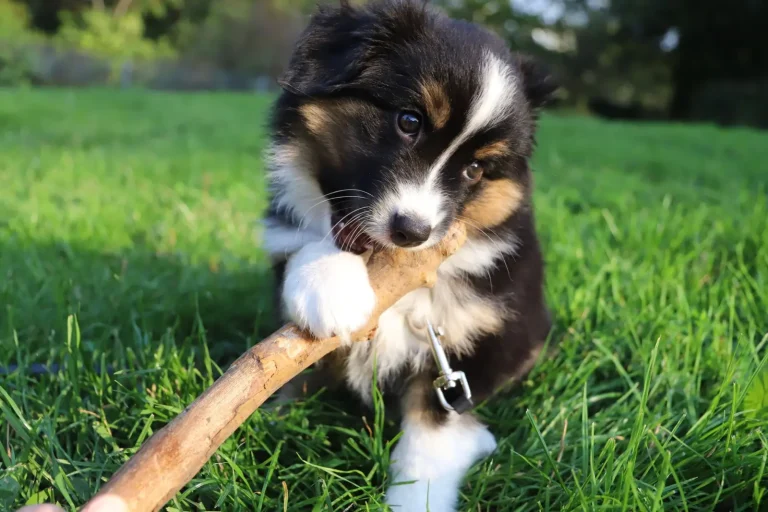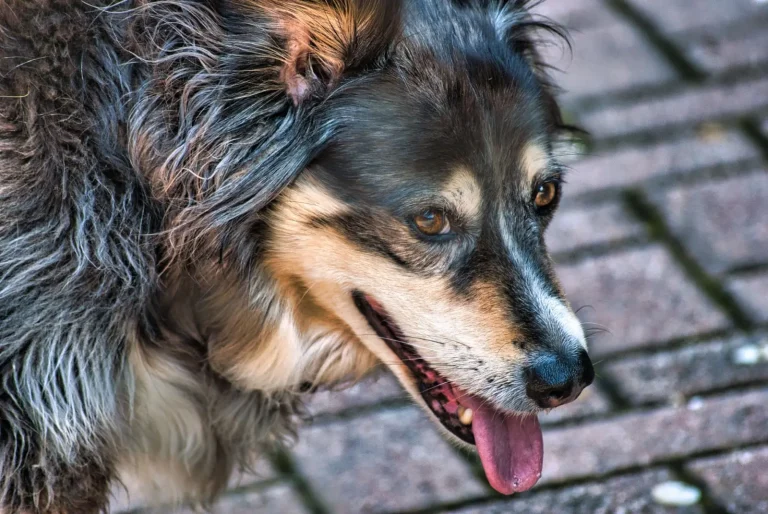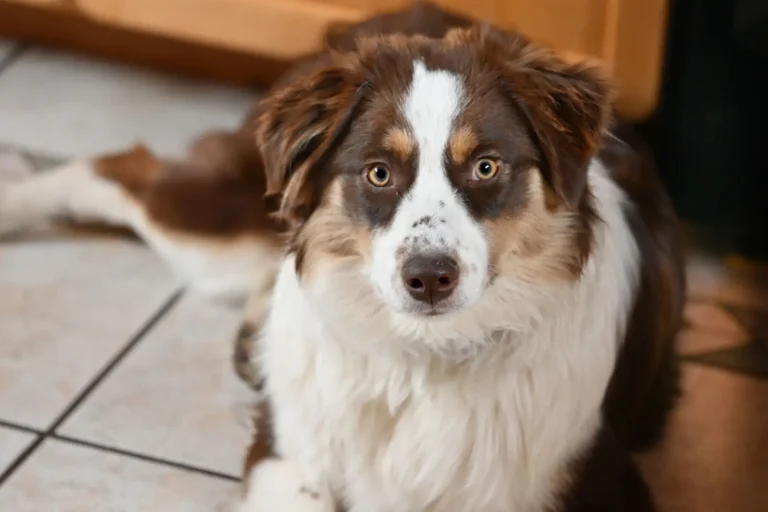

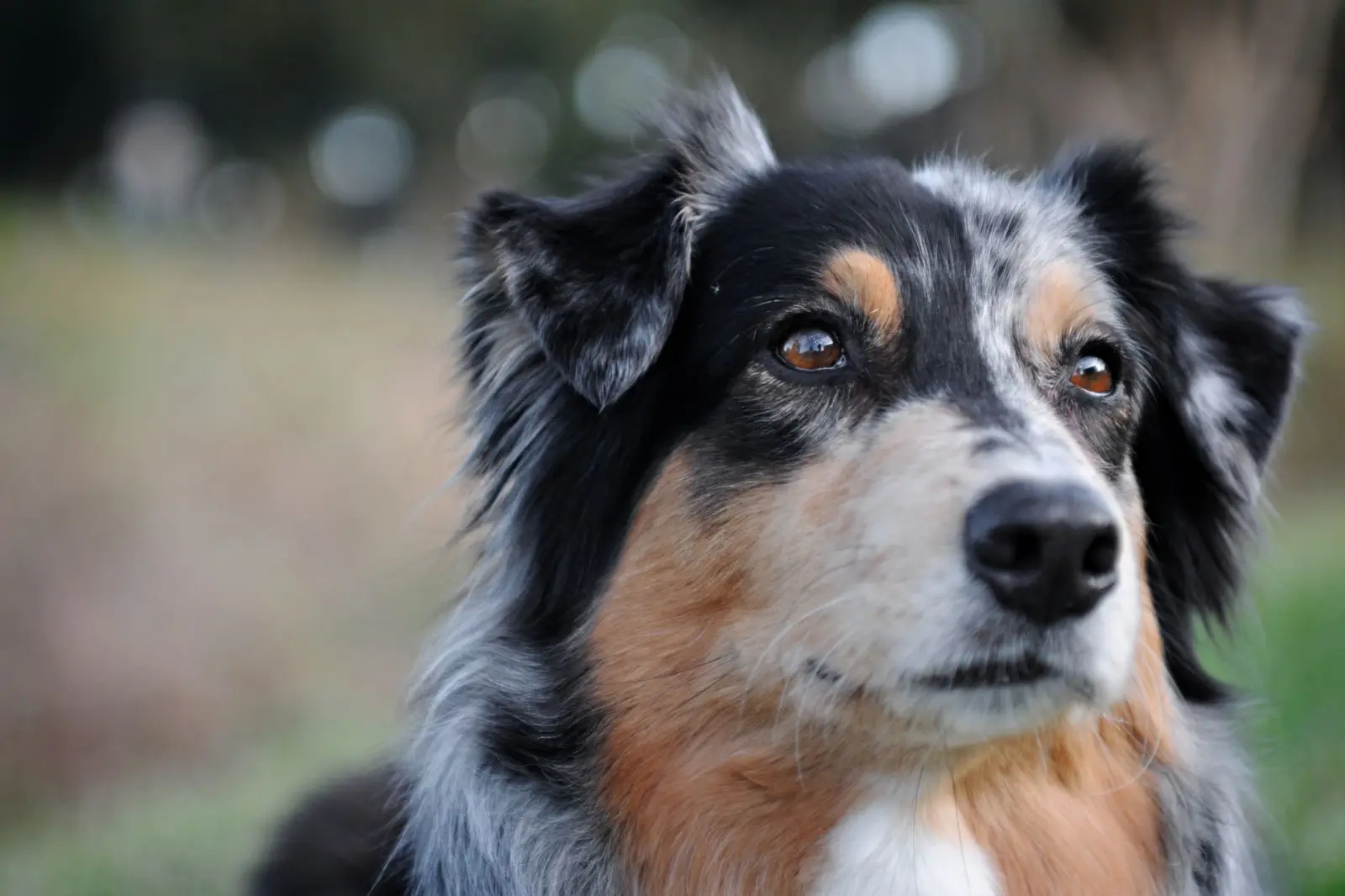
Working with Australian Shepherds in snake country teaches you quickly that their herding instinct and ground-level curiosity create genuine exposure risk. These dogs are driven to chase, investigate, and control movement – traits that make them excellent at their original work but problematic when a brown snake or tiger snake is moving through the property. Over years of managing these dogs in areas where venomous snakes are common, I’ve seen the gap between what people assume will happen and what actually does. Most owners underestimate how fast a snake encounter can unfold and how little warning their dog will have.
Australian Shepherds have a particular vulnerability that goes beyond simple curiosity. Their medium size, athletic build, and tendency to work low to the ground – sniffing, darting, investigating movement in grass or leaf litter – puts their head and neck in the exact zone where a defensive snake will strike. Unlike larger dogs that might survive a bite or smaller dogs that fit under structures, Aussie Shepherds occupy an awkward middle ground. They’re big enough to be taken seriously by snakes as a threat, but not large enough to have much biological buffer against venom. A bite to the face or neck during a ground-level investigation is far more serious than the same bite to a paw or leg.
Understanding Local Snake Behavior and Seasons
The risk isn’t constant throughout the year. In Australia, snake activity peaks during warmer months – roughly September through April, depending on your region – when snakes are more active, breeding, and moving between shelter and feeding grounds. During these months, an Aussie Shepherd’s outdoor time needs closer management. Cold months don’t eliminate risk entirely; snakes shelter in unexpected places and can emerge on warm days, but the frequency of encounters drops noticeably.
Different regions have different species, and understanding which snakes are present matters. Brown snakes, tiger snakes, and red-bellied black snakes are common in many populated areas. Brown snakes are particularly aggressive when threatened and don’t require much provocation. Tiger snakes are territorial and will defend their space. Red-bellied black snakes are less aggressive but still dangerous. The species in your area determines both the likelihood of an encounter and how a snake might respond to a dog’s presence. Local knowledge – talking to neighbors, vets, and wildlife handlers – gives you a clearer picture than generic advice.
Practical Management on Your Property
Most snake encounters happen on the owner’s own land, not during walks. This is where prevention becomes actionable. Snakes are attracted to properties that offer shelter and food. Rodents draw snakes; shelter in the form of long grass, dense shrubs, rock piles, or wood stacks keeps them comfortable. An Aussie Shepherd’s instinct to patrol and investigate makes them more likely to encounter snakes in these exact environments.
Maintaining shorter grass in areas where your dog spends time reduces snake cover and makes encounters less likely. It also makes snakes more visible to you before your dog finds them. Removing or securing potential shelter – clearing fallen branches, stacking firewood away from the house, keeping garden beds tidy – reduces the appeal of your property to snakes. These aren’t foolproof measures, but they shift the odds. A property that looks like active human space is less attractive to snakes than one that looks like wild habitat.
Supervision during outdoor time is the most direct control you have. An Aussie Shepherd left to roam unsupervised for hours has more opportunity to encounter a snake than one that spends time outside with you present. This doesn’t mean constant attention – it means being aware of what your dog is doing, where it’s investigating, and what’s moving in the grass. Many owners find that their dog’s behavior changes slightly when a snake is present; they may become more focused, move differently, or show interest in a specific area. Learning to read these small signals gives you time to redirect before an encounter happens.
Training and Behavioral Response
Snake aversion training exists and is used by some owners in high-risk areas. The premise is straightforward: expose the dog to a snake in a controlled setting (usually a non-venomous snake or a contained venomous snake) and condition them to avoid it. Results are mixed. Some dogs develop a strong aversion; others show temporary avoidance that fades over time. The training requires a skilled handler and carries its own risks. An Australian Shepherd’s herding drive can override learned aversion if the moment is right – a snake moving suddenly might trigger chase instinct before the dog’s trained response engages.
More reliable than aversion training is teaching reliable recall and a solid “leave it” command. An Aussie Shepherd that comes immediately when called and will disengage from something on command has a real safety advantage. This isn’t specific to snakes; it’s foundational obedience that applies to many hazards. The challenge is that in the moment of a snake encounter, stress and instinct often override training. A dog that responds perfectly to recall in your living room may not hear you when adrenaline is running and a snake is moving.
What Happens After a Bite
Knowing the signs of envenomation matters because speed of response affects outcome. A snake bite to a dog often goes unnoticed initially. You might find puncture marks, swelling, or bruising hours after the bite occurred. Early signs include lethargy, trembling, loss of coordination, or vomiting. Neurological signs – difficulty walking, paralysis starting in the hind legs, or respiratory distress – indicate serious envenomation. These can develop over minutes to hours depending on the snake species and the amount of venom injected.
The only effective treatment is antivenom, and it must be administered by a veterinarian. Time is critical. If you suspect a bite, contact your vet or emergency clinic immediately, even if your dog seems fine. Some bites are “dry bites” where little or no venom is injected, but you can’t know that in the moment. Waiting to see if symptoms develop is a gamble. In rural areas where veterinary clinics are distant, this becomes a serious logistical problem. Knowing where your nearest 24-hour emergency clinic is located and how long it takes to get there is practical preparation that many owners overlook.
The cost of treatment is substantial. Antivenom is expensive, and a severely envenomated dog may require multiple doses, hospitalization, and intensive care. Pet insurance that covers snake bite is worth investigating if you live in a high-risk area. Some policies exclude it; others cover it fully. Reading the fine print before you need it prevents difficult decisions later.
Living with an Australian Shepherd in snake country means accepting that the risk exists and managing it through a combination of environmental control, supervision, and training. It’s not about eliminating all possibility of encounter – that’s unrealistic in Australia – but about reducing frequency, increasing visibility, and having a clear response plan. Over time, most owners develop an intuitive sense of when conditions favor snakes and adjust their dog’s outdoor time accordingly. It becomes part of the rhythm of the season rather than a constant source of anxiety.