
Australian Shepherds respond to rewards, but not always in the way people expect. I’ve worked with dozens of them over the years, and the pattern is consistent: owners often reach for treats without thinking about what their dog actually cares about, or when the reward lands relative to the behavior. The result is confusion on both sides. A dog gets a treat five seconds after doing something right, and the connection never forms. Or a handler uses the same reward for every task, and the dog’s interest flatlines within weeks.
The fundamental issue is that rewards aren’t universal currency. What motivates one Aussie Shepherd might leave another indifferent. Some are genuinely food-driven. Others care far more about a toy, a chase, or even just the chance to do something. I’ve seen dogs that would work all day for a tennis ball but barely glance at premium chicken treats. This breed’s intelligence and work ethic mean they’re often more engaged by the activity itself than by what comes after it.
Timing Is Where Most People Stumble
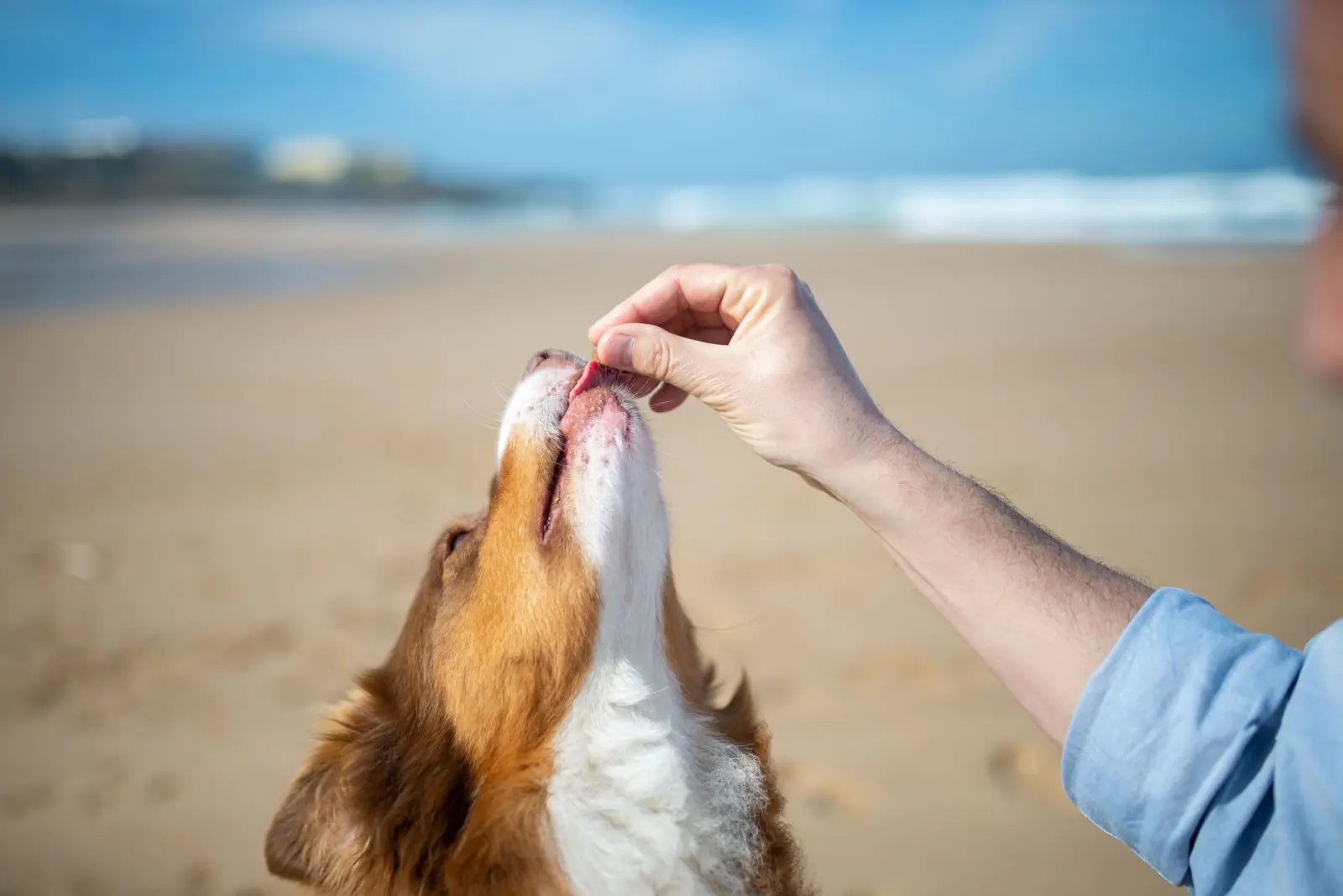
The distance between behavior and reward matters more than people realize. A dog needs to connect the two events almost instantly – ideally within a second or two. When you ask your Aussie to sit, and they sit, and then you fumble for a treat from your pocket, you’ve already lost the window. The dog may have stood up, sniffed something, or shifted their attention. Now you’re rewarding whatever they’re doing in that moment, not the sit you asked for.
This is why a marker word or clicker becomes so useful with this breed. The sound happens the instant the behavior is correct, bridging the gap between action and reward. The dog learns that the click means “yes, that’s it, reward is coming.” The actual treat arrives a second later, but the connection is already made. I’ve found that Aussie Shepherds pick this up quickly because they’re naturally attentive to communication. They’re watching you anyway, so they notice the click or the marker word immediately.
Consistency in timing matters too. If you sometimes reward immediately and sometimes delay, the dog has to guess when they’ve actually done the right thing. That creates uncertainty, and an uncertain dog tends to either shut down or become hyperactive trying to figure out the rules.
What Actually Motivates an Individual Dog
I’ve learned to spend the first few sessions with any new dog simply observing what they naturally gravitate toward. Does the dog’s tail go up when they see a toy? Do they get visibly excited around food? Some Aussies are genuinely indifferent to treats but light up when given permission to chase or retrieve. Others have a specific toy – not just any toy – that they’ll work for. One dog I trained would do almost anything for the chance to herd the other dogs in the yard, but had zero interest in food rewards.
This matters because you can’t fake motivation. If you’re using a reward the dog doesn’t actually want, you’re not reinforcing anything. You’re just going through motions. The dog will comply out of habit or because they’ve learned to read your body language, but they’re not genuinely engaged. With an Aussie Shepherd, that disengagement becomes obvious pretty quickly because the breed is expressive and responsive. A bored Aussie will show it.
The practical approach is to test a few different rewards and watch the response. Does the dog’s entire body language shift when they see it? Do they work faster or with more focus when that reward is available? That’s your signal that you’ve found something that matters to them. Once you know what that is, you can use it strategically.
Varying Rewards Keeps Interest Alive
Using the same reward every single time creates a predictability problem. The dog’s brain adapts. What was exciting on day one becomes routine by day ten. I’ve seen handlers use the same high-value treat for weeks and then wonder why their dog suddenly seems unmotivated. The dog isn’t unmotivated – they’ve just habituated to the reward.
The solution isn’t complicated, but it requires a bit of planning. Rotate between different rewards. If your dog loves treats, use a few different types. Mix in toys, play, praise, or access to something they want. The unpredictability actually increases engagement. A dog doesn’t know whether they’re getting the regular kibble or the special chicken treat, so they stay attentive. This is especially effective with Aussie Shepherds because they’re thinking dogs. They like the puzzle of not knowing exactly what’s coming.
This doesn’t mean randomizing everything. Consistency in what you’re asking for and when you’re asking for it remains important. But the reward itself can vary. Some sessions might be heavy on food rewards, others on play. Some might be mostly praise with occasional treats. The variation keeps the dog’s interest sharp without creating confusion about the actual task.
The Relationship Between Reward and Difficulty
I’ve noticed that handlers often use the same reward regardless of how hard the task is. A sit in a quiet room gets the same treat as a sit in a distracting environment with other dogs nearby. From the dog’s perspective, these aren’t equivalent challenges. The second one requires significantly more focus and impulse control. Using the same reward for both sends a mixed message about what you value.
Matching reward intensity to task difficulty makes sense to the dog. An easy behavior gets a small reward or just a word of praise. A difficult behavior in a distracting environment gets something the dog really wants. This teaches them that harder work pays better, which naturally increases their willingness to focus when things get challenging. Aussie Shepherds are capable of this kind of nuanced understanding. They’ll adjust their effort based on what they perceive the stakes to be.
I’ve also found that as a dog becomes more reliable with a behavior, the reward structure can gradually shift. A young dog learning to sit might need a treat every time. An adult dog who sits reliably can be rewarded intermittently – sometimes a treat, sometimes just praise. This variable schedule of reinforcement actually strengthens the behavior more than constant rewards do. The dog never knows when the next reward is coming, so they stay engaged.
When Rewards Become Counterproductive
There’s a point where over-reliance on rewards can work against you. If a dog only performs when a reward is visible, you haven’t really trained the behavior – you’ve created a transaction. The dog will sit when they see a treat coming out, but might not sit on command without that visual cue. This becomes obvious when you’re in a real-world situation and don’t have treats readily available.
The goal is to gradually fade the reward while maintaining the behavior. Early on, rewards are frequent and visible. As the dog understands what you want, you reward less often and make the reward less obvious. Eventually, the behavior becomes automatic. The dog sits because that’s what “sit” means, not because they’re hunting for a treat. This transition is important with Aussie Shepherds especially, because they’re smart enough to recognize the difference between a training session where rewards are available and a situation where they’re not.
Some handlers struggle with this because they worry that removing rewards will cause the dog to stop responding. In reality, a well-trained behavior persists without constant reinforcement. The dog has learned the association between the command and the action. Occasional rewards maintain the behavior and keep the dog interested, but constant rewards aren’t necessary.
Working with Australian Shepherds has taught me that they’re responsive to rewards when those rewards align with what the dog actually wants and when the timing is precise. The breed’s intelligence means they’re quick to learn patterns, both good and bad. A handler who pays attention to their individual dog’s motivations and adjusts accordingly will see faster learning and more reliable responses than someone who follows a generic reward schedule. The dog tells you what works if you’re paying attention.