
Australian Shepherds pull on the lead more consistently than most other breeds, and there’s a reason for that. After years of working with these dogs, I’ve noticed the pulling isn’t random or purely a sign of poor training. It’s deeply connected to how their brain is wired. These dogs were bred to move stock across open terrain, to make quick directional decisions, and to maintain constant forward momentum. When you put them on a lead, you’re essentially asking them to suppress one of their core operating systems.
The pulling typically gets worse between six months and three years of age. That’s when their physical strength catches up with their mental drive. A young Aussie Shepherd might seem manageable at four months, then suddenly become a genuine handful by eight months. This isn’t a regression in training. It’s maturity meeting instinct.
What I’ve learned is that most approaches to this problem miss the actual issue. People often assume the dog is being stubborn or hasn’t been trained properly. In reality, the dog is experiencing a genuine conflict between what you’re asking and what their body wants to do. That’s an important distinction because it changes how you work with the problem.
The Difference Between Pulling and Excitement
Not all lead pulling looks the same, and the distinction matters. Some Australian Shepherds pull because they’re excited and want to get somewhere faster. Others pull because they’re scanning the environment, trying to work something, or responding to movement. A few pull out of anxiety or frustration. The solution depends on which one you’re dealing with.
Excitement pulling tends to be more constant and directional. The dog is straining toward a destination – the park, another dog, a person they recognize. This type usually decreases with age and experience. Herding-driven pulling is different. The dog’s head is up, ears are alert, and they’re often moving in patterns rather than straight lines. They’re looking for something to work. Anxiety pulling is typically erratic, with the dog lunging or backing away unpredictably.
I’ve found that identifying which type you’re dealing with in the first week or two of walks makes everything else clearer. Watch what the dog is looking at when they pull, how their body position changes, and whether the pulling is consistent or situational.
What Doesn’t Work Reliably
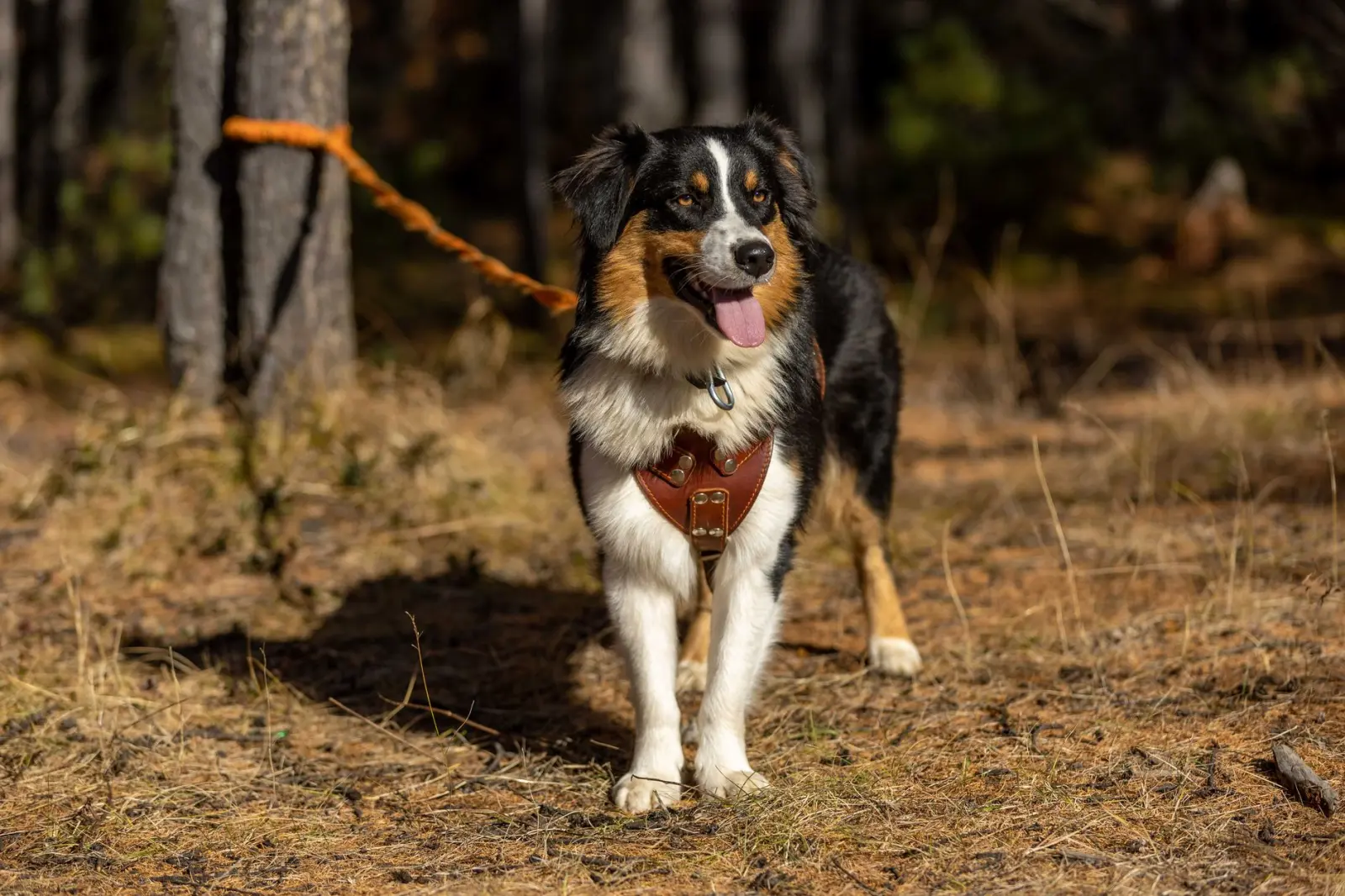
I’ll be direct: retractable leads don’t help with Australian Shepherds. They actually reinforce the pulling because the dog learns that tension equals freedom. The moment they pull, they get more rope. Fixed-length leads are essential, but the length matters. A six-foot lead is ideal for most situations. Eight feet gives too much range for a dog with herding instincts.
Choke chains and prong collars can suppress pulling temporarily, but they don’t address the underlying drive. I’ve seen dogs that pull less on a prong collar but are more stressed overall. The pulling stops, but the frustration remains. For Australian Shepherds especially, the goal isn’t just to stop the behavior – it’s to redirect the energy.
Punishment-based approaches also tend to backfire with this breed. Australian Shepherds are sensitive to correction, and harsh handling often makes them either shut down or become more reactive. They’ll pull less around you, but they won’t be enjoying the walk, and the underlying need to move and work hasn’t been addressed.
What Actually Shifts the Behavior
The most reliable approach I’ve seen involves three components working together: physical exercise before the walk, a clear expectation about what the lead means, and consistent redirection rather than punishment.
Physical exercise beforehand is non-negotiable. A 15-minute run or intense play session in the yard before a walk changes everything. The dog’s nervous system is already partially satisfied. They’re not starting the walk in a state of pent-up energy. This doesn’t mean they won’t pull, but the intensity of the pulling decreases noticeably. For Australian Shepherds, this isn’t laziness – it’s allowing them to access their thinking brain rather than operating purely from instinct.
The second piece is establishing that the lead has a specific meaning. When the lead goes slack, good things happen. When tension appears, nothing happens. No forward movement, no progress toward the destination. This requires patience and consistency. You stop moving the moment the dog pulls. Not a dramatic stop, just a pause. The dog learns through repetition that pulling doesn’t work. Moving beside you does.
Redirection is where most people get stuck. When the dog pulls, you’re not punishing them – you’re redirecting their attention back to you. A light touch on the lead, a change of direction, or a verbal cue that’s been practiced in lower-stress environments. The goal is to interrupt the pulling pattern and give the dog an alternative behavior that satisfies some of the same need.
The Role of Mental Stimulation
I’ve noticed that Australian Shepherds who pull the least aren’t necessarily the most obedient. They’re the ones whose brains are engaged. A dog that’s sniffing, investigating, and making choices about their environment pulls less than a dog who’s bored and frustrated.
Allowing structured sniffing time during walks actually reduces pulling in the long term. It sounds counterintuitive, but these dogs need to work their brains. If you’re walking them in a way that suppresses all natural behavior – no sniffing, no stopping, no exploration – they’ll pull harder because they’re trying to create stimulation. A walk where the dog gets to sniff, investigate, and make some choices about pace (within boundaries) tends to be calmer overall.
This is especially true for Australian Shepherds that spend a lot of time indoors. The lead walk becomes their primary outlet for processing the world. If that outlet is purely restrictive, the pulling intensifies.
Age and Consistency Matter More Than Method
The age of the dog changes what’s realistic. A two-year-old Australian Shepherd who’s been pulling since puppyhood will take longer to retrain than a six-month-old who’s just starting. The neural pathways are more established. The behavior is more automatic. This isn’t a failure of training – it’s just how learning works in dogs.
Consistency across everyone who walks the dog is critical. If one person stops for pulling and another doesn’t, the dog learns that the rule is negotiable. Australian Shepherds are smart enough to figure out which person or which situation allows pulling. If you’re the only one enforcing the boundary, you’ll see improvement, but it’ll be slower and less stable.
I’ve also noticed that dogs seem to pull less as they age into their senior years, assuming they haven’t developed anxiety or pain issues. The drive to move and work naturally decreases. A ten-year-old Australian Shepherd is rarely the pulling problem a three-year-old is, even if nothing specific was done to train the older dog.
The reality is that managing lead pulling with an Australian Shepherd is less about finding the perfect technique and more about understanding what’s driving the behavior, then creating conditions where the dog can be satisfied in a way that doesn’t involve pulling. It takes time, but it’s worth doing properly because a dog that walks well on a lead is a dog that gets taken places more often, and that matters for their quality of life.