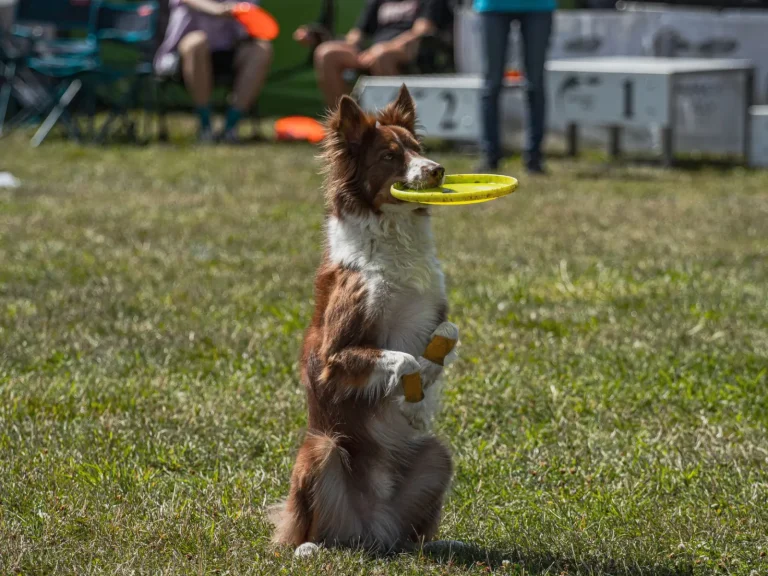


Australian Shepherds were bred to work all day in open spaces, moving stock across rough terrain. That genetic foundation doesn’t simply disappear when a dog lives in a house. What you’re dealing with is a breed that has a deeply embedded need for activity, mental engagement, and purpose. When you bring one home, you’re not just getting a dog – you’re inheriting thousands of years of selective breeding for motion and responsiveness.
Settling, in practical terms, means the dog can lie down and remain calm for extended periods without constant stimulation or your direct attention. It’s not the same as being tired. A tired Australian Shepherd might collapse on the floor, but the moment something interesting happens – a sound outside, movement in the kitchen, a person walking past – they’re back up and engaged. True settling is different. It’s a learned state where the dog has genuinely accepted that rest is acceptable right now, even if opportunities for activity exist.
Most people underestimate how foreign this concept is to the breed. I’ve worked with plenty of Australian Shepherds whose owners were frustrated because the dog couldn’t just “chill out” like other breeds seemed to do naturally. The frustration is understandable, but it misses the point. This isn’t laziness or a training failure on the dog’s part. It’s a mismatch between what the dog was built to do and what the environment demands.
Why Settling Doesn’t Come Naturally
An Australian Shepherd’s brain is wired to scan for work. Even in a quiet house, their nervous system is partially activated, waiting for something to do. This isn’t anxiety in most cases – it’s baseline arousal. The dog isn’t stressed; they’re simply ready. Add in a typical household with varied activity levels, and you’ve created an environment where the dog has learned that staying alert pays off. Something interesting happens eventually, and the dog gets to engage.
The problem compounds when owners inadvertently reward alertness. A dog notices something and barks. The owner responds, even negatively. That’s engagement. The dog learns that staying tuned in to the environment produces results. Over time, the dog’s default state becomes increasingly vigilant rather than restful.
Environmental design matters more than most people realize. A dog in a room with a window overlooking a busy street, or in an open-plan living space where they can monitor multiple areas, is being constantly presented with reasons to stay engaged. The visual and auditory stimulation alone is enough to keep their attention cycling through the environment rather than settling inward.
Building Capacity for Calm
The most reliable approach I’ve seen is to create specific conditions where settling becomes the path of least resistance. This doesn’t mean forcing the dog into submission or using punishment. It means structuring the environment and the dog’s schedule so that rest is genuinely the most rewarding option available.
Start with a defined space. A crate, a mat, or a specific room works. The boundary matters because it reduces the dog’s sense of responsibility to monitor the entire environment. When a dog is confined to a small area, they can’t patrol or scan as effectively, and this often paradoxically helps them relax faster. The decision-making load decreases.
Timing is critical. A dog who has had adequate physical exercise and mental work earlier in the day will settle more readily than one who hasn’t. But here’s the nuance: exhaustion isn’t the goal. A dog who is truly exhausted might collapse, but they’re not learning to settle – they’re just shutting down temporarily. What works better is moderate exercise paired with focused mental work, followed by a period where settling is the only available activity.
The transition into settling should be boring. Not punishment-boring, but genuinely unstimulating. No talking, no eye contact, no interaction. Many people inadvertently make settling an interactive process by praising the dog for lying down, which keeps the dog’s attention on the owner rather than allowing them to genuinely disengage. The dog learns to settle in order to get praise, not because settling itself has become acceptable.
What Actually Works in Practice
I’ve found that Australian Shepherds settle more readily when they have a clear job during settling time. This sounds counterintuitive, but it works. A dog lying on a mat with a chew toy, a puzzle feeder, or a long-lasting treat has a defined task. They’re not resting because they’re allowed to; they’re resting because they’re occupied with something that requires their attention but doesn’t demand movement or engagement with you.
The chew or toy should be something that genuinely interests the dog and takes time to work through. A five-minute treat won’t establish settling; the dog finishes, looks for the next thing, and the settling breaks down. Aim for items that occupy the dog for at least 20 to 30 minutes. Frozen kongs, bully sticks, or puzzle toys filled with high-value treats work well for most dogs.
Consistency matters more than intensity. A dog who settles for 15 minutes every single day will develop the habit faster than a dog who occasionally settles for an hour. The nervous system needs repeated exposure to the experience of being calm and nothing bad happening. Each successful settling session reinforces the pattern slightly.
Location variation is worth considering once the dog has the basic idea. If settling only happens in one specific place, the dog might associate settling with that location rather than understanding it as a general behavioral state. Over time, gradually introducing settling in different rooms or areas helps the dog generalize the skill.
Common Obstacles and What They Usually Mean
If a dog consistently can’t settle despite having had exercise and mental work, it often signals either insufficient physical outlet or an underlying anxiety issue. Australian Shepherds with genuine anxiety won’t settle because their nervous system is genuinely activated. This is different from a dog who simply hasn’t learned the behavior yet. An anxious dog might pace, pant, or show other signs of distress even when confined to a settling space.
Another common issue is that the dog has learned settling means something bad is about to happen. If you use settling time as a precursor to leaving the house, or if you’ve used confinement punitively in the past, the dog might resist settling because they’ve learned it predicts separation or isolation. In these cases, settling needs to be completely divorced from any negative event for a period of time.
Some Australian Shepherds struggle to settle because they haven’t actually learned to be comfortable with inactivity. They’ve been in high-stimulation environments their entire lives, and the quiet feels wrong. These dogs often need a gradual introduction to calm, starting with very short periods and slowly extending the duration as they become more comfortable.
The breed’s intelligence can work against settling too. A smart Australian Shepherd might figure out that certain behaviors – whining, pawing, barking – will end the settling period and get them what they want. If those behaviors ever succeed, the dog will repeat them. Consistency in ignoring these behaviors is essential, even though it’s frustrating.
Teaching an Australian Shepherd to settle is less about training a specific command and more about helping the dog’s nervous system accept that rest is normal and safe. It takes patience and a realistic understanding of what the breed was built to do. Once a dog genuinely settles, though, the change in household dynamics is noticeable. The dog is calmer, more responsive to other training, and genuinely seems more content. That shift doesn’t happen overnight, but it does happen when the approach matches the dog’s actual neurology and needs.