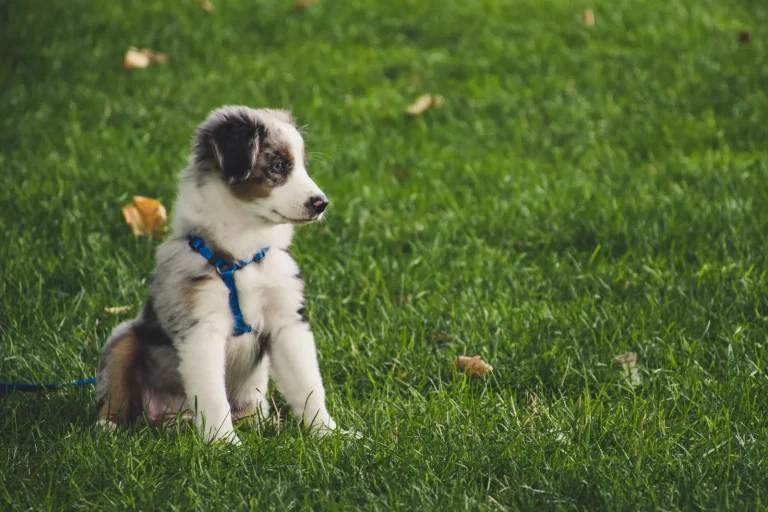

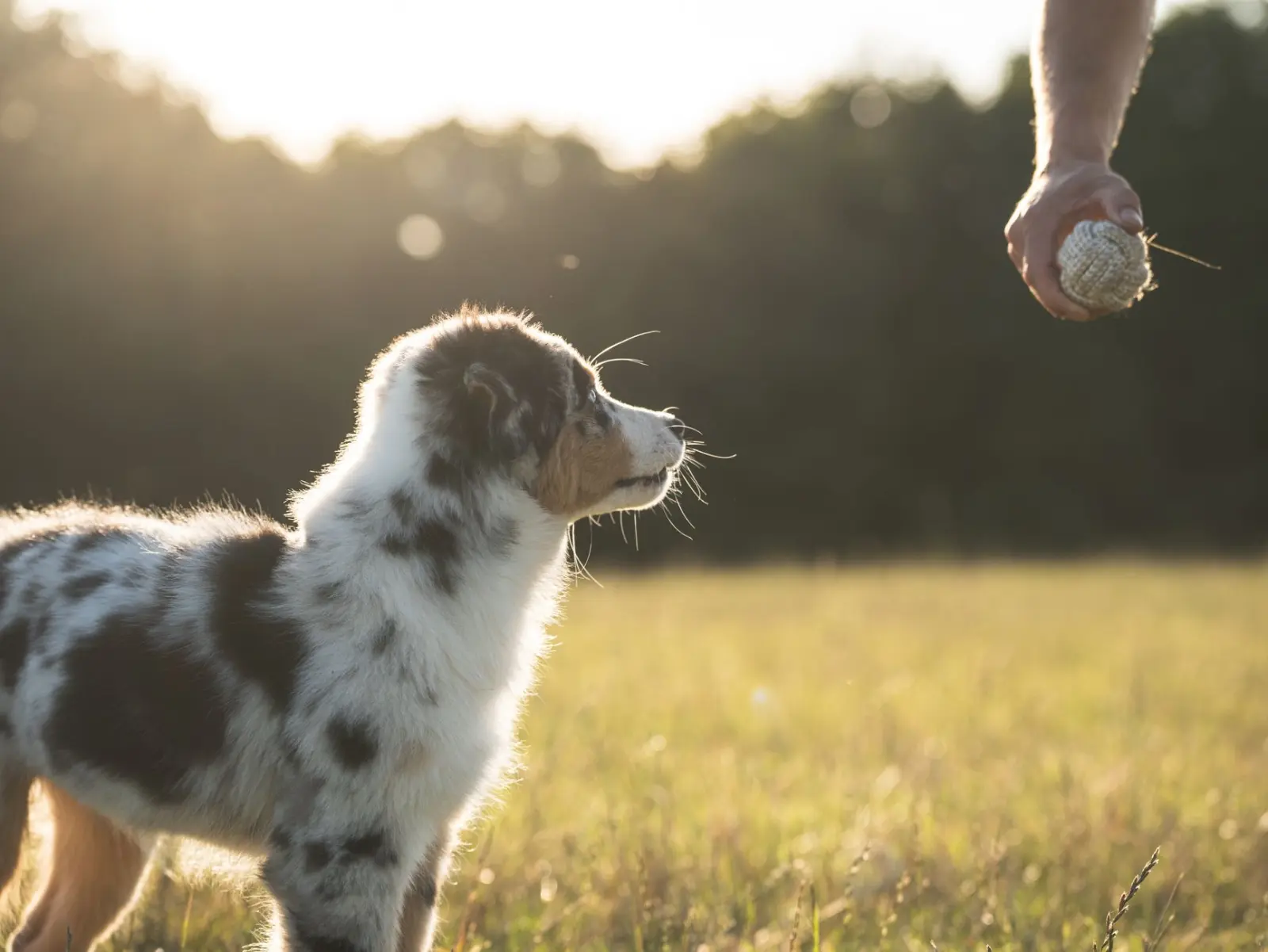
Australian Shepherds have a particular relationship with the stay command. They’re bred to work, to move, to manage stock across open ground. Asking one to hold position runs counter to their core wiring. This doesn’t make them difficult to train – it makes them honest. They’ll show you exactly where your communication breaks down and where your consistency wavers. After years of working with this breed, I’ve learned that teaching stay isn’t about forcing compliance. It’s about building a framework where staying makes sense to the dog.
The first thing most people miss is that stay and sit are completely different requests. Sit is a position. Stay is a duration. An Australian Shepherd can nail sit in a week. Stay takes months, sometimes longer, and that’s normal. The dog isn’t being stubborn. The dog is learning to override its natural impulse to remain engaged with you and the environment. For a breed that evolved watching movement and responding to it, this is genuinely difficult work.
Where the Foundation Actually Matters
Before you work on duration, the dog needs to understand that staying put is rewarded. Not just tolerated – actively rewarded. I see owners who practice stay by stepping back, waiting five seconds, and returning. Nothing happens. The dog gets no information about what just earned them anything. Australian Shepherds are smart enough to notice this. They’ll start to wonder why they’re being asked to do nothing and then released with no fanfare.
The real foundation is building a pattern where the dog learns that remaining in position while you move creates good outcomes. This means you reward frequently at first. I’m talking every two or three seconds. You step back, count to two, step forward, reward. The reward should be something the dog genuinely wants – not a kibble if the dog is food-motivated but indifferent to kibble. For many Australian Shepherds, this might be a piece of chicken, a toy, or even just enthusiastic praise and play. Watch what your individual dog actually works for.
The position itself matters less than you’d think at this stage. Some trainers insist on sit-stay. Some use down-stay. I’ve found that Australian Shepherds often learn down-stay more easily because it’s a more settled position and feels less like they’re about to spring into action. But the command word and the position are secondary to the core lesson: when I hold this position and you move away, good things happen.
Duration Builds Slowly and Unevenly
Once the dog understands the basic pattern, duration increases, but not in a straight line. You might work up to 30 seconds, then the next session the dog falls apart at 10 seconds. This frustrates owners. They think the dog has forgotten. Usually, the dog is just tired, distracted, or you’ve changed something subtle about your timing or your position. Australian Shepherds are sensitive to context. A stay that holds in your living room might collapse in the backyard. A stay that works at 6 p.m. might fail at 9 a.m. when the dog is fresher and more reactive.
I build duration in very small increments. I’ll work at 5 seconds for three or four sessions before moving to 8 seconds. This feels slow, but it prevents the dog from developing a habit of breaking. Once an Australian Shepherd breaks stay a few times and gets away with it, the behavior becomes much harder to solidify. Prevention is easier than correction.
Distance and duration are separate variables. Don’t increase both at the same time. If you’re working on holding stay for 20 seconds, keep your distance short – maybe just a step or two away. Once 20 seconds is solid at that distance, then you can step back further while resetting the timer to shorter durations. The dog needs to succeed consistently before you add complexity.
Distractions and Real-World Conditions
A stay that only works in a quiet room isn’t actually useful. Australian Shepherds live in the real world, where other dogs walk by, birds move, kids run, and the environment is constantly shifting. Building a reliable stay means gradually introducing distraction, but again, not all at once.
I start by introducing minor environmental changes while the dog is in stay. A door closes. Someone walks past slowly. A toy sits nearby but out of reach. The dog learns to hold position even when something interesting happens. If the dog breaks, you don’t punish. You simply reset and try again with less distraction. The dog is learning that breaking stay doesn’t get them what they want – it just means we start over.
With Australian Shepherds specifically, movement is a huge trigger. If you’re moving around while the dog is in stay, you’re asking them to resist their instinct to track and follow you. Some trainers move in circles or walk away and back. Others have the dog stay while the handler does jumping jacks. These exercises teach the dog that your movement isn’t permission for them to move. It takes repetition, but Australian Shepherds understand this principle once it clicks.
The Release Word Matters More Than People Think
How you end stay shapes whether the dog takes it seriously. A sloppy release teaches the dog that the command is flexible. If you sometimes say “okay” and sometimes just walk away and sometimes say “all done,” the dog gets confused about what actually ends the command.
I use a consistent release word – usually “free” or “release” – and I make sure it’s always the same. The dog learns that this word is the only permission to break position. This actually makes the command easier to maintain, not harder. The dog knows exactly when they’re allowed to move. Until that word comes, staying is the job.
The release should also be rewarding. When you release, the dog should get something good – a toy to chase, a treat, playtime. This reinforces that holding stay was worth it. Australian Shepherds work for a reason. Give them a reason to take stay seriously.
Teaching stay to an Australian Shepherd is a long-term project, but it’s one of the most valuable commands you can build. A dog that reliably stays is a dog you can safely manage in unpredictable situations. It takes patience and consistency, but this breed responds well to clear communication and fair expectations. The work is worth it.