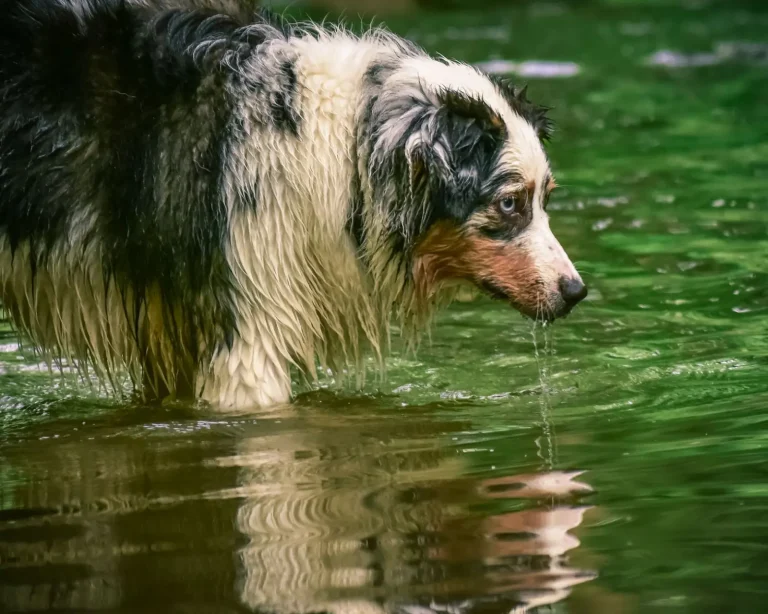

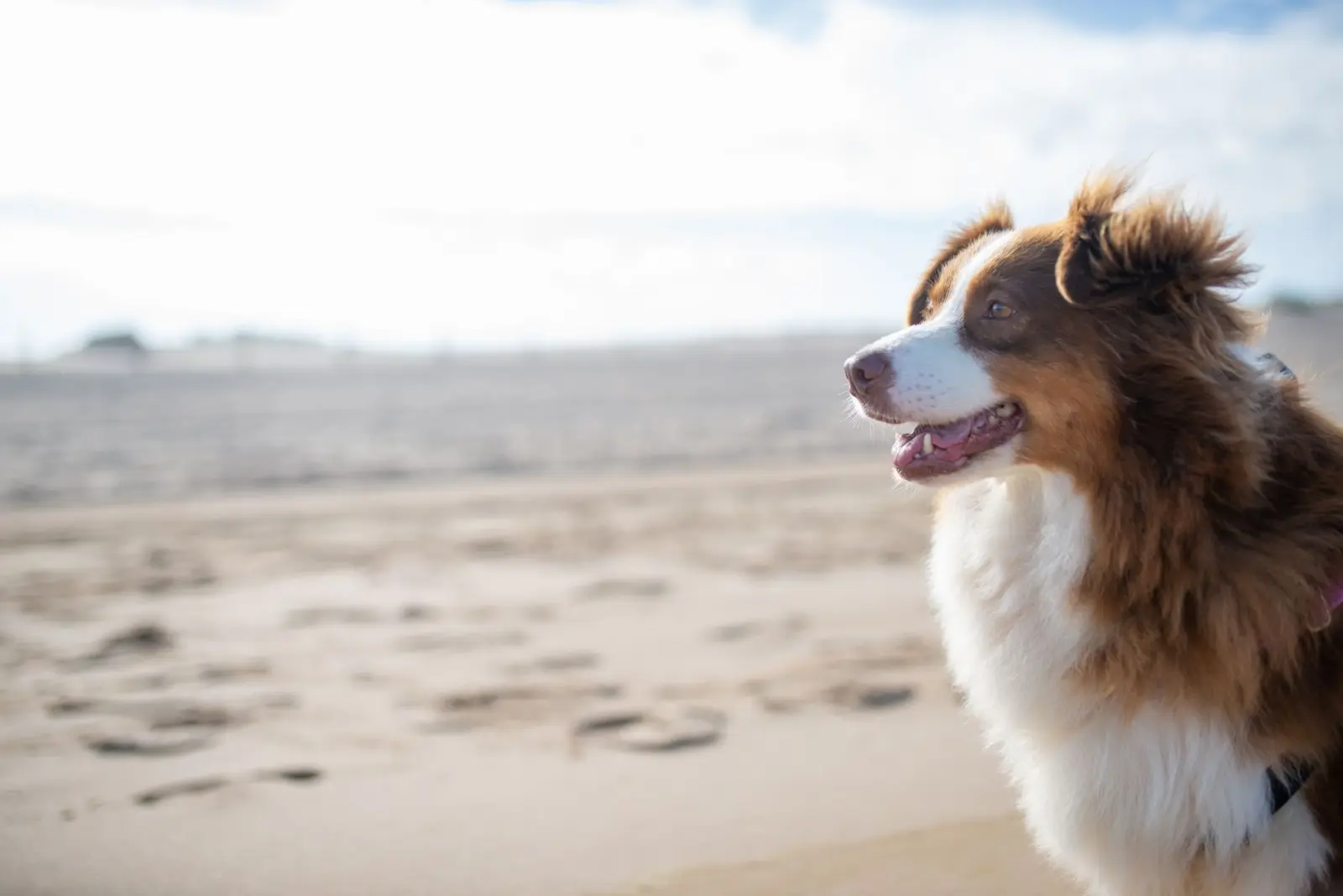
Australian Shepherds at the beach present a particular set of challenges that don’t always announce themselves clearly. Over years of working with these dogs in coastal settings, I’ve noticed patterns that owners often miss until something goes wrong. The breed’s energy, their thick double coat, and their natural drive to work make them both enthusiastic beach companions and vulnerable to specific hazards that are easy to underestimate.
The most immediate concern isn’t dramatic – it’s heat. Australian Shepherds were developed to work in variable conditions, but their coat is designed for temperature regulation in inland climates, not sustained exposure to Australian coastal heat reflected off sand and water. A dog that appears comfortable can be building internal heat stress without obvious signs. I’ve seen dogs collapse not from exertion but from the cumulative effect of heat absorption through their dark coat combined with the reflective surface of wet sand. The water itself doesn’t cool them as efficiently as owners assume, especially when they’re moving constantly.
Understanding Heat Stress in Coastal Conditions
Heat stress in Australian Shepherds at the beach operates differently than in other environments. The sand temperature can exceed 50°C on a hot day, and a dog’s paws absorb this directly. Their belly and chest, closest to the sand surface, absorb radiant heat continuously. Even when the air temperature feels moderate, the combination of sun exposure, sand temperature, and water activity creates a thermal load that accumulates. A dog might seem fine at the two-hour mark, then show signs of distress an hour later when the heat has accumulated in their core.
The early signs are often subtle. Panting becomes heavier than activity level justifies. The dog may seek shade but not rest properly. Some dogs become less responsive or show reduced interest in play – a behavioral shift rather than obvious distress. I’ve observed dogs who continue retrieving or swimming because their drive overrides their body’s signals. This is where breed temperament works against them. Australian Shepherds are motivated workers, and they don’t naturally stop when they should.
Water Hazards Specific to Australian Beaches
Saltwater itself isn’t inherently dangerous, but the conditions surrounding it are. Rips and currents are the obvious concern, but Australian Shepherds often encounter problems with less visible water features. They’re strong swimmers with good instinct, but they lack the experience to read water conditions the way a human might. A dog that swims confidently in a pool or calm bay can be caught off guard by a sudden change in current or depth.
Ingestion of saltwater is common and usually minor, but repeated swallowing of seawater can cause gastrointestinal upset. More problematic are the things in the water – broken shells, sea urchins, stingrays, and sharp rocks. Australian Shepherds investigate with their mouths, and their paws are sensitive. I’ve treated minor lacerations from shells and more serious injuries from stepping on sea urchins or sharp coral. These injuries are often preventable with awareness of what’s underfoot and what’s floating.
Algal blooms and bacterial growth in warm coastal water are seasonal concerns that many owners don’t consider. Dogs that swim in water with harmful algae or high bacterial loads can develop skin irritation, ear infections, or gastrointestinal issues. The symptoms appear days after the beach visit, making the connection unclear. If a dog develops itching, ear discharge, or vomiting after beach time, water quality during that visit should be considered.
Paw and Skin Protection
The paws of an Australian Shepherd are not adapted to extended time on hot sand or rough coastal terrain. Paw pad burns are real and underestimated. A dog can develop blistering or raw pads after a few hours on hot sand, and the damage isn’t always visible immediately. Owners often notice limping or reluctance to walk only after returning home.
Salt and sand accumulate in the coat, between pads, and in skin folds. If not rinsed properly, this combination creates an environment for bacterial and fungal growth. The area between the toes is particularly vulnerable. I’ve seen dogs develop infections in these spaces that persist for weeks because the initial salt and sand irritation wasn’t addressed promptly. A rinse with fresh water after beach time is standard practice, but many owners underestimate how thoroughly this needs to be done.
The double coat of an Australian Shepherd traps moisture and salt. Wet sand works into the undercoat and can cause matting if not addressed. Beyond the cosmetic issue, matting creates a microclimate where moisture persists and skin irritation develops. Drying the coat properly – not just air-drying – prevents this cascade.
Managing Time and Intensity
The duration of beach exposure matters more than most owners realize. A dog can handle an hour comfortably in moderate conditions but deteriorate rapidly in the second or third hour, especially if activity remains intense. Australian Shepherds don’t self-regulate well. They’ll chase, swim, and retrieve until they’re exhausted, and exhaustion in heat is dangerous.
I’ve found that breaking beach time into shorter sessions with rest periods in shade is more effective than one long outing. A dog that rests in the shade for 20 minutes, drinks fresh water, and cools down can often handle another active period. Without this structure, the cumulative heat load builds regardless of the dog’s enthusiasm.
Early morning and late afternoon visits are safer than midday exposure. The sand is cooler, the sun angle is lower, and the overall thermal stress is reduced. This timing also tends to coincide with lower water temperatures and calmer conditions.
Hydration requires attention beyond what owners typically provide. A dog that’s swimming and playing loses fluid through panting and exertion. Access to fresh water should be constant, not occasional. Salt water ingestion doesn’t replace hydration – it increases the dog’s need for fresh water. I’ve observed dogs that drank seawater becoming progressively more dehydrated because owners didn’t recognize the problem.
Australian Shepherds in Australian coastal environments face a combination of challenges that require active management rather than passive supervision. The breed’s drive and capability can mask the stress building in their system. Recognizing this gap between what the dog appears capable of and what their body can actually sustain is the foundation of safe beach time. Heat accumulation, water hazards, paw and skin damage, and dehydration are all preventable with awareness and structure. The goal isn’t to avoid the beach with these dogs – they often thrive with varied activity – but to approach it with realistic expectations about their vulnerabilities and the specific demands of the Australian coastal environment.