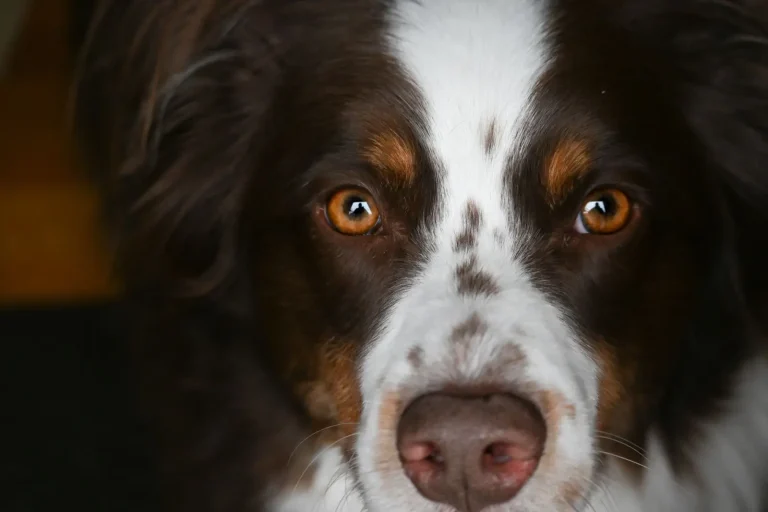

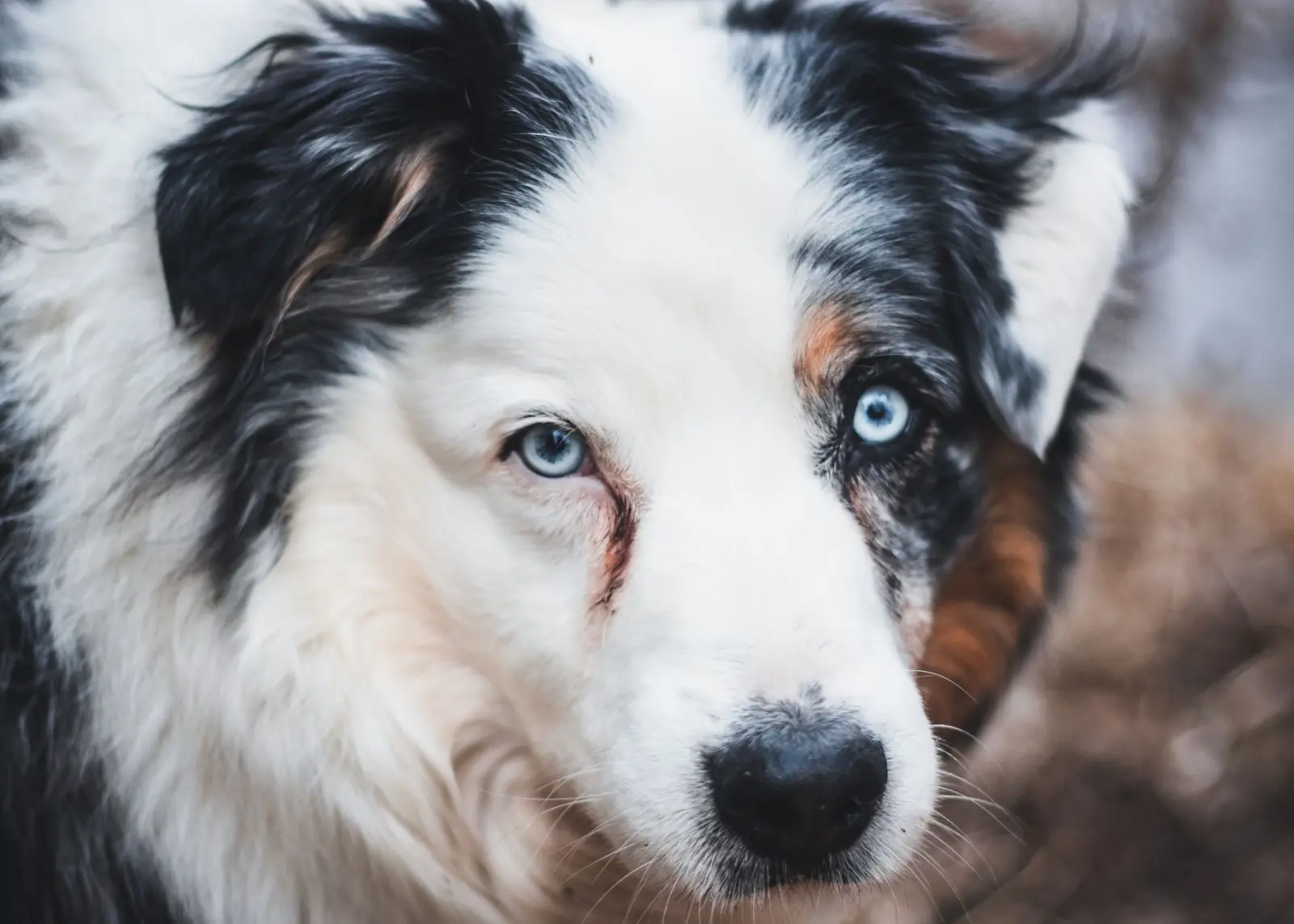
The double merle coat pattern in Australian shepherds is striking – predominantly white with patches of color, often with unusual eye pigmentation. It’s visually distinctive enough that it catches attention at dog parks and breed shows. But behind that appearance sits a genetic reality that has shaped how responsible breeders approach this breed. After years of working with Australian shepherds, I’ve seen firsthand what happens when two merle-coated dogs are bred together, and it’s something every person considering this breed needs to understand clearly.
Double merles result from breeding two dogs that each carry the merle gene. The merle pattern itself isn’t problematic – single merles are healthy, normal dogs. The issue emerges when that genetic instruction appears twice in a dog’s DNA. The merle gene affects pigmentation development, and when present in double dose, it disrupts the formation of structures in the eye and ear during fetal development. This isn’t a minor cosmetic concern. It’s a structural problem that manifests as deafness, blindness, or both.
Deafness is the most common outcome. Many double merles are born deaf in one or both ears. I’ve worked with owners who discovered this weeks after bringing a puppy home – the dog didn’t respond to sound, didn’t startle at loud noises, didn’t come when called with audio cues alone. Some dogs are profoundly deaf in both ears from birth. Others have partial hearing loss that becomes apparent only when you notice the dog’s selective responsiveness. The variation exists, but the prevalence is what matters: studies consistently show that 30 percent or more of double merle dogs experience some degree of hearing loss.
Vision Problems and Eye Structure
Blindness or partial vision loss occurs less frequently than deafness but remains a serious concern. The merle gene affects the development of the retina and the optic nerve. Some double merles are born with microphthalmia – abnormally small eyes – or with underdeveloped retinas that don’t function properly. Others develop progressive vision loss over time. I’ve seen dogs with apparent normal-looking eyes that gradually lost sight as they matured, their owners noticing the change only when the dog began moving more cautiously or bumping into objects in low light.
The eye issues aren’t always obvious at first glance. A puppy might have structurally small eyes or pale irises that don’t immediately signal a problem to an untrained observer. Some double merles have blue or parti-colored eyes – a trait that appeals to some people aesthetically but often correlates with increased risk of vision defects. Comprehensive eye examinations by a veterinary ophthalmologist can identify these issues, but many owners don’t pursue this screening early enough to understand what they’re dealing with.
Why Responsible Breeders Avoid This Cross
The genetics here are straightforward, which is precisely why ethical breeders in this breed have moved away from double merle production. The merle allele is dominant, meaning a single copy produces the pattern. Two copies – double merle – triggers the health cascade. This isn’t a matter of opinion or breeding philosophy. It’s predictable genetics. A breeder who knows this and deliberately produces double merles is making a choice to accept a high probability of serious health problems in the resulting dogs.
Most breed clubs and responsible breeding organizations actively discourage or prohibit breeding two merles together. The Australian Shepherd Club of America and similar organizations recognize this as a welfare issue. Yet double merles still exist in the market, which means they’re still being bred. Sometimes it happens through ignorance – a backyard breeder who doesn’t understand genetics. Sometimes it’s deliberate, driven by the visual appeal of the pattern or by profit motive when double merles command higher prices from uninformed buyers.
Living with a Double Merle Dog
Owners of double merle Australian shepherds face real, ongoing management challenges. A deaf dog requires different training approaches. You can’t rely on verbal commands or audio cues. Hand signals, vibration collars, and visual markers become essential. These dogs can live full, functional lives, but they need owners who understand their sensory limitations and adjust expectations accordingly. Off-leash freedom becomes risky. Recall training takes a different form. The dog’s safety in environments with traffic or other hazards requires more vigilance.
Vision loss adds another layer. A blind or partially blind dog navigates the world differently. Furniture arrangement matters more. Stairs become obstacles. The dog may develop anxiety in unfamiliar spaces. Some adapt remarkably well, using their other senses and memory to move confidently through known environments. Others struggle more. The severity depends on whether the loss is complete or partial, whether it’s in one eye or both, and whether it’s stable or progressive.
Behavioral issues sometimes emerge alongside sensory loss. A deaf dog startled by unexpected touch might snap or bite reflexively. A blind dog in pain or disoriented might become defensive. These aren’t character flaws – they’re reasonable responses to sensory deprivation and uncertainty. Owners who understand this can work with it. Those who don’t often interpret the behavior as aggression or stubbornness, which leads to frustration and sometimes rehoming.
The Breeding Decision
If you’re considering an Australian shepherd and encounter a double merle, the question isn’t whether the dog can live a decent life. Many do. The question is whether you’re prepared for the specific demands and whether you want to support a breeding practice that knowingly produces dogs with these limitations. There’s a difference between accepting an unexpected health issue in a dog you already own and deliberately purchasing from a breeder who creates them.
Single merle Australian shepherds offer the visual appeal of the merle pattern without the genetic risk. They’re widely available, they’re healthy, and they’re produced by breeders who understand basic genetics and care about breed welfare. If the merle pattern appeals to you, this is the straightforward choice. If you already own a double merle, the focus shifts to understanding your dog’s specific needs and providing appropriate management and veterinary care.
The double merle pattern exists because it’s genetically possible and visually striking. It persists in the market because some people find it appealing and some breeders prioritize profit or aesthetics over health. Understanding what this pattern means – not just how it looks, but what it does to the dog’s sensory systems – is the foundation for making informed decisions about this breed.