
The blue merle Australian Shepherd is one of the breed’s most visually striking coat patterns, yet it remains one of the most misunderstood when it comes to how it actually develops. After years of working with these dogs – both in breeding programs and in clinical settings – I’ve noticed that most people see the pattern as a simple aesthetic choice, when in reality it’s the product of a specific genetic mechanism that comes with its own set of considerations.
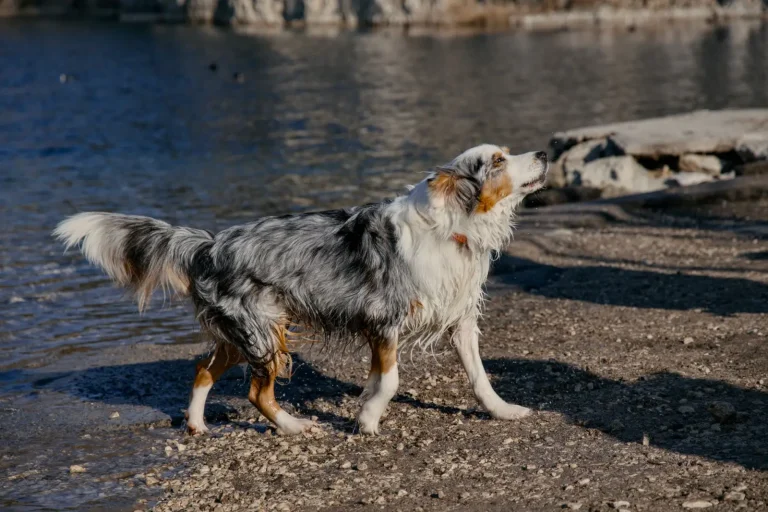
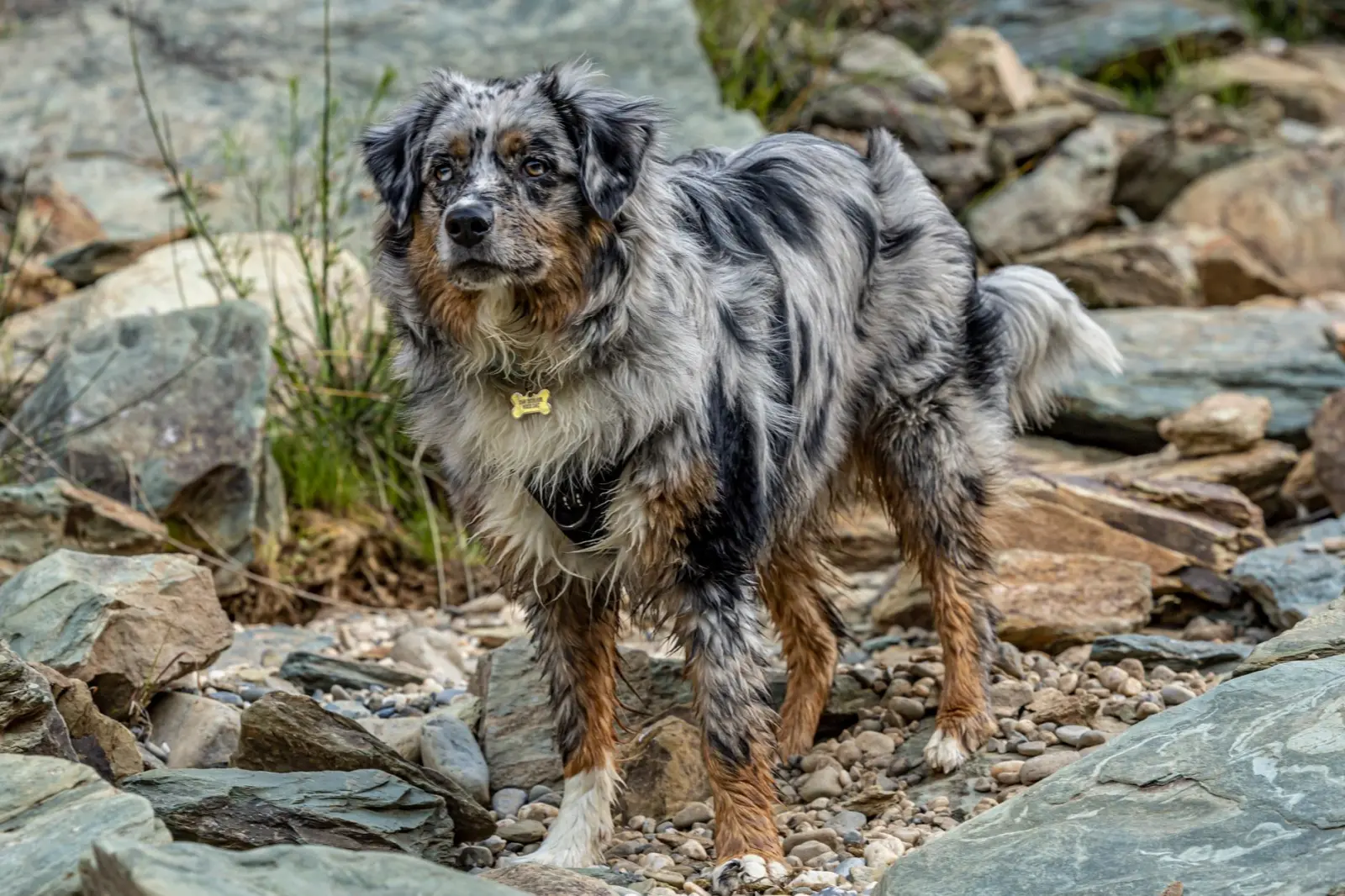
The blue merle pattern itself isn’t truly blue. What we call “blue” is actually a diluted black pigment distributed across the coat in a mottled or speckled pattern. The base color is typically gray or silver, with darker patches and streaks running through it. The effect creates what looks like marbling or watercolor bleeding across the dog’s body. Some blue merles have more distinct patches, while others have a finer, more uniform speckle throughout. This variation in pattern density is normal and doesn’t indicate a problem – it’s simply how the merle gene expresses itself differently from one dog to another.
Understanding the genetics requires looking at what’s actually happening at the DNA level. The merle pattern is controlled by a dominant allele, often referred to as the M allele. A dog needs only one copy of this gene to display the merle pattern. This is why merle appears so frequently in Australian Shepherd litters: if one parent carries the merle gene, roughly half the offspring will inherit it and show the pattern. If both parents are merle, the situation becomes more complicated and potentially problematic.
The Double Merle Problem
When two merle dogs are bred together, there’s a 25 percent chance that a puppy will inherit the merle allele from both parents. This is called a double merle or homozygous merle. The consequences are significant and consistent enough that responsible breeders actively avoid this cross. Double merle puppies frequently experience serious developmental issues with their eyes and ears. Partial or complete blindness is common, as is deafness. Some puppies are born with both conditions. The severity can vary – some double merles have mild vision problems while others are completely blind – but the risk is substantial enough that it’s considered irresponsible breeding practice.
The mechanism behind these problems relates to how the merle allele affects pigment cell development during gestation. The gene influences the migration and survival of melanocytes, the cells responsible for pigment production. When present in double dose, this disruption becomes severe enough to damage the developing eye and inner ear structures. It’s not a matter of the pattern being “too strong” or the dog being “too blue” – it’s a genuine developmental defect that occurs in utero.
Pattern Expression and Modifier Genes
What’s interesting is that the blue merle pattern itself varies considerably even among single-merle dogs. Some Australian Shepherds display a heavy merle with large dark patches and minimal gray background. Others have a light merle with fine speckling throughout. This variation comes down to modifier genes – other genetic factors that influence how the primary merle gene expresses itself visually. These modifiers can make a merle pattern appear denser or more dispersed, but they don’t change the underlying genetic mechanism.
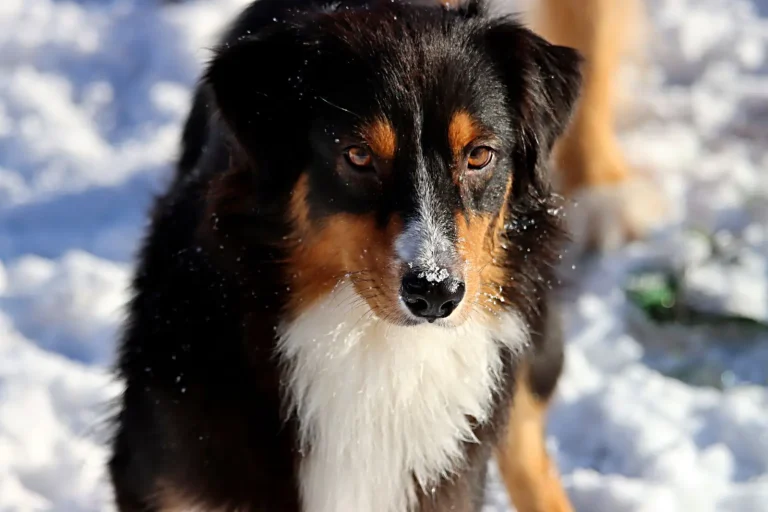
I’ve also observed that blue merles often carry tan or copper markings on their face, legs, and chest, just like their non-merle counterparts. These markings are controlled by separate genes and appear independently of the merle pattern. A blue merle might be tan-pointed, tri-colored (with white), or solid merle depending on what other color genes it inherited. The combination of merle with these other patterns creates the visual diversity you see in the breed.
Breeding Considerations and Testing
From a breeding standpoint, the responsible approach is straightforward: never intentionally breed two merle dogs together. A single merle parent bred to a non-merle (red or black) parent will produce litters where approximately half the puppies are merle and half are non-merle. This is predictable and safe. The merle puppies will be healthy, and the non-merle puppies will be equally healthy. Both are equally valuable as family companions or working dogs.
Genetic testing has become more accessible in recent years, and it can confirm whether a dog carries the merle allele. This is particularly useful when a dog’s coat color is ambiguous or when breeding decisions need to be made with certainty. A DNA test can definitively tell you whether a dog is a single merle, non-merle, or – in rare cases where it might not be visually obvious – a double merle. For anyone involved in breeding, this testing removes guesswork and ensures informed decisions.
The merle pattern itself doesn’t affect a dog’s working ability, temperament, or overall health beyond the concerns associated with double merles. A blue merle Australian Shepherd will herd, run, and live just as well as any other color variant. The pattern is purely cosmetic in most cases, though it does carry that significant genetic caveat when breeding decisions are made carelessly.
Over time, I’ve noticed that awareness about double merle risks has improved in the Australian Shepherd community, but misconceptions still exist. Some people believe that a very light merle or a very dark merle indicates a health problem. Others think that merle dogs are inherently more prone to ear or eye issues. Neither is accurate. A healthy single merle is genetically sound. The only real concern is the combination of two merle parents, which is entirely preventable through responsible breeding practices.