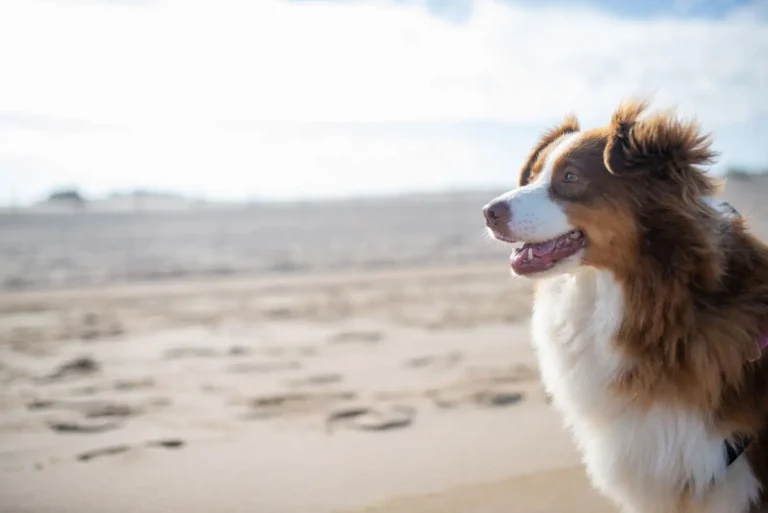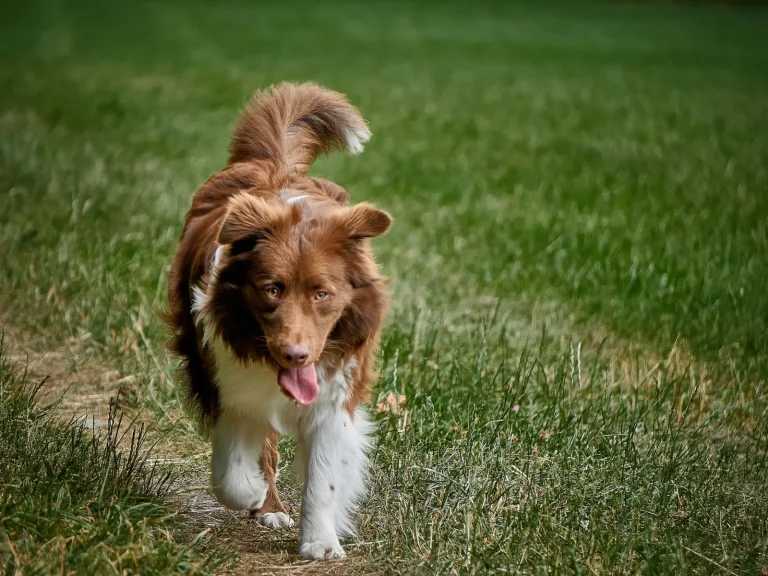

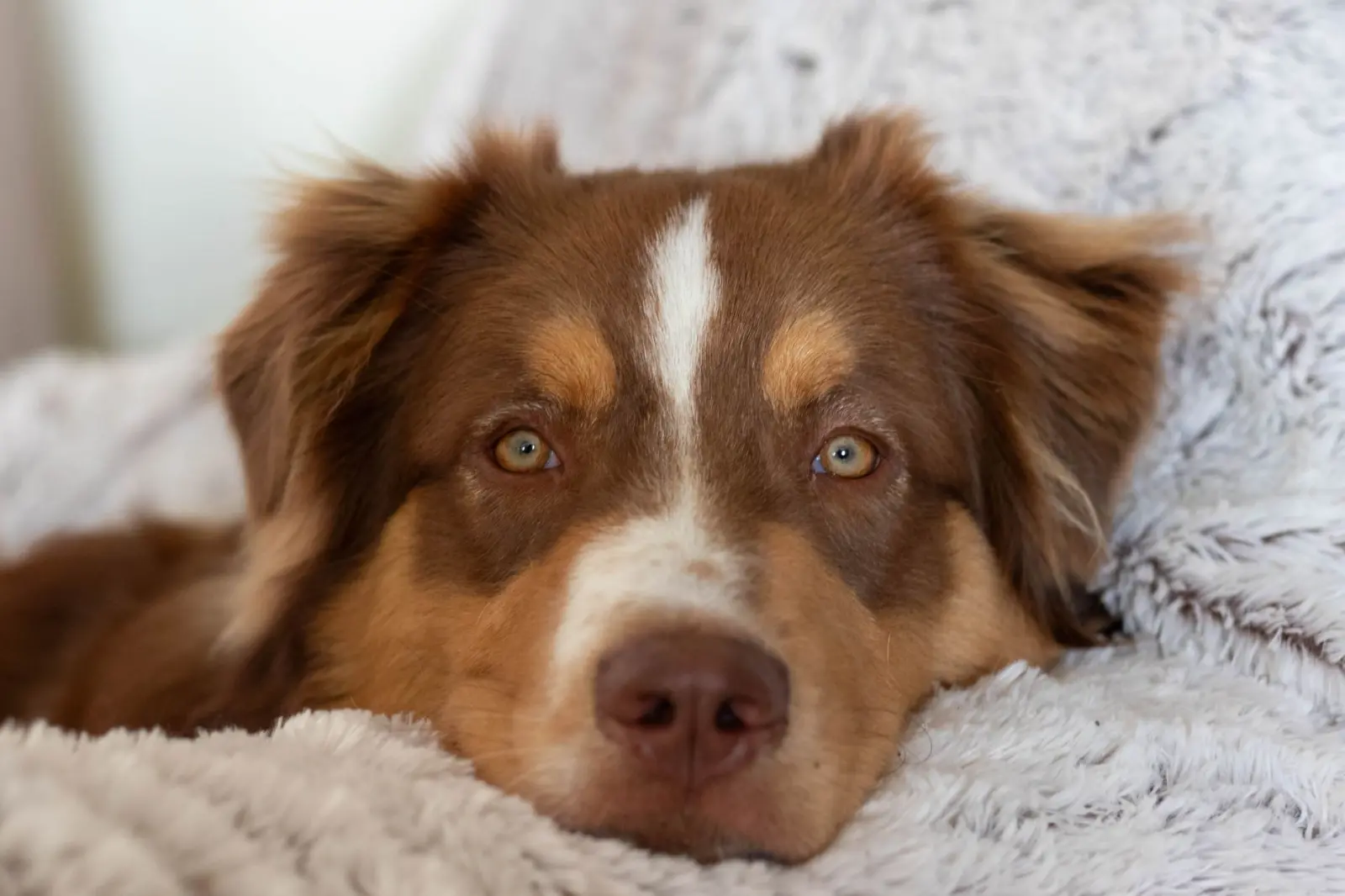
Australian Shepherds have a reputation for sharp vision, and it’s largely deserved. Their eyes are built for herding work – alert, responsive, and capable of tracking movement across open ground. But that same intensity and breed structure that makes them effective working dogs also predisposes them to a cluster of eye problems that show up with enough frequency that breeders and owners need to take them seriously. Over the years, I’ve seen how often eye issues in this breed go unnoticed until they’ve progressed, which is why understanding what happens during testing matters.
The breed carries genetic risk for several conditions. Collie Eye Anomaly affects the back of the eye during development. Progressive Retinal Atrophy causes gradual vision loss. Cataracts can appear early in some lines. None of these are rare accidents – they’re conditions that show up regularly enough that responsible breeders screen for them, and owners should expect their vet to monitor for them across the dog’s lifetime.
When a vet performs an eye exam on an Australian Shepherd, they’re not just checking if the dog can see. They’re looking at the structures and function of the eye in ways that matter specifically to this breed.
What Happens During a Standard Eye Exam
The exam usually starts with what’s called the visual assessment. The vet watches how the dog moves around the room, how it responds to movement, whether it blinks normally, and whether the eyes track objects smoothly. This tells them whether the dog’s vision is functional in everyday situations. Then they look at the eye itself – the eyelids, the white part, the cornea, the lens. They’re checking for discharge, redness, cloudiness, or swelling. These are the things you can notice at home too, but a vet knows what subtle changes matter.
The ophthalmoscope comes next. This is the handheld instrument that lets the vet look deep into the eye, past the lens, to examine the retina and optic nerve. The room gets dark. The vet holds the instrument close to the dog’s eye and peers through it. What they see back there is what tells the real story. The retina should have a healthy appearance – a certain color and texture, blood vessels in the right pattern, a distinct optic disc. Changes in any of these can indicate disease.
Tonometry measures eye pressure. The vet uses a small instrument that touches the eye gently to measure intraocular pressure. High pressure can indicate glaucoma, which is painless until it causes sudden vision loss. This is one of those tests that seems minor but catches serious problems early.
Breed-Specific Concerns During Testing
When the vet is examining an Australian Shepherd specifically, they’re alert to certain patterns. Collie Eye Anomaly shows up as hypoplasia – underdevelopment – of the choroid, the tissue layer beneath the retina. It can be mild and cause no vision problems, or it can be severe enough to affect sight. The vet looks for it because it’s present from birth, even if it doesn’t always cause symptoms. Finding it early means understanding what to monitor.
Progressive Retinal Atrophy is harder to catch in its early stages. The retina looks relatively normal at first, but the photoreceptor cells are slowly dying. Night blindness often appears first – the dog becomes hesitant in low light before daytime vision is affected. The vet knows to ask about this. They also know that some Australian Shepherd lines carry mutations for early-onset PRA, which is why genetic testing has become more common in responsible breeding programs.
Cataracts in Australian Shepherds sometimes develop young. The vet looks for cloudiness in the lens. Early cataracts might not affect vision much, but they can progress. Knowing they’re there means tracking them over time and making decisions about surgery if they worsen.
Genetic Testing and Its Role
Beyond the physical exam, genetic testing has become a standard part of responsible screening in the breed. A simple DNA test can identify whether a dog carries mutations for Progressive Retinal Atrophy or other hereditary conditions. This test doesn’t require an ophthalmologist – a regular vet can collect a cheek swab. What it does is answer a question that the physical exam alone can’t: is this dog going to develop a condition later, even if its eyes look normal now?
For breeders, this information is essential. For owners of individual dogs, it provides clarity. A dog that tests clear for PRA mutations won’t develop that form of blindness. A dog that carries one or two copies of a mutation might or might not show symptoms, depending on whether the condition is recessive or dominant. Knowing this changes how you plan for the dog’s future and what you watch for.
When Specialist Evaluation Becomes Necessary
Not every eye issue requires a veterinary ophthalmologist, but some do. If your regular vet finds something concerning – suspected Collie Eye Anomaly, early cataracts, or signs of retinal disease – they’ll likely refer you to a specialist. An ophthalmologist has equipment and training that goes beyond what a general practice vet can offer. They can perform detailed imaging of the retina, measure visual function more precisely, and make recommendations about treatment or monitoring that are specific to the condition.
The Canine Eye Registration Foundation, or CERF, maintains a registry of dogs that have passed eye exams performed by board-certified ophthalmologists. Many breeders use CERF certification as part of their screening protocol. If you’re getting an Australian Shepherd from a breeder, asking about CERF clearance is reasonable. It’s not a guarantee that the dog will never develop eye problems, but it’s evidence that someone looked carefully.
For dogs already in homes, regular eye exams by your vet – at least annually, more often as the dog ages – catch changes early. Many eye conditions progress slowly enough that catching them a year or two earlier makes a real difference in how long the dog maintains functional vision.
The practical reality is that Australian Shepherds are a breed where eye health requires attention. It’s not paranoia to have your vet check the eyes regularly. It’s not excessive to ask about genetic testing if you’re considering breeding. And it’s not overreacting to get a specialist opinion if something looks off. The breed’s visual intensity and working heritage come with responsibility on the owner’s side to keep those eyes healthy and functional for as long as possible.