

Australian Shepherds in Australia face a particular set of challenges when storms roll through. I’ve worked with enough of these dogs over the years to recognize that their response to severe weather is less about breed stereotypes and more about individual temperament combined with the intensity of what’s happening outside. These are working dogs bred for responsiveness, which means they tend to notice atmospheric changes well before the rain arrives, and they don’t always handle the sensory overload gracefully.
The first thing to understand is that an Aussie’s reaction to a storm isn’t simply fear in the way people often describe it. What I’ve observed is closer to heightened alertness mixed with genuine distress. The pressure changes, the sound of wind and thunder, the sudden darkness – these things activate their instinct to monitor their environment. A dog bred to work livestock and respond to subtle cues from a handler is essentially wired to pay attention to everything. When a storm hits, that attention becomes overwhelming.
What tends to happen in most households is that owners either under-respond or over-respond. Some people assume their dog will be fine and leave them to manage alone, which can lead to destructive behavior, escape attempts, or injury. Others hover and comfort excessively, which sometimes reinforces the anxiety rather than settling it. The reality sits somewhere in the middle, and it requires paying attention to what your individual dog actually needs during those hours.
Recognizing Early Signs
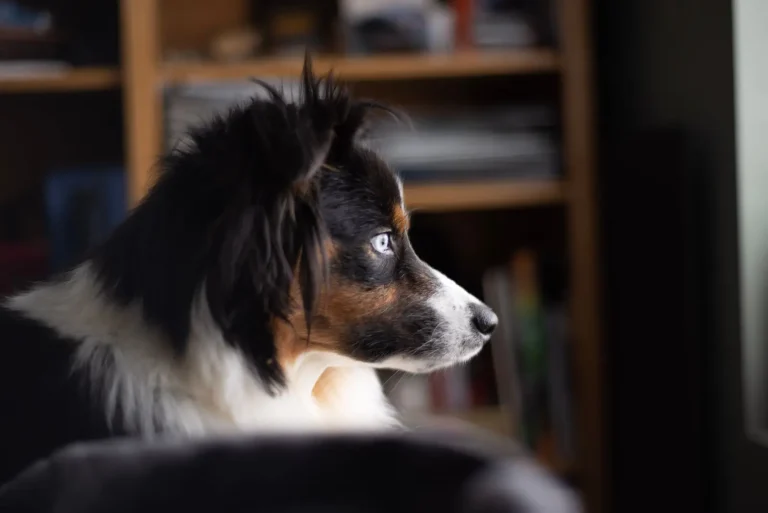
Australian Shepherds usually show you what’s coming before the storm does. You’ll notice panting that has nothing to do with temperature, pacing that seems purposeless, or a sudden need to stay close to you or a particular room. Some dogs will try to hide in bathrooms or under beds. Others become clingy in a way that’s different from their normal behavior. These aren’t signs of weakness – they’re the dog communicating that something in their environment feels wrong.
The key is recognizing these signals early enough to create a safe space before the storm intensifies. If you wait until the thunder is directly overhead, you’ve already missed the window where a calm environment can actually help. I’ve found that dogs who are settled before the worst of it arrives tend to weather the event with less distress than those left to their own devices.
Creating a Storm Refuge
A dedicated space matters more than most people realize. This isn’t about being indulgent – it’s practical. Interior rooms without windows are genuinely better because they reduce the visual stimulus of lightning and muffle sound somewhat. A bathroom or laundry room works well. Some people use a crate if their dog is already crate-trained, though not all dogs find this comforting during storms. The point is choosing a space where the dog can be with you but where external stimuli are reduced.
What you put in that space is less important than consistency. If your Aussie knows that a particular room is where storms happen, and that you’re there with them, the predictability itself becomes calming. I’ve seen dogs settle noticeably faster in their designated storm space simply because they know what to expect. Keep water available, but don’t be surprised if they don’t drink much – stress affects appetite and thirst.
Some owners use white noise or music to mask the sound of thunder. This can work, though results vary widely between individual dogs. What matters is that you’re not creating a situation where your dog is straining to hear through the noise. The goal is gentle masking, not distraction.
What Actually Helps During the Event
Your presence matters, but your demeanor matters more. An anxious owner creates an anxious dog. I’ve watched owners unconsciously tense up when thunder rolls, and their Aussie picks up on that immediately and responds with more anxiety. If you’re going to sit with your dog during a storm, aim for calm neutrality. You’re there as a stable presence, not as someone who shares the concern.
Gentle touch can help some dogs and agitate others. You’ll know your own dog’s preference. Some Australian Shepherds settle with quiet stroking or a hand resting on them. Others find touch overstimulating and prefer you nearby but not touching. Talking to your dog in a low, steady voice can be grounding, but avoid the high-pitched reassurance that people often default to. That tone actually signals to the dog that something is wrong.
Medication is worth discussing with your vet if storms are a regular issue where you live. In Australia, severe storm seasons can mean repeated events over weeks or months. If your dog is genuinely distressed – not just mildly anxious but showing signs of panic like inability to settle, excessive drooling, or attempts to escape – short-term anti-anxiety medication during storm season can be reasonable. This isn’t about suppressing normal caution; it’s about preventing the kind of distress that leads to injury or behavioral problems.
Preventing Escape and Injury
Australian Shepherds in a panic state can do surprising damage. I’ve seen them claw through drywall, break through screen doors, or attempt to jump through windows. This isn’t misbehavior – it’s a genuine flight response. The practical reality is that you need to secure your dog during storms in a way that prevents these outcomes.
If your Aussie is outside when a storm approaches, bring them in early. Don’t wait for the first drops of rain. Check that doors and windows are secure. If your dog is the type to panic-dig, make sure they’re not in a position where they can dig under a fence. Some people use baby gates to prevent access to certain areas of the house during storms, which can actually reduce the dog’s options and help them settle faster.
Microchipping and ID tags are essential year-round, but they’re especially important during storm season. A terrified dog can slip out of a collar or bolt through a door you didn’t realize was open. If that happens, you want every possible way to get your dog back.
Long-Term Patterns and When to Seek Help
Some Australian Shepherds seem relatively unbothered by storms. Others show significant distress every single time. If your dog falls into the second category and storms are frequent in your area, this is worth addressing proactively rather than waiting for the next event.
Desensitization can help in some cases, though results are unpredictable. Playing recordings of storm sounds at low volumes during calm times, gradually increasing volume, sometimes reduces the novelty and fear response. This requires patience and consistency, and it doesn’t work for every dog. Some dogs simply have a lower threshold for atmospheric disturbance, and that’s just their temperament.
If your dog’s storm anxiety is affecting their quality of life – if they’re not sleeping, not eating, or showing signs of stress even on clear days when storms are forecast – that’s worth a conversation with your vet. Behavioral issues tied to storm anxiety can sometimes be addressed through training, medication, or both. The key is recognizing that this is a real problem, not something the dog will simply outgrow.
Working with an Australian Shepherd during storm season is about understanding that their alertness and responsiveness, the qualities that make them good working dogs, also make them more sensitive to environmental chaos. The goal isn’t to eliminate their awareness – that’s part of who they are. It’s to create conditions where that awareness doesn’t tip into panic, and where you’re a steady presence they can rely on when the weather turns rough.