
Resource guarding in Australian Shepherd puppies is less about aggression and more about how their brains are wired. I’ve worked with dozens of these pups over the years, and the pattern is consistent: they’re herding dogs with a strong sense of possession. When a young Australian Shepherd fixates on a toy, food bowl, or even a stick, they’re not being deliberately difficult. They’re expressing an instinct that evolved to help them control and protect things that matter. The key is understanding that this behavior exists on a spectrum, and where your puppy lands depends largely on early exposure and how you respond when it happens.
Most people don’t realize that resource guarding often starts small. A puppy might stiffen slightly when you reach toward their bowl, or turn their body away from a sibling during play. These are mild signals, easy to miss or dismiss as normal puppy behavior. But Australian Shepherds are observant and smart. If those small warnings work – if they successfully keep you or other dogs away – the behavior tends to solidify. What begins as a subtle tension can develop into something more pronounced if the puppy learns that guarding actually protects their resources.
The Foundation: Early Exposure Matters
The window between eight weeks and four months is critical, though not in the way many people think. It’s not about forcing your puppy to share or teaching them that humans are always taking things away. That approach often backfires with Australian Shepherds, who can become more defensive if they feel their possessions are under threat. Instead, the goal is to normalize the presence of people and other dogs around things they value, without creating a sense of competition or loss.
I’ve found that puppies who grow up in homes where multiple dogs eat in the same room, where hands regularly pass near food bowls without taking anything, and where toys appear and disappear naturally tend to develop fewer guarding behaviors. The puppy learns that the presence of others around their resources doesn’t mean those resources will vanish. This is different from training. It’s more about creating a baseline of comfort through repetition and calm exposure.
Feeding multiple puppies or a puppy alongside an adult dog in close proximity, done carefully and with supervision, can be surprisingly effective. The Australian Shepherd puppy watches the older dog remain calm while eating near others. They observe that the world doesn’t collapse when someone approaches. Over time, this becomes their normal rather than their exception.
Management During the Vulnerable Period
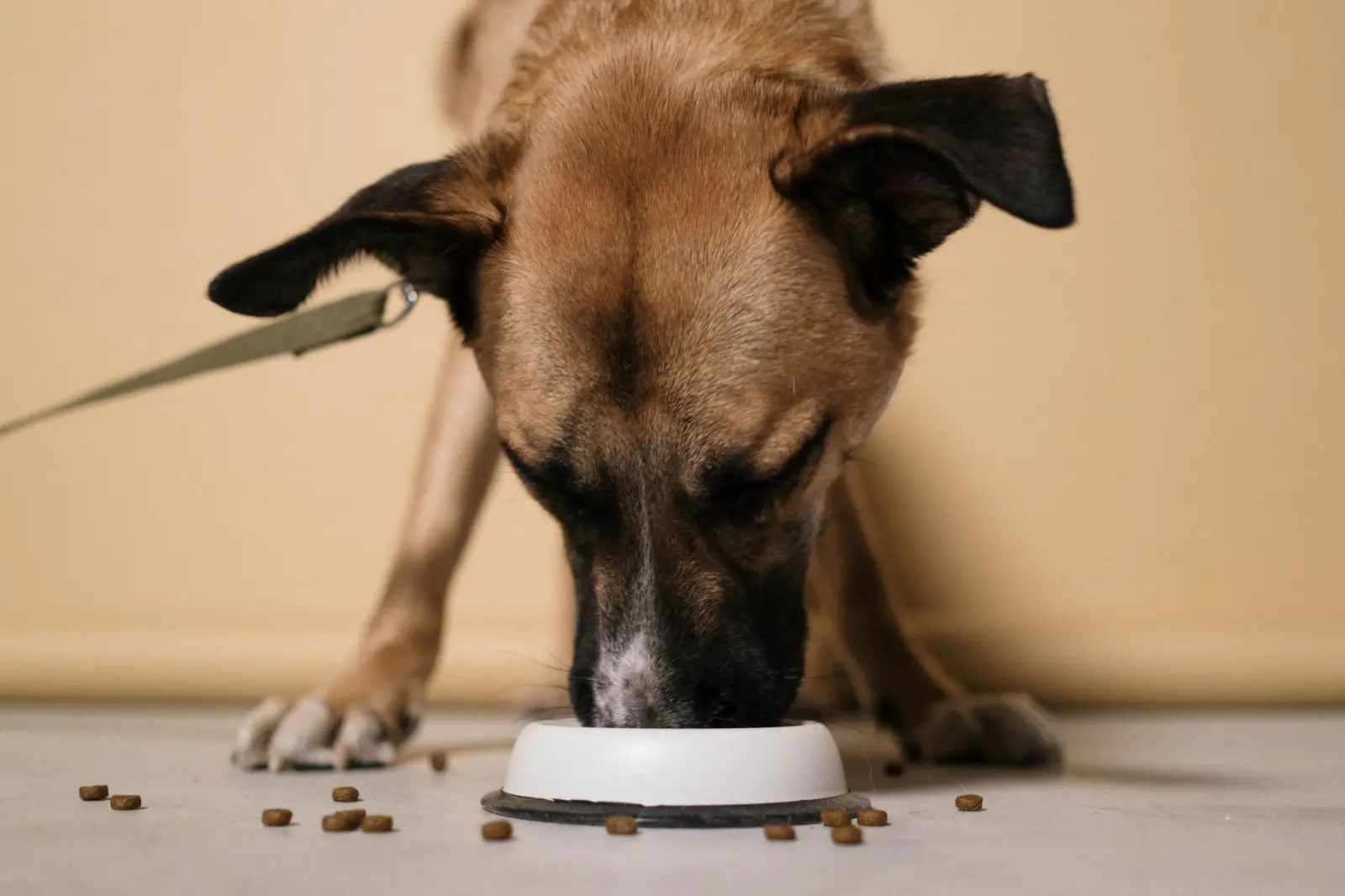
While you’re building that foundation, management is your practical tool. This means controlling the environment so your puppy doesn’t have repeated opportunities to practice guarding behavior. If your Australian Shepherd puppy shows any tension around their food bowl, you feed them in a separate space where other dogs or people aren’t nearby. This isn’t punishment. It’s simply removing the trigger until the puppy is older and more emotionally regulated.
High-value items – rawhides, bully sticks, special chews – should be given in a confined space, usually when other dogs aren’t present. These are the items most likely to trigger guarding because they’re genuinely worth protecting. A regular toy that the puppy has access to all day carries less emotional weight than a special treat they only get occasionally. Don’t confuse the two situations. Managing high-value items separately while allowing casual toy sharing creates a realistic middle ground.
I’ve also noticed that Australian Shepherds benefit from having multiple toys available at once. When there are more objects than dogs, competition becomes irrelevant. A puppy surrounded by toys doesn’t need to guard one specific toy because losing it doesn’t feel like a loss. This is basic resource scarcity management, and it works particularly well with this breed because they’re not typically toy-obsessed the way some breeds are.
How You Handle the Behavior Itself
When your puppy does show guarding – stiffening, growling, or moving away – your response sets the trajectory. The instinct for many owners is to correct the behavior, to show the puppy that guarding isn’t allowed. But punishment often increases anxiety around resources, which intensifies guarding. An Australian Shepherd puppy who gets scolded for stiffening around their bowl learns that humans approaching their food is scary and worth defending against more aggressively.
A calmer approach involves simply creating distance. If your puppy guards their bowl, you stop approaching the bowl. You don’t take it away as a consequence. You just remove the pressure. Over time, as the puppy realizes that guarding doesn’t actually result in loss, and that humans nearby aren’t a threat, the behavior naturally diminishes. This is slower than punishment-based training, but it’s also more stable because you’re addressing the underlying anxiety rather than just suppressing the symptom.
Some owners find success with the “trade up” method, where they offer something even more valuable in exchange for a guarded item. This works, but only if the trade is genuinely better and if you’re consistent. An Australian Shepherd puppy who trades a toy for a high-value treat learns that giving things up results in gain. The risk is that they eventually expect a reward every time they release something, which can feel like you’re negotiating with them rather than setting boundaries. I prefer to use this method sparingly, mostly as a safety tool rather than a primary training strategy.
Socialization Beyond Just Meeting Other Dogs
Proper socialization for Australian Shepherds includes exposure to other dogs eating, playing, and existing in the same space without constant human intervention. But it also includes exposure to different handling styles. A puppy who has only ever been touched gently by one person may become defensive when a veterinarian or groomer handles them more assertively. Varying who handles your puppy, how they touch them, and in what contexts helps build resilience.
I’ve noticed that Australian Shepherds raised with children who occasionally take toys away, who reach into food bowls during feeding, or who generally interact with the puppy in unpredictable ways tend to develop less resource guarding. This isn’t about allowing children to be rough or disrespectful. It’s about the puppy learning early that human hands near their possessions don’t always mean loss. The key is that these interactions happen in a context where the puppy feels safe overall, not in an environment of chaos or genuine threat.
The breed’s intelligence works in your favor here. Australian Shepherds can distinguish between different contexts and people. A puppy can learn that their owner taking a toy is different from a stranger doing the same. They can learn that their sibling’s approach to the food bowl is different from an unfamiliar dog’s approach. This nuance develops naturally if you expose them to variety without overwhelming them.
Resource guarding in Australian Shepherd puppies is preventable in most cases, but it requires thinking ahead rather than reacting after the behavior is established. The breed’s natural herding instincts mean they’re predisposed to possessiveness, but that same intelligence and trainability means they respond well to an environment where guarding simply isn’t necessary. The puppies who develop the fewest issues are those who grow up in homes where resources feel abundant, where human proximity doesn’t signal loss, and where the overall atmosphere is calm and predictable. This takes consistency over months, not weeks, but the payoff is a dog who moves through the world without the constant tension of defending what matters to them.