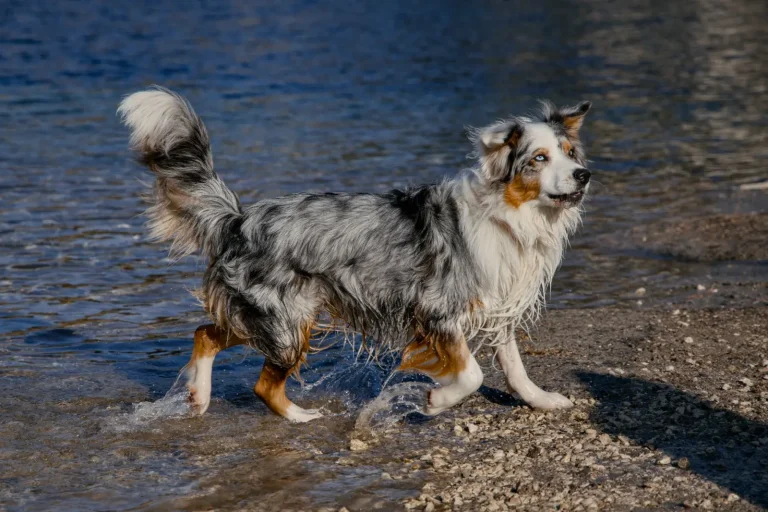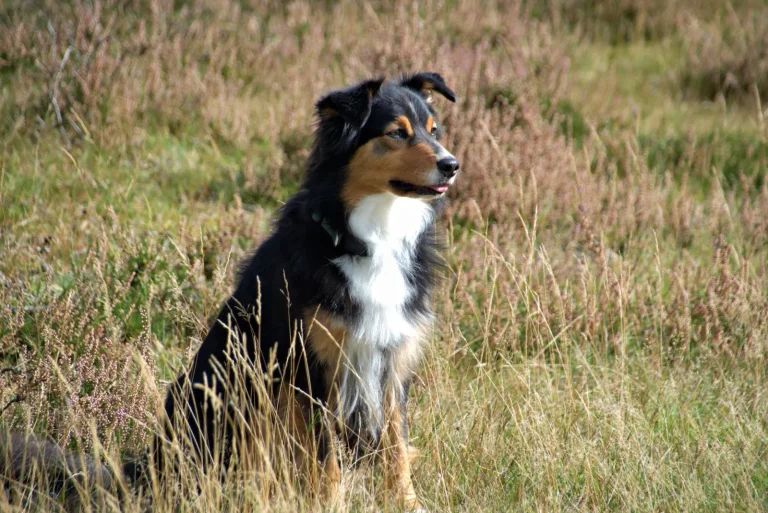

Australian Shepherd puppies are wired differently than many other breeds. They were developed to work livestock independently, which means they’re built to make decisions on their own and follow movement rather than necessarily follow a person’s voice. This isn’t stubbornness or defiance – it’s their actual genetic blueprint. Once you accept that, training recall becomes less about forcing compliance and more about making yourself more interesting than whatever else is happening around them.
I’ve worked with dozens of Australian Shepherd puppies over the years, and the ones that develop solid recall are the ones whose owners understand this fundamental trait early. The puppies that struggle are often those where the owner expects the same kind of automatic response you might get from a Golden Retriever or a Labrador. Australian Shepherds will come, but they need a reason that outweighs their current interest. That reason has to be built deliberately.
The timing of when you start matters more than people realize. Most puppies aren’t developmentally ready for reliable recall until around four to five months old. Before that, their attention span is genuinely limited, and their impulse control is still forming. I’ve seen owners get frustrated at eight or nine weeks because a puppy won’t come reliably, but that’s like expecting a toddler to sit through a two-hour meeting. The neural pathways aren’t there yet. Starting early is fine – establishing the habit of checking in with you is valuable – but expecting consistent performance before four months usually leads to unnecessary frustration.
The Foundation: Making Yourself Rewarding
Before you ever expect a puppy to come when called, they need to have learned that coming to you is the best possible outcome. This sounds obvious, but it’s where most people miss the mark. They call their puppy, the puppy comes, and then something neutral or mildly unpleasant happens – the puppy gets put in a crate, gets their nails trimmed, or the fun ends. From the puppy’s perspective, you just interrupted something good and offered nothing better in return.
What I’ve found works consistently is making yourself the source of the best things that happen during the day. High-value treats matter here, but so does play, excitement, and unpredictability. When I call a puppy and they come, they get something genuinely worth their attention. Sometimes it’s a piece of chicken. Sometimes it’s a few seconds of wild play. Sometimes it’s both. The puppy learns that the sound of their name or the recall command is a lottery ticket – something good is definitely coming, and they don’t know what.
This requires you to be intentional about recall practice in low-distraction environments first. Your living room or backyard with no other animals, no people, no movement. You call, the puppy comes, you reward immediately. This happens dozens of times before you ever expect it to work when a squirrel is present or another dog is nearby. I typically practice this five to ten times per day, every day, for several weeks. It’s not exhausting, but it is consistent.
Why Distance and Distraction Matter More Than You Think
Australian Shepherds have a prey drive that activates when things move. A squirrel, a blowing leaf, another dog playing – these things trigger their herding and hunting instincts. At that moment, your voice is competing with a neurological response that’s thousands of years old. You can’t outshout that. You have to outmotivate it, and that’s a much higher bar than most owners expect.
The mistake I see repeatedly is jumping too quickly to practicing recall in distracting environments. Someone will practice in their living room for a week, feel confident, then take their puppy to a park and be shocked when the recall fails completely. The puppy hasn’t failed – the owner has skipped several steps in the training progression. You need to gradually increase distraction level. Start indoors. Move to a quiet backyard. Then a backyard with mild distractions. Then a low-traffic park. Then busier environments. This progression can take weeks or months, depending on the individual puppy’s drive level.
I also notice that distance plays a separate role from distraction. A puppy that comes reliably from ten feet away might not come from thirty feet away, especially if something interesting is happening at twenty-five feet. Building distance and building distraction resistance are two different skills. I practice them separately. Close recalls with high distraction, then distant recalls with low distraction, then gradually combining them.
The Reality of Adolescence
Around six to eight months, many Australian Shepherd puppies hit a phase where their recall gets noticeably worse. This is normal. Their independence increases, their confidence grows, and they’re testing boundaries. Some owners panic and think they’ve lost progress. They haven’t. What’s happened is that the puppy is developing more autonomy, which is developmentally appropriate but temporarily inconvenient.
During this phase, I actually increase the frequency of short, easy recalls in low-distraction settings. I’m not trying to train new behavior – I’m maintaining the habit of checking in with me. I also become more selective about when I practice in high-distraction environments. If I know my adolescent shepherd is going to ignore me at the park, I don’t set up that failure. I keep the puppy on a long line if needed, or I practice recall in controlled settings where I know success is likely.
What matters during adolescence is not backing down on consistency. If you stop practicing, the behavior will deteriorate. If you practice inconsistently – rewarding sometimes but not always – the behavior will also deteriorate. Australian Shepherds are smart enough to figure out when you’re not serious about something.
Equipment and Environment Choices
A long line is one of the most underrated training tools for this breed. It’s not a punishment device – it’s a safety net that allows you to practice recall in environments where you can’t guarantee success without it. If your puppy is off-leash at a park and spots a dog three hundred yards away, you can’t reliably call them back. But if they’re on a thirty-foot line, you can let them explore at a distance while maintaining the ability to prevent disaster if needed.
I use long lines regularly with puppies and adolescents, not because I’m training them to be on a line, but because it lets me practice recall in realistic scenarios without the risk of them disappearing into the woods. Once they’re reliably coming in these situations, the line becomes unnecessary. But rushing to off-leash work before that foundation is solid is how puppies get lost or injured.
The environment itself matters. A puppy will have better recall in an open field than in woods with interesting smells. They’ll have better recall in the morning than at dusk when wildlife is more active. They’ll have better recall when they’re not hungry or overstimulated. None of this means the training has failed – it means you’re observing real conditions and adjusting your expectations accordingly. I don’t expect the same performance in all situations, and I structure my practice to account for these variables.
Australian Shepherd puppies are capable of reliable recall, but it requires understanding their temperament, accepting that it takes time, and being consistent across months of practice. The breed’s independence and prey drive aren’t obstacles to overcome – they’re traits to work with. When you stop fighting their nature and start building on it, recall training becomes more predictable and the results last.