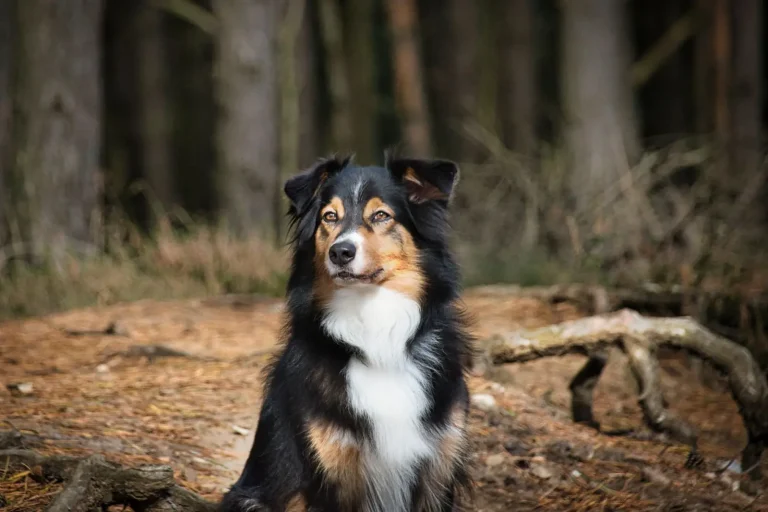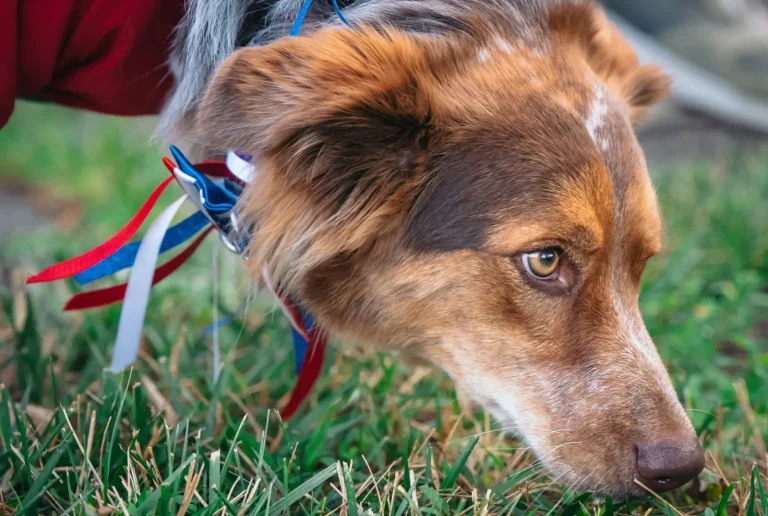

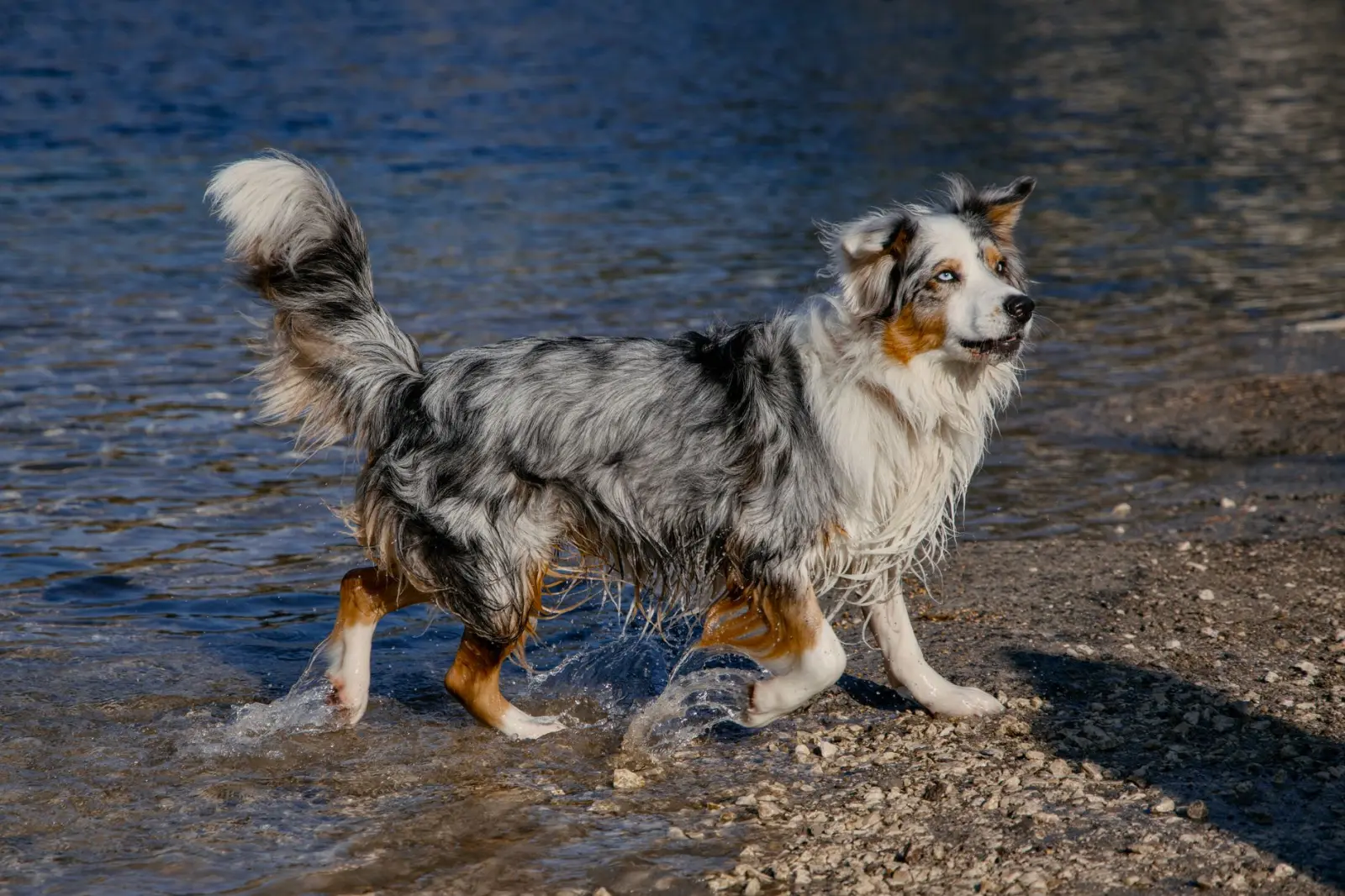
An adolescent Australian Shepherd is a different animal than the puppy you brought home. Somewhere between six and eighteen months, something shifts. The dog that once seemed eager to please becomes selective about which commands land. The energy that was manageable during puppyhood turns into something that requires genuine strategy. This phase catches a lot of owners off guard because the dog is no longer small or obviously a puppy, yet it’s nowhere near emotionally mature. What you’re seeing isn’t defiance or regression – it’s a normal developmental stage that demands a different approach than either puppyhood or adulthood.
The physical changes are obvious. Your Shepherd grows into its frame, gains muscle, and moves with more power and coordination. What’s less visible but equally important is the neurological shift happening in the brain. The adolescent dog has more confidence than it did as a puppy, but less impulse control than it will have as an adult. This creates a specific behavioral profile: the dog is capable of doing what you ask, but whether it chooses to depends on competing motivations. A squirrel, another dog, or even a scent on the wind can override training that seemed solid just weeks before. This isn’t a training failure. It’s adolescence.
Energy and Exercise Reality
Australian Shepherds were bred to move all day, and an adolescent hasn’t yet learned to settle. Many owners assume that more exercise is the answer, and while activity matters, the relationship is more nuanced than simple exhaustion. A two-hour hike might tire the dog physically, but it won’t necessarily reduce behavioral problems if the dog’s mental needs aren’t being met. An adolescent Shepherd needs both physical activity and structured mental engagement. Without the mental component, you end up with a fit dog that’s still restless and reactive.
What I’ve observed repeatedly is that owners underestimate how much mental work an adolescent Shepherd actually wants. A thirty-minute training session with real problem-solving – not just repetition of known commands – often does more to settle an adolescent than an hour of running. The dog’s brain is developing rapidly, and it’s genuinely hungry for tasks that require focus. This is when puzzle toys, scent work, and training that builds new skills become practical tools, not enrichment extras. A dog that has spent an hour working through a scent search or learning a new behavior often settles more easily than one that’s simply been exercised.
The Training Plateau
One of the most common complaints I hear is that training seems to regress during adolescence. The sit-stay that was reliable at four months becomes unreliable at ten. The recall that worked in the backyard fails in the park. This feels like the dog has forgotten what it learned, but that’s usually not what’s happening. The adolescent Shepherd has learned the command, but it’s now weighing that against what it actually wants to do in any given moment. A younger puppy often complies because it hasn’t yet developed strong independent drives. An adolescent has.
The practical response is to adjust your expectations and your training strategy. This is when many owners benefit from shifting away from expecting perfect obedience in distracting environments and instead building stronger foundation work in lower-distraction settings. It’s also when consistency becomes absolutely critical. An adolescent Shepherd will test boundaries relentlessly, and inconsistency – even small inconsistency – gets amplified. If the dog gets away with ignoring a recall command once, it learns that the command is negotiable. If it gets away with jumping on visitors sometimes but not others, it learns that the rule depends on something, and it will try to figure out what that something is.
Social Behavior Shifts
An adolescent Shepherd often becomes more reserved or reactive around unfamiliar people and dogs than it was as a young puppy. This can look like a regression in socialization, but it’s actually a normal developmental phase. The dog is developing more discernment and less automatic friendliness. Some adolescents become genuinely suspicious of strangers. Others develop selective aggression toward certain dogs. This isn’t always a sign of poor early socialization, though that matters. It’s often just how the breed matures.
Managing this phase requires accepting that your dog might not be the social butterfly it was at four months. Continued, positive exposure to new people and dogs still matters, but the dog won’t respond the same way it did as a young puppy. Pushing a reserved adolescent into uncomfortable social situations can actually reinforce wariness. Instead, allowing the dog to observe and approach at its own pace, combined with positive associations (treats, play, calm interaction), tends to work better. Some Shepherds move through this phase quickly and become confident adults. Others remain more selective about their social circle. Both are normal.
Managing Impulse Control
Impulse control is genuinely difficult for an adolescent Shepherd. The dog wants to chase, jump, grab, and investigate. Asking it not to do these things requires real effort on the dog’s part, and the dog’s capacity for that effort is still developing. This is where management becomes as important as training. If your adolescent has a history of jumping on guests, managing that means preventing the opportunity to practice jumping, not just correcting it when it happens. A dog that practices jumping hundreds of times will have a harder time learning not to jump than one that rarely gets the chance.
Practical management looks different in different households. For some, it means keeping the dog on a leash when guests arrive. For others, it means using a baby gate or crate to separate the dog during high-excitement moments. For still others, it means teaching the dog an incompatible behavior – like going to a mat – and rewarding that heavily. The point is that adolescence is when management prevents bad habits from becoming entrenched. A dog that practices undesired behavior repeatedly during adolescence is much harder to redirect as an adult.
The adolescent phase with an Australian Shepherd typically lasts until somewhere between eighteen and twenty-four months, though some dogs mature more slowly. During this time, the dog is capable of learning and responding, but it’s also genuinely driven by developmental forces that aren’t fully under its control. Recognizing this as a phase rather than a permanent personality trait or a training failure changes how you approach the dog. Consistency, appropriate management, mental engagement, and realistic expectations all matter. The dog you have during adolescence is not the dog you’ll have as an adult, and understanding that makes the phase manageable rather than frustrating.