

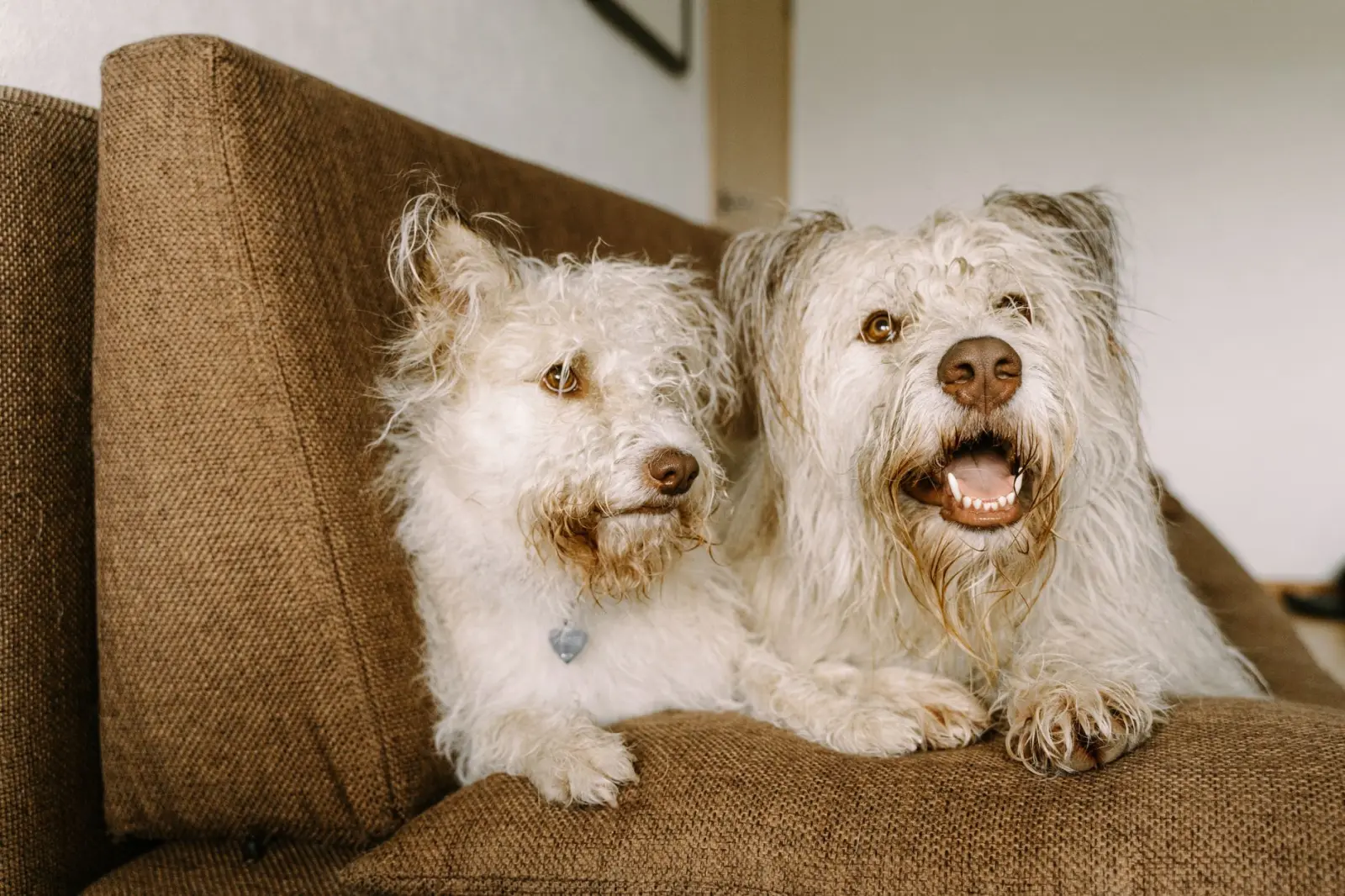
After years of working with Australian Shepherds, I’ve noticed that owners often conflate two very different problems: separation anxiety and boredom. Both produce destructive behavior, both emerge when the dog is alone, and both leave owners frustrated. But they’re not interchangeable, and treating one as if it were the other typically makes things worse.
The confusion is understandable. An Aussie Shepherd that shreds the couch cushions while you’re at work looks the same whether it’s panicked or understimulated. What matters is recognizing which one you’re actually dealing with, because the intervention is almost entirely different. Miss this distinction and you’ll likely pour energy into the wrong solution.
Separation anxiety is fundamentally about distress. A dog experiencing it is genuinely uncomfortable with your absence. Boredom, by contrast, is about insufficient mental or physical engagement. The dog isn’t distressed – it’s just looking for something to do, and the couch is available.
The Physical Markers of Anxiety
When I see an Aussie that’s genuinely anxious about separation, certain patterns emerge consistently. The dog often begins showing signs before you even leave: panting, pacing, whining, or shadowing you room to room as you prepare to go. This isn’t learned behavior – it’s an involuntary stress response.
Once you leave, an anxious dog typically focuses its destructive energy on exit points: door frames, window sills, the area around the crate. There’s an almost frantic quality to it. I’ve seen dogs with bleeding paws and broken teeth from this kind of behavior. The destruction isn’t exploratory; it’s urgent.
Anxious dogs also tend to eliminate indoors, even if they’re housetrained. This happens because the stress overrides their normal bladder control. They might also drool excessively, pant heavily, or show visible trembling. These are physiological responses, not choices.
Another telling sign is that the anxiety often worsens with time. An Aussie that’s mildly anxious at month one can escalate to severe panic by month six if nothing changes. The dog essentially learns that your departure is genuinely threatening, and the anxiety compounds.
What Boredom Actually Looks Like
Boredom in an Australian Shepherd presents quite differently. The dog is calm before you leave. It doesn’t follow you around or show signs of distress. You leave, and for the first 30 minutes to an hour, nothing happens. Then the destruction begins – but it’s methodical, not frantic.
A bored Aussie will often work through toys, cushions, or furniture in a way that suggests exploration and play rather than panic. The dog might drag items around, chew them systematically, or dig at the carpet. There’s a logic to it, even if destructive.
The timing is important. Boredom-related destruction often follows a pattern: the dog settles, then after a period of quiet, decides to entertain itself. An anxious dog, by contrast, may begin destructing almost immediately after your departure or even while you’re still visible in the window.
Bored Aussies also don’t typically show the physiological markers. They’re not panting excessively or trembling. They eliminate in appropriate places. They might bark or howl, but it’s not the high-pitched, desperate vocalization of an anxious dog – it’s more of a complaint or a call for engagement.
The Breed Factor
Australian Shepherds are working dogs with genuine drive and intelligence. This matters more than people realize. An Aussie that appears to have separation anxiety might actually be a bored, frustrated dog that’s been under-exercised for years. The breed simply doesn’t tolerate mental or physical deficit well.
I’ve worked with owners who assumed their Aussie had anxiety, started medication, and saw minimal improvement. Then they increased daily exercise and mental stimulation – puzzle toys, training sessions, longer walks – and the “anxiety” largely resolved. That tells me the original problem was boredom and frustration, not genuine anxiety.
This doesn’t mean Australian Shepherds can’t develop real separation anxiety. They can, and it’s serious when it happens. But the baseline for this breed is high stimulation needs. Boredom is far more common than true anxiety in my experience.
Duration and Escalation Patterns
How the behavior changes over time offers another diagnostic clue. Boredom tends to remain relatively stable. If your Aussie has been destroying one specific cushion for six months, it’s likely boredom. The dog has found its outlet and continues using it.
Anxiety typically escalates. A dog that was fine for two hours alone might gradually become unable to tolerate one hour. The window of tolerance shrinks. The intensity of the behavior increases. The dog may begin showing anxiety signs in other contexts – during thunderstorms, when visitors arrive, or even during car rides.
I’ve also noticed that anxious dogs often develop secondary behaviors. An Aussie that starts with door-frame destruction might progress to self-injury, obsessive pacing, or compulsive behaviors. Boredom doesn’t usually follow this trajectory. It stays localized to the destructive outlet.
Environmental Context Matters
Where the dog spends its alone time reveals something too. An anxious dog confined to a small space often escalates faster. A bored dog in a small space might simply sleep or stare out a window, then destroy something when the restlessness builds.
I’ve seen Aussies that were labeled anxious actually settle down significantly when given access to a larger space, windows to look through, or even a view of the street. That shift suggests the problem was confinement and boredom, not anxiety.
The opposite is also true: an anxious dog won’t improve just by having more space. It might actually become more distressed because it has more area to pace and more windows to fixate on your absence.
The Practical Distinction
Testing these differences requires observation without judgment. Leave for short periods and watch what happens in the first five minutes. Does the dog show immediate distress, or does it settle first? Does it focus on exits, or does it explore the space? Does it vocalize desperately, or is it quiet until restlessness sets in?
Video recording is genuinely useful here. Many owners are surprised by what they see when they actually watch their dog’s behavior rather than inferring it from the damage.
True separation anxiety often requires professional intervention – sometimes medication, sometimes behavioral work, sometimes both. Boredom requires a different approach: more exercise, more mental engagement, better enrichment while you’re away. These solutions are nearly opposite, which is why getting the diagnosis right matters so much.
An Australian Shepherd that’s bored doesn’t need anti-anxiety medication. It needs a job, mental stimulation, and physical outlet. An Aussie with genuine separation anxiety won’t improve from more exercise alone, though exercise is still part of the picture. The distinction isn’t academic – it directly determines whether your intervention will actually help.