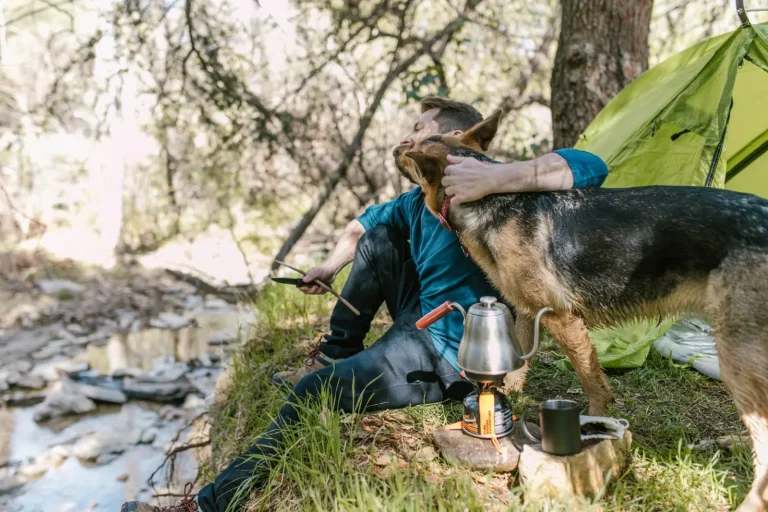

Australian Shepherds are not typically solitary dogs by nature, but they are intensely bonded to their people and their established routines. When you bring a second dog into a household that already has one, you’re not simply doubling the workload or the chaos – you’re fundamentally altering the social structure that exists. After years of working with multiple-dog households dominated by Aussies, I’ve noticed that owners often underestimate how much their first dog has become accustomed to being the primary focus of attention, even when that dog seemed perfectly social at the dog park or around other dogs.
The first thing that typically shifts is the existing dog’s sense of territory and priority. An Australian Shepherd that has spent months or years as the sole dog in the home has developed a particular rhythm with their owner. They know when walks happen, when meals arrive, when play sessions occur, and crucially, they know they are the center of those interactions. A new dog doesn’t just add companionship – it introduces competition for resources, space, and attention. This isn’t necessarily a problem, but it is a change that manifests differently depending on the individual dog’s temperament and the household’s structure.
The First Few Weeks: What Actually Happens
The honeymoon period is real, but it’s often misinterpreted. Many owners report that their first dog seems excited and playful with the newcomer initially. This is sometimes genuine social interest, but it’s equally often novelty and uncertainty. The existing dog is trying to figure out what this new animal means for their world. During this time, I’ve watched owners relax too quickly, assuming the dogs have bonded and the transition is complete. What they’re usually witnessing is a temporary truce while both dogs are still establishing where they stand.
The actual friction tends to emerge around weeks two to four. By then, the new dog has stopped being a curiosity and has started being a permanent presence. The first dog begins to notice that their owner’s attention is divided, that their meal routine involves another bowl, that their favorite resting spot might now be occupied. Resource guarding can surface suddenly, even in dogs who never showed it before. A dog that was perfectly fine sharing toys with visiting dogs may become protective of toys in their own home when another dog lives there permanently. This isn’t aggression in the classical sense – it’s a dog reasserting boundaries in response to a perceived shift in their security.
Australian Shepherds and the Energy Dynamic
Australian Shepherds have a particular intensity that complicates multi-dog living. They are bred to work, to focus, to control movement. When two Aussies share a home, or when an Aussie lives with another high-energy dog, the combined drive can create a feedback loop. One dog’s excitement triggers the other’s. Play sessions that should burn energy sometimes escalate into something that looks like aggression but is actually overstimulation. I’ve seen owners break up what they thought was a fight, only to have the dogs immediately want to play again the moment they’re separated.
The energy management becomes as important as the social management. A single Aussie in a home can be exercised, trained, and settled into a predictable state. Two Aussies feed each other’s arousal. They chase, they play-bow, they mouth each other, and the intensity builds. Without deliberate separation and individual exercise, this can create an environment where the dogs are constantly in a heightened state. Some households handle this naturally because the owners are active and structured. Others find themselves with two dogs that are essentially winding each other up all day.
Feeding and Resource Management
One of the most practical shifts happens at mealtimes. Even if your first dog has never shown food aggression, the presence of another dog eating nearby changes the calculus. I’ve worked with owners who fed their original dog in the kitchen with no issues, then suddenly had to separate the dogs at feeding time after the second dog arrived. The first dog’s behavior didn’t change because they became aggressive – it changed because they perceived a threat to their resource. Feeding in separate rooms or at different times becomes standard practice in most two-dog households, not because it’s ideal, but because it prevents unnecessary tension.
Toys and chews follow the same pattern. A dog that never cared about possession suddenly cares when another dog is in the home. The simplest approach is to remove high-value items during periods when both dogs are together unsupervised, then offer them during separate times or in controlled situations. This isn’t about training the dogs to “share” – it’s about respecting that dogs don’t naturally share resources the way humans expect them to, and forcing the issue creates stress rather than resolving it.
The Hierarchy Question
There’s a persistent myth that dogs establish a strict hierarchy and that the owner needs to reinforce it. In reality, most multi-dog households develop a fluid, situational dynamic. One dog might defer in the hallway but claim the couch. Another might eat first but yield the toy. Australian Shepherds, being intelligent and sensitive to hierarchy, often work this out themselves if given space. The problem arises when owners try to impose a hierarchy that doesn’t match the dogs’ natural inclinations, or when they misread the dogs’ signals.
What I’ve observed more consistently is that the original dog often maintains a kind of seniority, not because they’re dominant, but because they have established routines and the new dog is still learning the household rules. This seniority can be respected by the owner without being enforced. Greeting the first dog first, feeding them first, allowing them first access to certain spaces – these small choices can help the original dog feel secure during the transition. It’s not about dominance; it’s about maintaining the first dog’s sense of stability while the household changes.
Exercise and Separation
One of the most overlooked aspects of adding a second dog is that exercise needs don’t simply add together. Two Aussies don’t need exactly twice the exercise of one Aussie. They need individual exercise, separate from each other. When dogs exercise together, they often feed each other’s intensity. A solo run or walk allows each dog to settle into their own rhythm and actually tire out. When they exercise together, they’re often just playing and stimulating each other rather than genuinely expending energy.
I’ve found that households with two dogs actually function better when the dogs have some structured time apart each day. This might be one dog in a crate or separate room while the other gets individual attention, training, or exercise. It’s not punishment – it’s a reset. It allows each dog to have the owner’s full attention, which is often what they actually need more than companionship with another dog.
Adding a second dog to an Australian Shepherd household is manageable and often works well, but it requires recognizing that you’re not just adding another pet – you’re restructuring the social and physical environment. The first dog’s adjustment is real and deserves attention. Managing resources, energy, and attention deliberately from the beginning prevents many of the problems that emerge later. Most households that struggle with two Aussies aren’t dealing with a fundamental incompatibility; they’re dealing with the consequences of not adjusting their approach to account for the change in dynamics.