
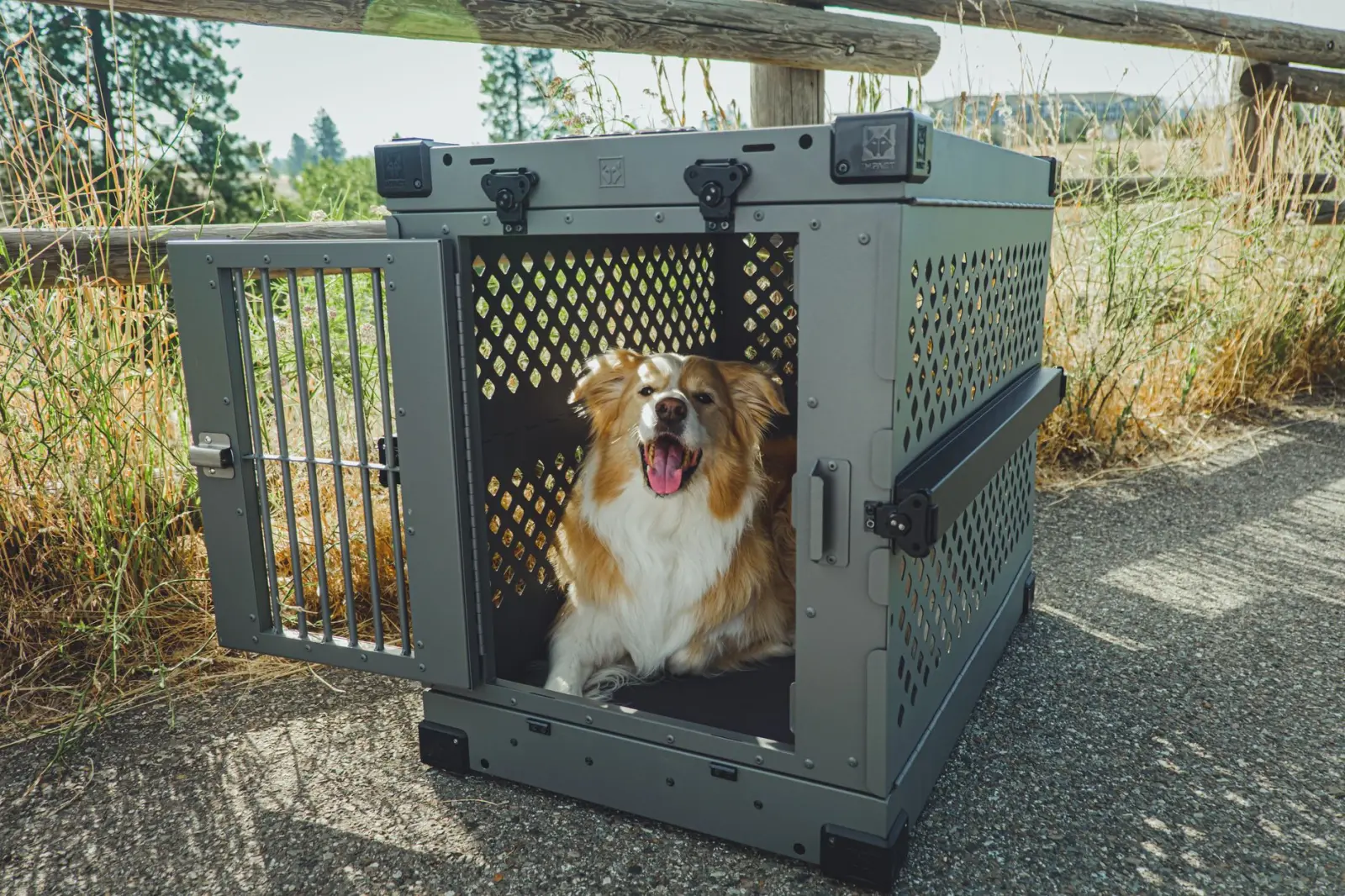
Australian Shepherds present a particular challenge when it comes to crate training. They’re intelligent, energetic, and bred to work independently across open terrain. Asking one to settle willingly into a confined space goes against several of their natural instincts. Over the years, I’ve watched owners approach this task in wildly different ways, and the outcomes reveal something important: the process works best when you stop thinking of it as “crate training” and start thinking of it as building genuine comfort with a specific space.
The mistake I see most often is treating the crate as a tool for containment first. Owners buy a crate, introduce the dog to it, and expect compliance. With an Australian Shepherd, that rarely produces the result they want. These dogs are observant. They notice when they’re being managed rather than invited. They resist pressure more than most breeds, not out of stubbornness exactly, but because their working heritage makes them question why they should follow an instruction that doesn’t make practical sense to them.
What actually works is patience that extends across weeks, not days. The crate needs to become the dog’s choice before it becomes your tool. This sounds like a luxury you might not feel you have, especially if you need the crate for practical management right now. But rushing this phase creates dogs that panic in crates, dogs that bark relentlessly, and dogs that will find ways to escape the moment you’re not watching. Those problems are far more time-consuming to solve later.
Starting Without Pressure
The first phase involves making the crate present in the dog’s environment without any expectation attached. Leave the door open. Let the dog investigate on their own timeline. With Australian Shepherds, curiosity usually wins. They want to know what things are and how they work. Some will enter immediately. Others take days. Both are normal.
Once the dog is entering the crate voluntarily, start leaving treats inside. Not as a lure – you’re not calling them in – but as something they discover when they wander in on their own. The crate becomes a place where good things happen, but only if the dog chooses to be there. This distinction matters. An Australian Shepherd can tell the difference between being offered a choice and being manipulated toward a predetermined outcome.
During this phase, never close the door while the dog is inside. The door stays open. The goal is to build an association between the crate and safety, not between the crate and confinement. This takes longer than most training guides suggest, but it prevents the resistance that develops when a dog feels trapped before they’re ready.
The Door Closing Transition
Closing the door for the first time should feel incidental, not significant. You’ll know the timing is right when the dog has spent several sessions voluntarily resting in the crate with the door open. At that point, you can gently close the door for a few seconds while they’re inside eating a treat or chewing something they enjoy. Open it immediately. No drama. Do this a handful of times over several sessions.
Then extend the duration. Door closed for ten seconds. Then thirty. Then a minute. The dog should remain calm throughout. If they show stress – panting, whining, scratching – you’ve moved too fast. Step back to the previous phase and progress more gradually. Australian Shepherds are prone to anxiety, and pushing through their discomfort doesn’t build resilience. It builds panic.
What I’ve noticed is that these dogs respond well to predictability. If you close the door and immediately open it every single time, they relax into the pattern. They understand the rule. But if you close the door sometimes and leave it closed for varying lengths of time, they stay uncertain. Uncertainty keeps them alert and resistant.
Managing the Bigger Picture
Crate training doesn’t happen in isolation. An Australian Shepherd that hasn’t had adequate exercise will fight confinement harder than one that’s genuinely tired. This isn’t laziness on your part – it’s reality. A young, high-drive dog needs significant physical and mental activity before you can reasonably expect them to settle anywhere, crate or otherwise. If your dog is bouncing off walls when you put them in the crate, the crate isn’t the problem.
Similarly, the crate works better when it’s positioned in a space where the dog can still see and hear household activity. An Australian Shepherd isolated in a back room will feel separated from their pack. They’re not being difficult – they’re being true to their nature as working dogs who stay connected to their environment. Placing the crate in a living area or kitchen, where the dog can observe what’s happening, reduces the sense of exile.
Duration matters too. A young Australian Shepherd shouldn’t be crated for eight hours while you’re at work. Their bladder can’t handle it, and their mind will spiral. Realistic timeframes are two to three hours for puppies, four to five for adolescents. If you need longer confinement, a larger pen with a crate inside it works better – the dog has room to move and a separate space to retreat to.
When Resistance Signals Something Else
Occasionally, an Australian Shepherd will simply not settle in a crate, even after weeks of proper introduction. This happens. Some dogs have genuine claustrophobia. Others have experienced something that made confinement feel dangerous. Before concluding that your dog is just difficult, rule out medical issues. Pain, ear infections, and digestive problems can all make a dog resistant to lying down in an enclosed space.
If medical issues are ruled out and the dog still panics, it’s worth accepting that the crate might not be the right tool for this particular dog. Plenty of Australian Shepherds do fine with a gated pen or a dog-proofed room instead. The goal is a space where they can be safely contained when necessary, not a specific piece of equipment. Some dogs get there through a crate. Others don’t.
What I’ve learned is that crate training an Australian Shepherd is as much about reading the individual dog as it is about following a process. The breed traits – intelligence, independence, energy – are consistent. But how they manifest in any single dog varies. The training that works is the one that respects those traits rather than fighting them.