
Australian Shepherds were built for work. Their compact frame, quick reflexes, and intense focus evolved to move livestock across open terrain, and that genetic blueprint doesn’t disappear just because a dog lives in a suburban home. Over years of working with this breed, I’ve noticed that Aussies without meaningful outlets for their herding drive tend to redirect that energy in ways their owners find frustrating – obsessive ball chasing, nipping at children’s heels, or fixating on moving objects in ways that border on compulsive. The breed doesn’t need herding to be “well-behaved,” but they do need *something* that engages that particular part of their brain.
The first thing to understand is that herding isn’t a single activity. It’s a complex set of behaviors: stalking, circling, controlling movement, reading pressure and release, and responding to subtle directional cues. Not all herding work looks the same, and not all Aussies will excel at the same tasks. I’ve seen dogs that are phenomenal with sheep but lose focus entirely with ducks. I’ve worked with others that prefer the precision work of driving versus the containment work of gathering. The dog’s individual temperament, age, and prior exposure all shape what will actually engage them.
Stock Work: The Traditional Path
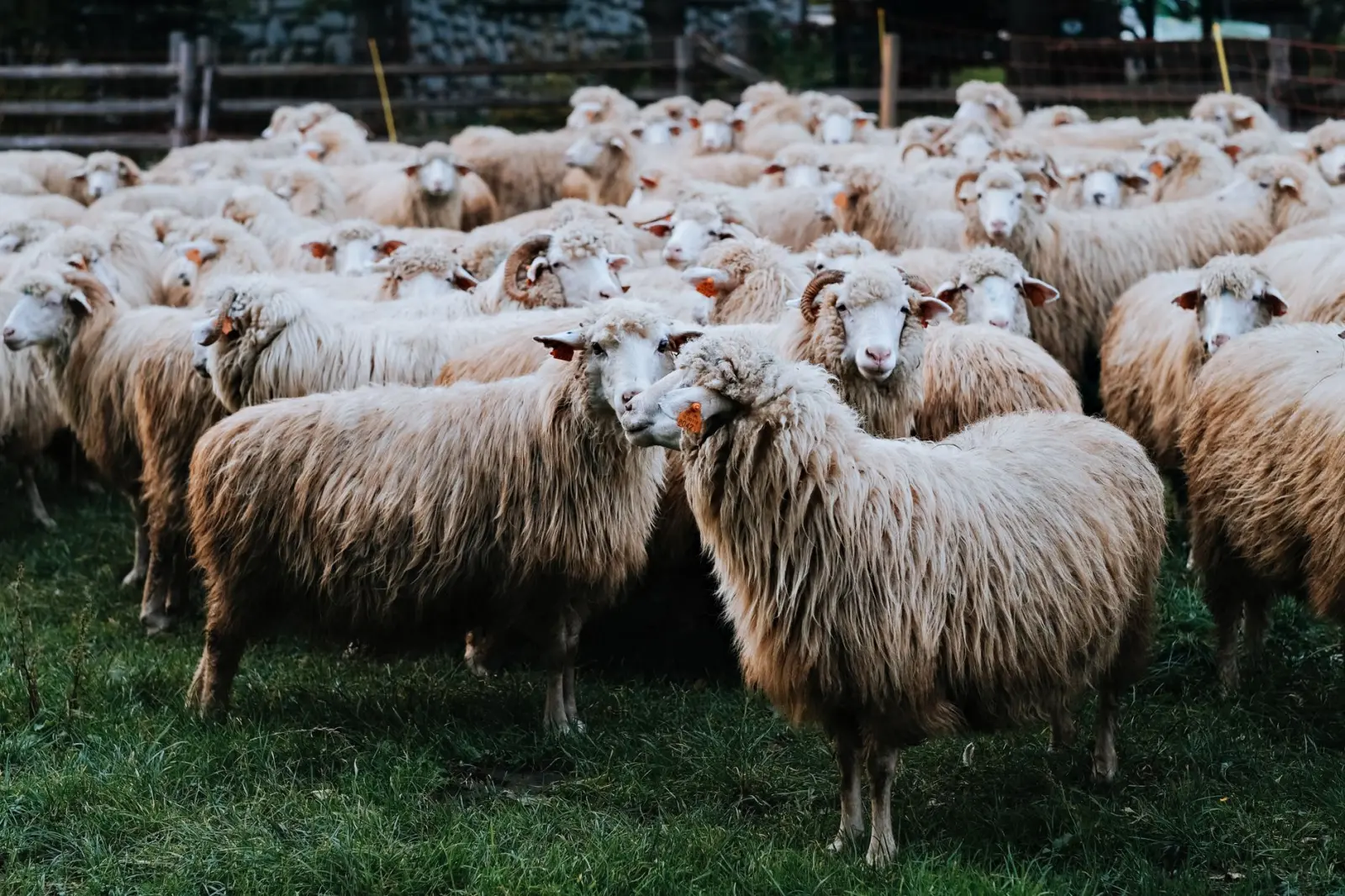
Actual livestock herding remains the most straightforward way to satisfy an Aussie’s instincts. If you have access to sheep, cattle, or goats, even a few animals in a pasture, the breed will often take to it naturally. Young dogs especially seem to understand intuitively what they’re supposed to do. I’ve watched eight-month-old pups with no formal training approach a small flock and begin working – circling, responding to pressure, adjusting their movement based on how the animals react. It’s not always pretty or controlled, but the drive is there.
The challenge isn’t getting an Aussie interested in livestock. It’s managing that interest safely and teaching them to work *with* direction rather than purely on instinct. A dog working alone will often chase, which can stress animals and isn’t herding in any useful sense. Controlled herding requires the dog to understand boundaries, respond to handler commands, and move stock deliberately rather than frantically. This takes time and patience, and it’s worth doing properly if you have the resources. Many owners underestimate how much training a working dog actually needs, then blame the dog when things go wrong.
Herding Trials and Organized Competition
For people without livestock at home, organized herding trials offer a structured way to test and develop these skills. Australian Shepherds compete in several formats: ASCA trials (the breed club’s own trials), AKC herding events, and various regional competitions. The trials typically involve moving sheep through gates or into pens, and the dog’s performance is judged on speed, control, and obedience.
Trial work appeals to a certain kind of owner – usually someone who wants measurable progress and enjoys the competitive environment. I’ve seen Aussies that were chaotic in everyday life transform into focused, responsive dogs in the trial setting. There’s something about the structure and the clear objective that clicks for them. That said, not every dog enjoys trials, and not every owner has the time or inclination to pursue them seriously. It’s a genuine commitment, not a casual weekend activity.
Non-Livestock Herding Alternatives
Many Aussies don’t have access to sheep or cattle, and that’s fine. The herding instinct can be channeled into other activities that satisfy the underlying drive without requiring actual livestock. Some of these work surprisingly well; others are more of a partial solution.
Treibball is one I’ve seen gain real traction with Aussie owners. The dog pushes large exercise balls into a goal, which mimics the driving and pushing aspects of herding. It requires focus, directional control, and problem-solving. The repetitive nature of the work – moving one ball at a time, responding to handler direction – appeals to the breed’s structured thinking. It’s not herding, but it scratches a similar itch.
Agility and obedience can provide mental and physical engagement, though they’re not herding substitutes. Aussies often excel at these sports because they’re intelligent and responsive, but the work is fundamentally different. Agility is about speed and obstacle navigation; herding is about reading and controlling movement. Some dogs are satisfied with agility alone. Others use it as supplementary exercise but still seem to be missing something.
Dock diving, flyball, and fetch-based games burn energy and engage the chase drive, but they don’t replicate the strategic, problem-solving aspects of herding work. A dog that’s herding is thinking about pressure, release, positioning, and response. A dog that’s chasing a ball is responding to a simple stimulus. Both have value, but they’re not equivalent.
The Nuance of Herding Drive
One observation I’ve made repeatedly: herding drive exists on a spectrum, and not every Australian Shepherd expresses it equally. I’ve worked with Aussies that showed almost no interest in livestock, even when given the opportunity. Their energy was high, their intelligence was clear, but the herding instinct simply wasn’t prominent. These dogs often did fine with other outlets. Conversely, I’ve known dogs with such intense herding drive that no amount of exercise seemed to satisfy them until they had actual herding work.
Age matters too. Younger dogs often show more overt herding behavior – the nipping, the stalking, the intense focus on movement. As dogs mature, especially if they’ve had appropriate outlets, that behavior often becomes more controlled and directed. A two-year-old Aussie that seems impossibly driven might settle considerably by age four or five, particularly if they’ve had consistent work.
The environment shapes expression as well. An Aussie in a small apartment will likely show more problematic herding behaviors than one with space and regular activity. It’s not that the drive is stronger; it’s that there’s nowhere for it to go, so it leaks out in ways that interfere with daily life.
Starting Herding Work Practically
If you’re considering herding activities for your Aussie, the realistic starting point depends on what you have access to. If you have land and livestock, a trainer experienced with herding dogs can assess your dog and guide initial work. If you’re looking at trials, finding a local club and attending a trial as a spectator first makes sense. You’ll see what the work actually looks like and whether it appeals to you.
For people without livestock access, starting with Treibball or another structured activity gives you a framework to work within. The key is consistency. An Aussie that gets herding or herding-adjacent work once a month won’t show the same focus and satisfaction as one that works regularly. The breed benefits from routine, from knowing that certain times involve focused, directed activity.
What I’ve noticed over time is that owners often overthink this. They worry that their Aussie needs herding to be happy, or they feel guilty that they can’t provide it. In reality, many Aussies are content with consistent exercise, mental engagement, and a clear relationship with their handler. Herding is one option among several, and it’s worth pursuing if it’s available and if both you and your dog seem inclined toward it. If it’s not realistic for your situation, the breed can thrive with other outlets. The real requirement isn’t herding specifically – it’s having something meaningful to do.