
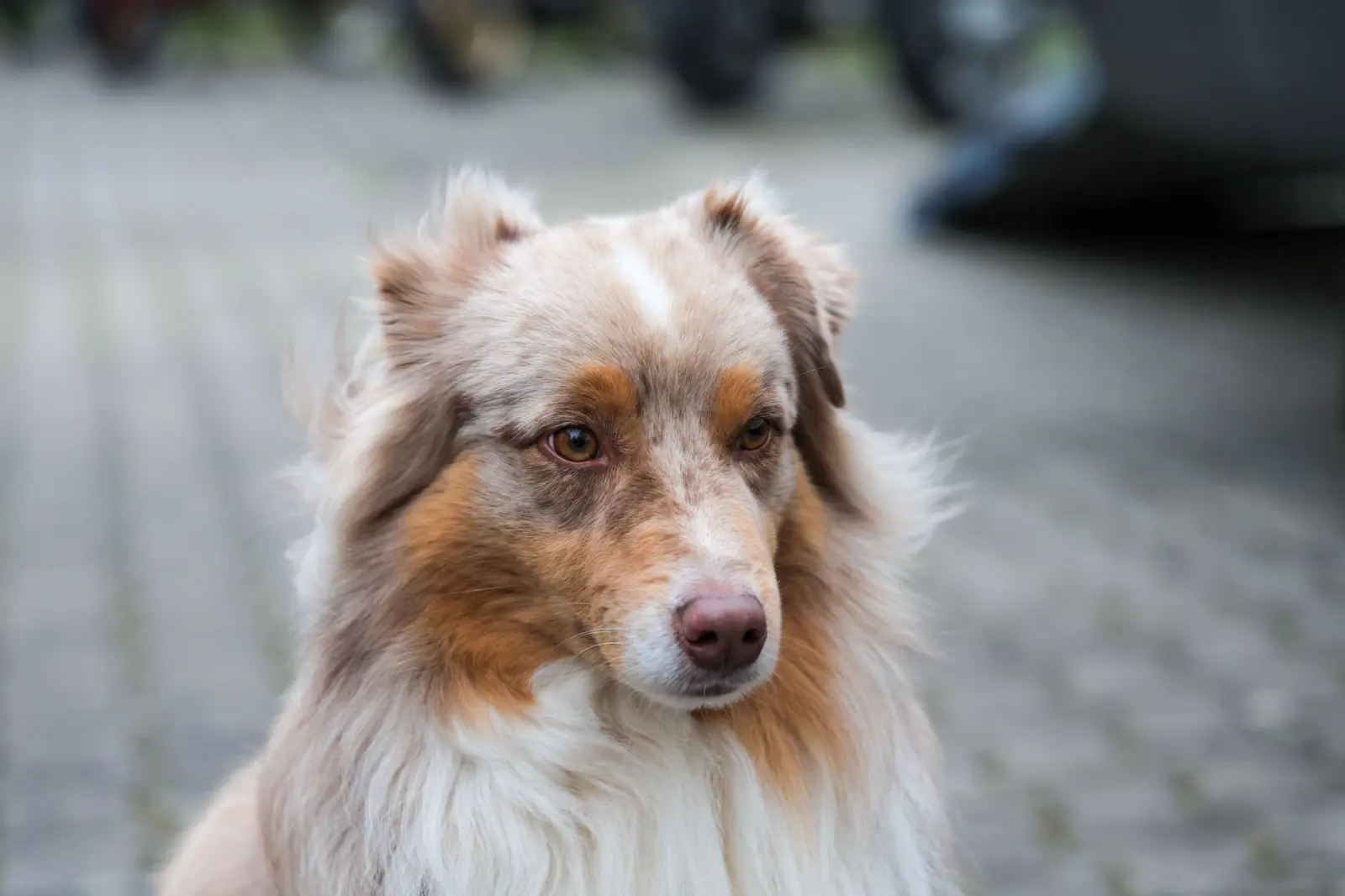
Red merle Australian Shepherds stand out immediately. The color pattern – patches of red and cream mixed with lighter, almost white areas – creates a striking appearance that draws attention at dog shows and in everyday life. What many people don’t realize is that this coloring isn’t simply a matter of picking two pigments and mixing them together. The genetics behind red merle involves specific genes working in particular ways, and understanding how that works helps explain why some dogs display the pattern clearly while others show it more subtly, and why certain health considerations matter.
The foundation of red merle coloring starts with two separate genetic systems. The first involves the base color itself – the red or cream pigmentation. The second is the merle pattern, which creates those characteristic mottled patches and lighter areas. These aren’t controlled by the same gene, which is why you can have red merles, blue merles, and other color combinations in the same breed. A dog can carry the genes for red coloring independently from the genes that produce the merle effect.
Red coloring in Australian Shepherds comes from recessive genetics. Both parents need to contribute the gene for red in order for a puppy to display red rather than black pigmentation. This is straightforward Mendelian inheritance – two copies of the recessive allele produce the phenotype. When you see a red Australian Shepherd, you know with certainty that both parents carried at least one copy of the red gene. A black dog might carry red genetics hidden in its background, but a red dog cannot hide it.
How Merle Creates the Pattern
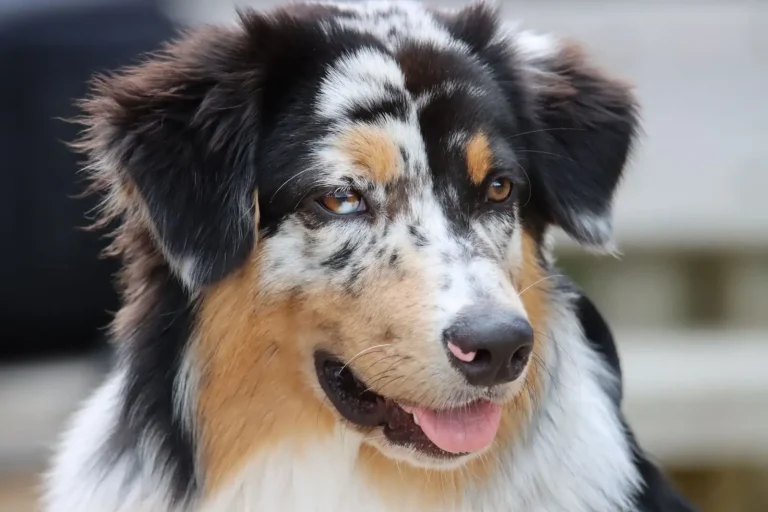
The merle gene itself is dominant, which means a dog needs only one copy to display the merle pattern. This is where things get more complicated. The merle allele doesn’t add color – it actually dilutes and disrupts pigment in patches, creating that mottled appearance. In red merles, you see areas where the red is fully expressed alongside areas where it’s been lightened or removed entirely by the merle effect.
The visual result depends partly on how the merle gene expresses itself in that individual dog. Some red merles show very distinct, bold patches with sharp boundaries between colored and lighter areas. Others display a more subtle pattern with smaller flecks and less dramatic contrast. This variation happens even within the same litter and doesn’t indicate a problem – it’s simply how the gene manifests during development. The merle pattern forms during fetal development as pigment cells migrate, and slight variations in that process create the individual differences you see.
Double Merle and Why It Matters
A critical concern in Australian Shepherd breeding involves dogs that inherit the merle gene from both parents. A double merle dog carries two copies of the merle allele instead of one. These dogs often display predominantly white coats with very little colored pigment. This isn’t purely a cosmetic issue. The merle gene, when present in double dose, frequently correlates with deafness, blindness, or both. The same developmental disruption that lightens coat color can affect the development of the inner ear and eyes.
This is why responsible breeders avoid breeding merle to merle. A red merle bred to another merle-patterned dog – whether red merle, blue merle, or any other merle color – has a 25 percent chance of producing double merle puppies. Those puppies face significantly elevated risk for sensory impairments. Breeding a red merle to a solid-colored dog (non-merle) eliminates this risk entirely, since the puppies will either be merle or non-merle, never double merle.
What Red Merles Inherit and Pass On
Understanding what a red merle dog actually carries genetically helps predict what offspring might look like. A red merle is homozygous recessive for red coloring (two copies of the red gene) and heterozygous for merle (one copy of the merle gene, one copy of the non-merle allele). This means a red merle will always pass on a red gene to every puppy, but will only pass on the merle gene to approximately half of them.
If you breed a red merle to a black dog that carries red genetics, you’ll get red and black puppies. If that black dog also carries merle, you might get red merles, red non-merles, black merles, and black non-merles in the same litter. The proportions depend on what the black parent carries. If you breed a red merle to a solid red dog (non-merle), all puppies will be red, but only half will display the merle pattern.
Breeders who work with red merles for years develop an intuition for predicting litter outcomes based on the parents’ genetics. You start to recognize which combinations tend to produce certain patterns, and you learn to think several generations ahead about how particular genetic combinations might influence the breed’s future. This forward-thinking approach is what separates intentional breeding from random pairing.
Identifying Red Merle in Puppies
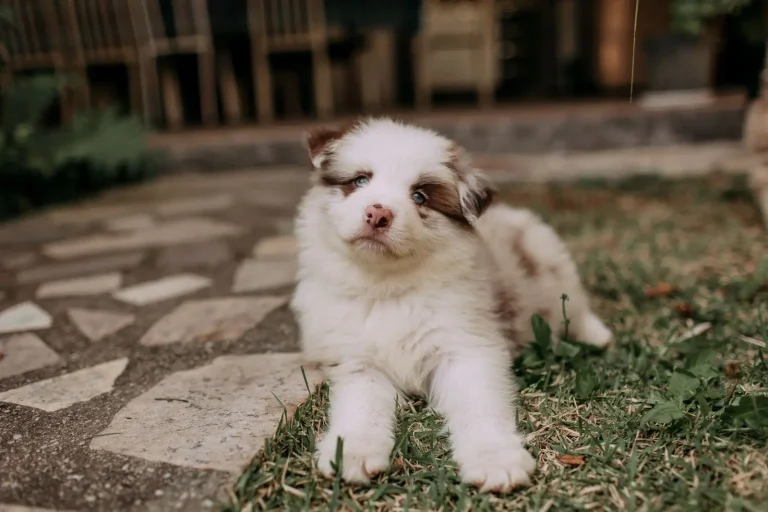
Red merle puppies aren’t always obviously merle at birth. Some are born with very faint patterning that becomes clearer as they grow and their coat develops. Others show the pattern clearly from the first weeks. The merle effect continues to develop somewhat as the dog matures, though the basic pattern is typically established by a few weeks of age. Puppies that will be red merles are usually identifiable by eight to ten weeks, though subtle variations in pattern intensity can still emerge as the coat grows in fully.
The base red color is present from birth in red merles, unlike in some other breeds where color develops gradually. What changes is the clarity and intensity of the merle pattern itself. A puppy that appears to have a very light red coat with barely visible patterning at six weeks might show much more defined merle patches by six months as the adult coat comes in.
In practice, color genetics in Australian Shepherds is more consistent and predictable than in many other breeds, partly because the breed has been carefully managed for decades. Red merle is a recognized and accepted color pattern, and most breeders understand the genetics well enough to produce predictable results. That said, individual variation always exists, and no breeder can guarantee exact appearance. What they can do is understand the probabilities and avoid combinations that create unnecessary health risks.