

Australian Shepherds have a particular relationship with boundaries. They’re herding dogs built to work at a distance from their handler, reading livestock and making independent decisions about movement and position. This background shapes how they approach place training – the exercise where a dog settles on a designated spot and holds it until released. It’s not a passive sit-stay. It’s a commitment to a location, and Aussies tend to understand that distinction fairly quickly once the expectation becomes clear.
I’ve worked with enough of these dogs to notice that place training often goes sideways not because Aussies can’t learn it, but because handlers misread what the dog is actually doing. An Aussie sitting on a mat might look settled, but internally they’re often still tracking movement in the room – watching you, monitoring the door, calculating whether something more interesting might happen. That’s not a failure. That’s the breed showing up as themselves. The training works best when you acknowledge this tendency rather than fight it.
Why Place Matters for This Breed
Place training gives an Australian Shepherd a job that doesn’t require constant handler direction. For a dog bred to work independently, this is genuinely satisfying. It’s a boundary they can own. You’re not asking them to ignore their instincts; you’re channeling them into a specific task: stay in this zone until I tell you otherwise.
The practical benefit is significant. A dog with solid place training can settle during meals, while you’re working at home, or when guests arrive. For Aussies especially, this prevents the kind of ambient stress that builds when they feel responsible for monitoring everything. They’re off duty. The mat is their responsibility, not the entire household.
Starting With Surface and Context
The physical setup matters more than most handlers realize. Aussies respond well to defined surfaces – a mat, a bed, a specific rug. The boundary should be obvious. I’ve seen training fail because the handler used an unmarked spot on the floor. The dog never quite understood where “place” actually was. With a textured mat or raised bed, the dog knows exactly where the location begins and ends.
Location choice affects learning speed. Early training works best in a low-distraction environment. Not a blank room – that can feel isolating to a dog – but a space where you’re present and visible, with minimal competing stimuli. A kitchen corner while you’re cooking is better than the living room during family movie night. Once the dog understands the concept, you can introduce it in busier contexts.
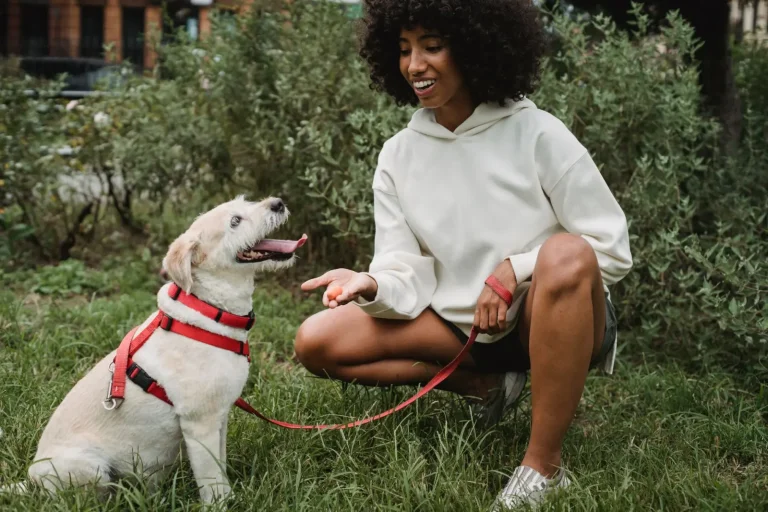
The initial introduction is straightforward. Lure the dog onto the mat with a treat or toy, mark the moment they land on it with a word like “place,” and reward them while they’re still on the surface. Repeat this dozens of times across multiple short sessions. Most Aussies catch on within a few days that stepping onto the mat triggers a reward. That’s not place training yet. That’s just teaching them the location.
Building Duration Without Losing the Thread
This is where patience becomes the actual skill. Once the dog understands the location, you’re teaching them to remain there. The temptation is to increase duration too quickly. You’ll see an Aussie hold place for thirty seconds, and the handler thinks they’re ready for five minutes. That jump often breaks the behavior because the dog hasn’t internalized the duration yet.
I work in small increments. After the dog settles on the mat, I wait two seconds, then reward them while they’re still lying down. Next session, maybe three seconds. The reward happens on the mat, not after they leave it. This teaches them that staying is what produces the payoff, not getting up.
Aussies will test boundaries, especially when they’re young or when the duration extends beyond what they’ve practiced. You might see them creep toward you, or their back legs slide off the mat while their front half stays put. These aren’t failures – they’re the dog exploring the edges of the rule. The response matters. A firm “no” followed by a reset back to the mat, then a reward for compliance, teaches them that the boundary is real but not punitive.
Distance and Distraction Progression
Once a dog will hold place for a minute or two, the next variable is distance. Start by stepping one foot away, then back. Reward. Then two feet. The dog learns that you leaving doesn’t mean the rule changes. Aussies often struggle less with distance than with distraction, because their work background means they’re comfortable with handlers moving around.
Distraction is the real test. A doorbell, another dog, food preparation – these pull at an Aussie’s attention. Early in training, you introduce mild distractions while the dog is on the mat. A toy rolling past. Someone walking by. The dog stays, you reward. Gradually, you increase the distraction level. The key is matching the distraction to what the dog can handle. If you introduce something too exciting too soon, you’ll teach them that breaking place is possible, and you’ll spend weeks rebuilding.
I’ve found that Aussies respond well to a release word. After they’ve held place for the duration you’ve set, you say something like “okay” or “free,” and they can get up. This teaches them that place isn’t forever – it has an endpoint. They’re not trapped. That clarity often makes them more willing to settle in the first place.
Common Patterns That Derail Training
Inconsistency is the biggest obstacle I see. If place is enforced sometimes but not others, the dog learns that it’s optional. An Aussie will absolutely test this. They’ll hold place when they feel like it, but ignore it when something more interesting appears. The rule has to be consistent across all handlers in the household and across all contexts where you’re using it.
Another pattern is rewarding the dog after they’ve left the mat. The handler waits for the dog to hold place, then releases them, then gives them a treat. The dog learns that the reward comes after leaving, not for staying. Rewards need to happen while they’re on the mat, during the behavior, not after it ends.
Some handlers also make the mistake of using place as punishment. They send the dog to the mat when they’re frustrated or as a consequence for misbehavior. The dog learns that place is negative, and their willingness to settle drops. Place should be neutral or positive – a place where good things happen, not where they’re exiled.
Aussies are sensitive to handler emotion. If you’re tense or frustrated while training, they feel it. The best place training sessions happen when you’re calm and matter-of-fact about the expectation. The dog settles, you reward, you move on. No drama, no intensity.
Over time, place becomes genuinely restful for an Aussie. They stop seeing it as a constraint and start seeing it as a legitimate option when they want to settle. You’ll notice them choosing to go to their mat without being asked, especially in busy moments. That’s when you know the training has actually landed. The boundary isn’t something you’re enforcing anymore. It’s something the dog understands and uses on their own terms.