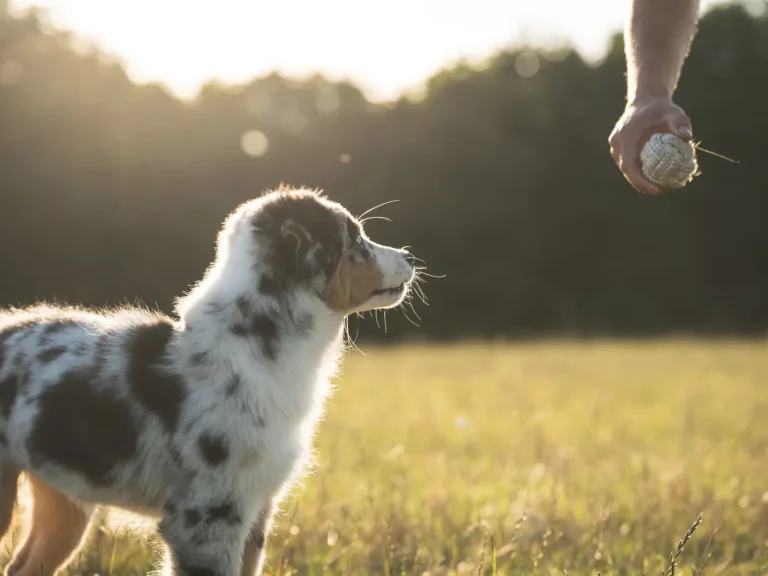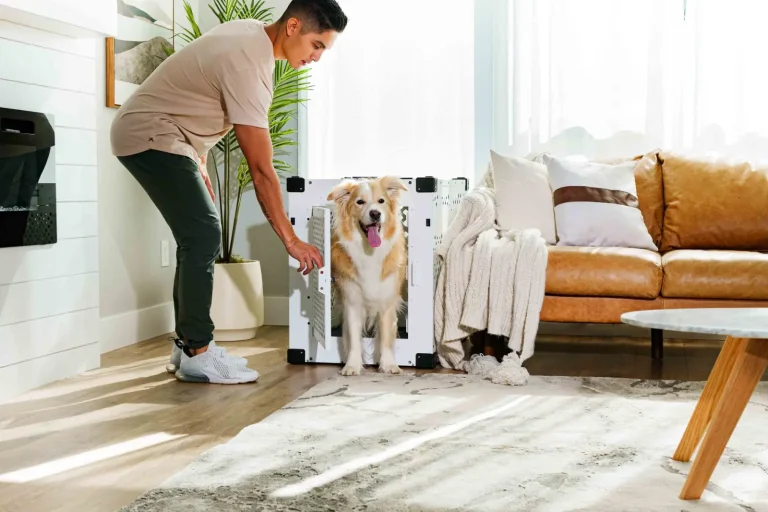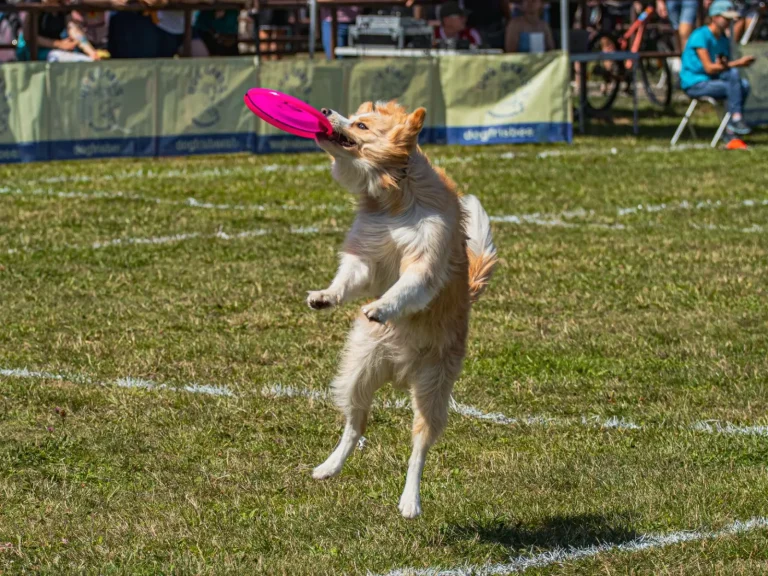

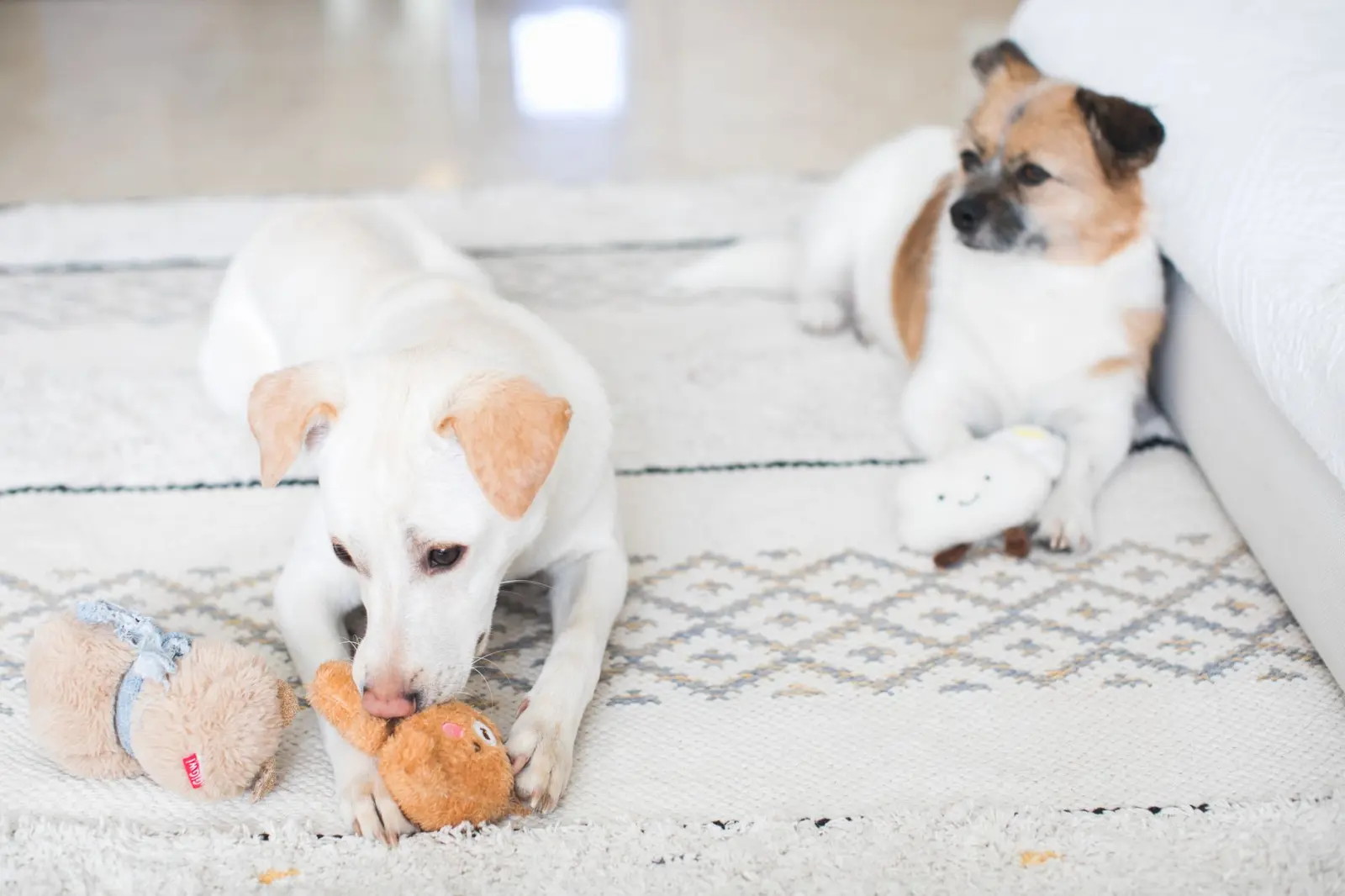
Australian Shepherds have a particular way of locking into things. Whether it’s a toy, a person’s hand during play, or a task you’ve asked them to do, they tend to hold on with real commitment. This intensity is part of what makes them useful working dogs, but it also means a release cue isn’t something you can teach casually and expect to work under pressure. I’ve worked with enough Aussies to know that a half-formed release command becomes a source of frustration rather than a solution.
The release cue matters more with this breed than it might with others. An Australian Shepherd that won’t let go of something – whether it’s a toy during fetch, a person’s sleeve during play, or even just their focus on a task – can be difficult to manage. Teaching a solid release isn’t about obedience for its own sake. It’s about giving yourself a practical tool to redirect their energy and maintain control in situations where their natural drive would otherwise run the show.
Most people start by saying “drop it” or “release” while holding a treat near the dog’s nose. The dog lets go, takes the treat, and everyone assumes the cue is learned. What actually happens in real life is different. When an Aussie is genuinely engaged – really locked onto a toy, caught up in play, or focused on something they find rewarding – that casual training rarely holds. The dog either ignores the cue entirely or responds slowly, which defeats the purpose.
Building Value in the Release Itself
The fundamental issue is that most dogs, and Aussies especially, see the release cue as something that ends the fun. You’re asking them to stop doing something they enjoy and hand over what they have. Without making the release itself rewarding, you’re fighting against their natural instinct to hold on to good things.
What works better is making the release cue predict something even better than what they’re currently holding. This doesn’t mean just offering a treat. It means the dog learns that releasing the object opens the door to something more valuable – another round of play, a higher-value reward, or immediate access to something they want more. With Aussies, this often means getting back to play faster or getting access to the next task or game.
I’ve found that the most reliable releases come when the dog understands that letting go isn’t the end of the interaction. It’s a transition. Release the toy, and play starts again immediately. Release the sleeve, and you’re back to the game. This reframing takes time and consistency, but it’s what actually sticks when you need it.
Timing and Consistency Matter More Than the Word
The actual word you choose – “release,” “drop it,” “let go” – is less important than how consistently you use it and when you mark the behavior. With Aussies, I’ve noticed they respond better when the release cue is paired with an immediate positive consequence, not just the absence of play. The timing has to be tight. The moment they open their mouth or loosen their grip, that’s when the reward needs to appear or the next game needs to start.
Many people wait too long between the cue and the reward, or they reward inconsistently. An Australian Shepherd will notice this. They’re detail-oriented dogs. If release works most of the time but not always, they’ll test it. They’ll hold on longer to see if you’ll sweeten the deal. If you sometimes reward with a treat and sometimes just let them back to play, they’ll learn to hold out for the better option.
The consistency extends to who’s giving the cue and in what context. If the cue works when you’re holding a treat but not when someone else is asking, or if it works at home but falls apart at the park, you haven’t really taught the release. You’ve taught a context-specific behavior. Australian Shepherds are capable of learning nuanced distinctions, but that’s not what you want here. You want a release that works regardless of who’s asking or where you are.
The Role of Play in Teaching Release
For an Australian Shepherd, play is often a more powerful motivator than treats. This is worth understanding because it changes how you approach the training. If your dog is toy-motivated and play-driven, using play as the reward for releasing makes more sense than cycling through kibble or small treats.
I’ve trained Aussies where the release cue was taught almost entirely through play sessions. The dog learns to release the toy because releasing it means the game gets better, faster, or more intense. The cue becomes associated with escalation rather than termination. This works particularly well with dogs that have high prey drive or strong play motivation, which describes most Australian Shepherds.
The practical advantage is that you’re training in a context that naturally engages their drive. You’re not working against their nature. You’re channeling it. When you eventually need the release cue in a real situation – the dog has grabbed something they shouldn’t, or they’re locked onto something during play – they’ve already internalized that release leads to something good.
When Release Breaks Down
There are situations where even a well-trained release cue will fail or weaken. High arousal is the most common culprit. When an Australian Shepherd is genuinely excited or stressed, their impulse control narrows. The cue might work at 70 percent intensity but fall apart at 90 percent. This isn’t a sign that the training failed. It’s a sign that you’re asking for something that’s neurologically harder when the dog is highly aroused.
Managing this means recognizing your dog’s threshold and not pushing past it unnecessarily. If you know the release cue is shaky when your Aussie is at peak excitement, you avoid putting them in that situation without backup. You might use a long line, create more distance, or simply not ask for the release when you know it won’t work. Over time, as the dog matures and you build more history with the cue, their threshold for responding reliably will increase.
Another common breakdown point is when the dog finds something more rewarding than what you’re offering. A tennis ball on the ground might not be worth releasing for a treat, but it might be worth releasing for an immediate return to an intense game. Again, this isn’t a training failure. It’s information. It tells you what actually motivates your dog and what doesn’t.
Age and maturity also play a role. A young Australian Shepherd’s impulse control is still developing. What looks like a solid release at eight months might become unreliable at a year old as the dog’s confidence and drive increase. This is normal. The training doesn’t disappear, but it needs reinforcement and refinement as the dog changes.
Teaching a reliable release with an Australian Shepherd requires patience and a willingness to understand how the breed’s natural intensity works. It’s not a command you teach once and then forget about. It’s something you maintain and refine over time, adjusting as your dog matures and as situations change. The dogs that have the most solid releases are the ones whose owners treat it as an ongoing part of their interaction, not a one-time training goal.