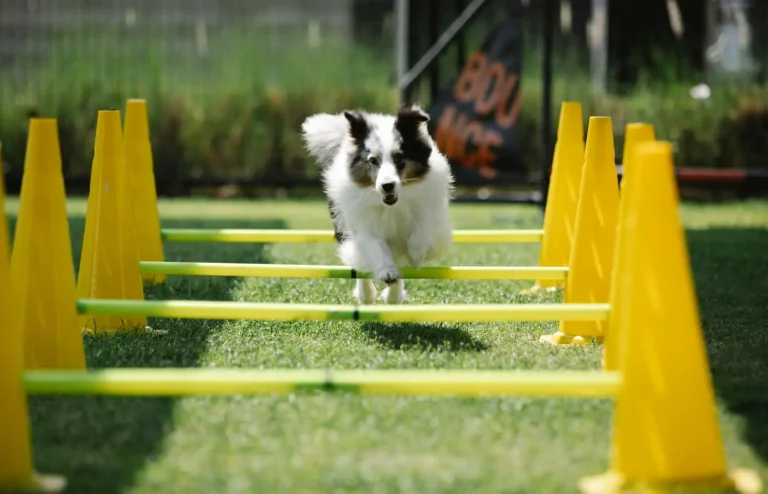


Australian Shepherds are wired to work. Even the ones living in suburban homes carry that herding instinct – the constant assessment of movement, the mental calculation of what needs managing. Teaching one to settle on cue isn’t about suppressing that nature. It’s about giving the dog a clear job that involves doing nothing, which paradoxically appeals to their need for structure and purpose.
Over the years, I’ve noticed that Aussies respond differently to bedtime cues than many other breeds. They don’t naturally wind down like a Golden Retriever might. They need permission to stop working, and that permission has to come from you. The cue itself becomes the job – the thing they’re supposed to do right now. Once they understand that, the behavior tends to solidify quickly because they’re built to follow direction.
The foundation starts long before you introduce any formal cue. Most people skip this part and wonder why their dog won’t settle. An Aussie needs to burn off the right kind of energy first. Not just a walk around the block. They need mental work – training sessions, puzzle toys, herding games if you have access to them, or even structured play that mimics herding patterns. A tired Aussie is exponentially easier to work with than one that’s been sitting around waiting for something to happen.
Building the Settling Behavior First
Before you attach a cue to settling, you need the behavior itself to exist reliably. This means creating an environment where your dog naturally lies down and stays there. A designated bed or crate works well because it gives the dog a physical boundary and a clear location. The bed becomes the place where settling happens, not just any spot on the floor.
I typically start by rewarding the dog for being on the bed during calm moments. Not after exercise, not when they’re already wired. I mean during naturally quiet times – early morning, late afternoon, whenever your particular dog tends to be less activated. I’ll toss a treat on the bed, let them lie there for a few seconds, and reward again. No cue yet. Just building the association that the bed is where good things happen when they’re calm.
With Aussies specifically, this phase often takes longer than people expect because they’re monitoring everything. They might lie down but keep their ears up, watching the window or listening for activity. That’s normal. The goal isn’t perfect relaxation at first. It’s just the willingness to be on the bed without getting up the moment something shifts in the environment.
Introducing the Cue
Once the dog is reliably choosing the bed during low-activity times, I introduce a simple verbal cue or hand signal. Something like “bed” or “settle” works better than longer phrases. Aussies respond to precision, and a one-word cue is cleaner than “go to your bed now.” I say the word just as the dog is moving toward the bed or already lying there, then immediately reward. The timing matters because the dog needs to connect the sound with the action they’re already doing.
Hand signals are particularly useful with this breed because they’re visual processors. A simple gesture – pointing to the bed, or a downward palm motion – often becomes more reliable than a verbal cue alone. I’ve found that combining both (word plus gesture) gives the best results. The dog learns that either one means the same thing.
This phase typically takes two to three weeks of consistent practice. Some Aussies catch on faster, especially if they already have experience with other trained behaviors. The key is repetition in low-stakes situations. You’re not trying to get the dog to settle when there’s chaos happening. You’re building the behavior when conditions are calm, so that eventually it holds up under mild distraction.
The Timing Problem Most People Miss
Here’s where many owners run into trouble: they introduce the cue at the wrong time of day or in the wrong state of the dog’s arousal. If your Aussie has been cooped up all day and you come home and immediately ask for “bed,” you’re fighting against accumulated energy. The dog might comply because they know the cue, but they won’t actually settle. They’ll lie down and vibrate with restlessness.
The realistic approach is to time your bedtime cue for when your dog is already trending toward calm. That might be after a training session, after physical exercise, or in the evening when their natural activity cycle is winding down. Early on, you’re not asking for the behavior at arbitrary times. You’re capturing it when it’s already happening and labeling it.
As the behavior strengthens, you can gradually introduce it at slightly more challenging times. But that progression takes weeks, not days. Aussies are smart enough to learn the word quickly, but they’re also honest – if they’re not actually ready to settle, they’ll show you that through restlessness or repeated getting up.
Environmental Management Matters
One thing I’ve learned is that the physical setup of your home affects how well this works. If the dog’s bed is positioned where they can see the front door, the window, or high-traffic areas, they’re fighting their instinct to monitor. It’s not that they’re being disobedient. It’s that their environment is asking them to do two things at once: settle and stay alert. That’s a losing proposition.
Placing the bed in a quieter corner, away from visual access to activity, makes settling easier. Some people use a crate, which provides even more containment and security. Others use a bed in a bedroom or den. The specific location matters less than the principle: the settling spot should be somewhere the dog doesn’t feel compelled to keep watch.
I’ve also noticed that white noise or soft background sound helps. Aussies are sensitive to acoustic changes – a door closing, a car passing, a neighbor’s dog barking. A fan or a white noise machine masks some of that environmental chatter and makes it easier for the dog to actually relax rather than just lie down while remaining vigilant.
Consistency and the Plateau
Once your Aussie is reliably going to bed on cue in calm conditions, the behavior often plateaus. It doesn’t improve much beyond that point without deliberate work to generalize it. That means practicing the cue in different locations, at different times, and under mild distractions. Not all at once. Gradually.
I might practice in the living room instead of the bedroom. Then with mild background noise. Then with someone else moving around nearby. Each small change is tested separately, and if the dog fails – gets up repeatedly or doesn’t respond to the cue – I dial it back and rebuild before trying again.
The mistake I see most often is expecting the behavior to transfer automatically to new contexts. A dog that settles beautifully in their crate in the bedroom might completely ignore the cue when you’re in the kitchen with the door open. That’s not stubbornness. It’s just how learning works. The behavior is location-specific and context-specific until you teach it to be otherwise.
With Australian Shepherds, this generalization phase can take several months. They’re precise learners, which is a strength, but it also means they learn the specific conditions under which a behavior works. Patience during this phase pays off because once they truly understand that “settle” means settle regardless of where you are or what’s happening, the behavior becomes rock solid.
The most reliable bedtime cue I’ve seen with this breed is one that’s been practiced consistently over time, in varied conditions, with a dog that’s already had appropriate exercise and mental stimulation. It’s not complicated, but it does require understanding how the breed thinks and respecting the time it takes to build genuine, transferable behavior.