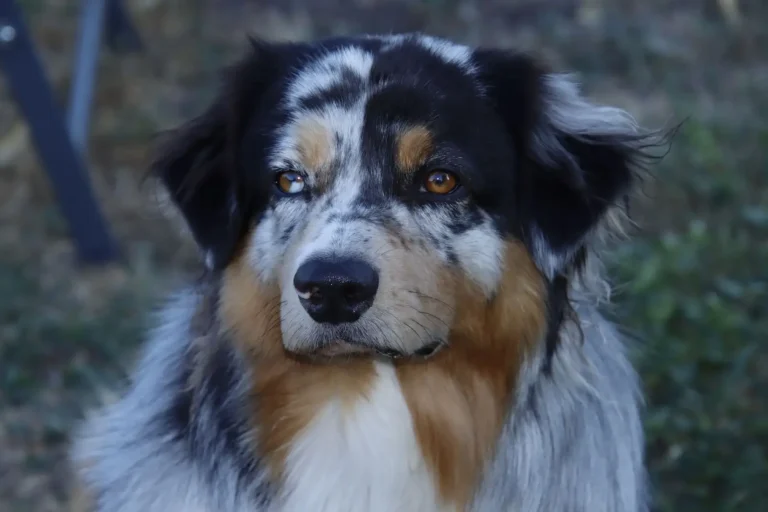

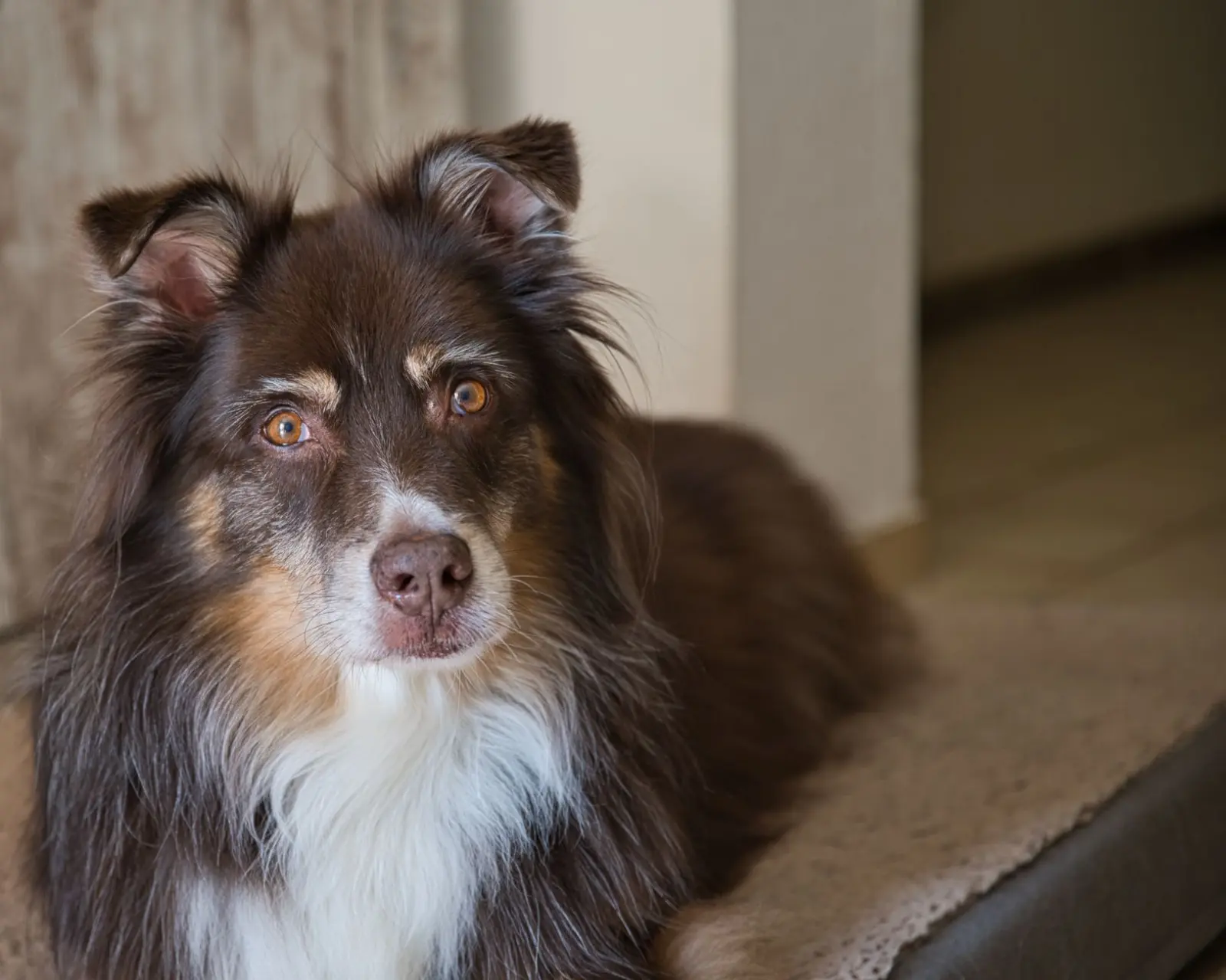
If you live with an Australian Shepherd, you’ve probably noticed the staring. Not a glance or casual eye contact, but a sustained, focused gaze that can feel almost unsettling if you’re not used to it. They lock onto you while you’re making dinner, sitting on the couch, or doing nothing in particular. It’s one of the most distinctive behavioral quirks of the breed, and it happens far more often than it does with most other dogs.
I’ve worked with enough Australian Shepherds over the years to recognize this as a normal part of how they process the world and their relationship with their handler. It’s not random, and it’s not always a sign of a problem. But it does have roots in how these dogs were bred and what they were originally designed to do.
The Herding Instinct Connection
Australian Shepherds were developed to work livestock across rough terrain, and a huge part of that job involved reading the handler’s body language and anticipating commands. A working dog that had to constantly look away or lose focus would be ineffective. The breed was selected over generations for dogs that could maintain intense visual attention on both the handler and the animals they were moving.
That genetic predisposition doesn’t disappear just because the dog now lives in a house instead of on a ranch. The staring is partly an expression of that same attentiveness. They’re watching for signals, waiting for direction, or simply maintaining the kind of visual lock that once kept them connected to their job. Even a pet Australian Shepherd retains this wiring.
What I’ve observed is that this behavior intensifies when the dog senses any kind of activity or potential activity. If you’re standing up, moving toward the kitchen, or even just shifting your weight, the stare often becomes more pronounced. The dog is essentially asking: “Are we doing something now? Is this the moment?” It’s anticipatory rather than random.
Social Bonding and Attachment
Beyond the herding instinct, Australian Shepherds are genuinely social animals that form strong attachments to their handlers. They’re not independent in the way some breeds are. They want to be involved in what you’re doing, and staring is one way they maintain that connection.
This is different from separation anxiety or neediness. A well-adjusted Australian Shepherd can be alone without distress, but when you’re present, they often prefer to keep you in their awareness. The stare is a form of engagement. It says they’re tuned into you and your movements.
I’ve noticed that Australian Shepherds who have clear jobs or regular training sessions often stare less intensely during downtime, because they’ve had their engagement needs met. Dogs that lack sufficient mental stimulation or structure tend to stare more persistently, as if searching for direction or trying to create engagement through sheer attention.
Reading What the Stare Actually Means
The intensity and context of the stare matter. A soft stare with relaxed eyes and a slightly open mouth is very different from a hard, unblinking stare with tension in the face. The former is usually affection or mild curiosity. The latter can indicate stress, confusion, or an attempt to control a situation.
I’ve seen Australian Shepherds stare intensely at other dogs or people they’re uncomfortable with, and that’s worth paying attention to. It’s not the same as the stare they give their owner during a normal day. That focused, hard stare directed at another animal or person can be a sign of herding behavior, prey drive activation, or tension that needs to be managed.
When an Australian Shepherd stares at you specifically, during ordinary moments, it’s almost always neutral or positive. They’re checking in, waiting for information, or simply enjoying your presence. Some owners describe it as their dog “monitoring” them, and that’s actually an accurate way to think about it.
When Staring Becomes a Problem
Most of the time, the staring is just part of the breed. It’s not something that needs to be corrected unless it’s paired with other behaviors that indicate anxiety or obsession. However, I have encountered situations where excessive staring does signal an underlying issue.
If an Australian Shepherd is staring constantly, pacing, or unable to settle even in a calm environment, it might indicate that the dog isn’t getting enough mental or physical exercise. These dogs have high energy and high intelligence. Without adequate outlets, they can become fixated or anxious. Increasing exercise, adding training sessions, or introducing puzzle toys often reduces obsessive staring behavior.
There’s also a difference between staring and fixation. A dog that stares at you while you’re doing something is normal. A dog that stares at a single spot for extended periods, or stares in a way that seems disconnected from what’s happening around them, might be experiencing stress or even a neurological issue. That warrants a conversation with a veterinarian.
Managing the Behavior in Daily Life
Living with an Australian Shepherd’s stare is generally straightforward once you understand what it is. You don’t need to discourage it or train it out of them. In fact, that intense focus is part of what makes them responsive to training and reliable in situations where you need their attention.
What does help is giving them regular outlets for that attentiveness. Training sessions, structured play, or work-like activities (herding trials, agility, dock diving, or even just complex fetch games) satisfy the need to focus intently on a task. Dogs that have these outlets tend to be more relaxed overall and less likely to develop anxious or obsessive staring patterns.
I’ve also found that Australian Shepherds respond well to clear boundaries around attention-seeking. If a dog is staring at you constantly and you’re trying to work or rest, a simple “settle” command and redirecting them to a mat or bed can help. They learn that staring doesn’t always result in activity, and they develop the ability to relax even when you’re present.
The staring itself isn’t something most owners need to change. It’s a natural expression of how these dogs are wired. Understanding where it comes from makes it easier to accept as part of living with the breed rather than viewing it as a behavioral problem that needs fixing.