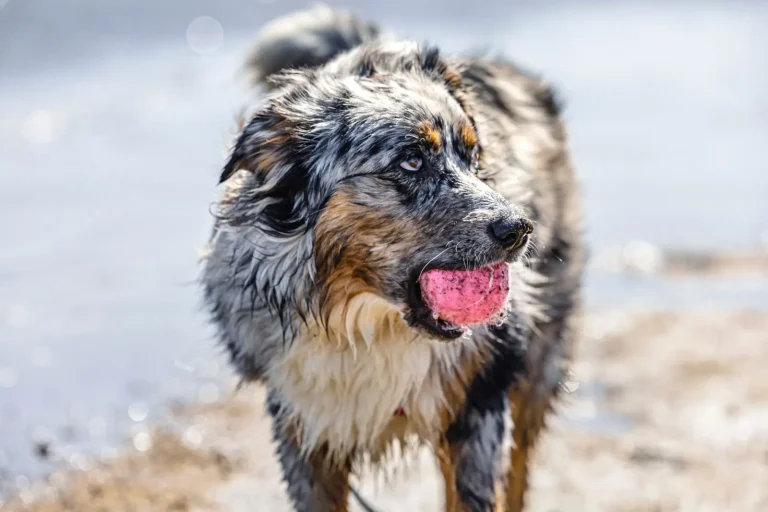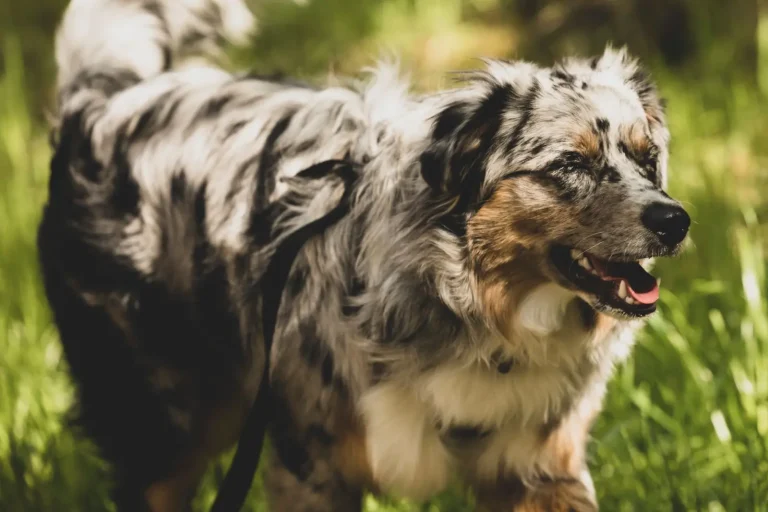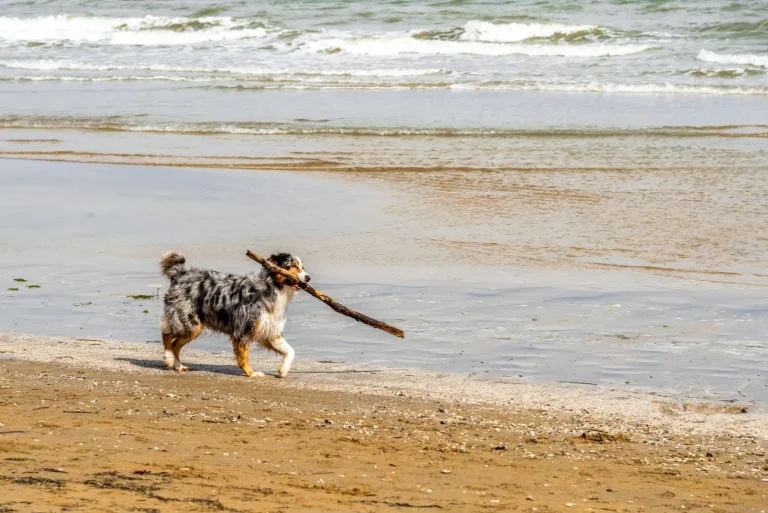

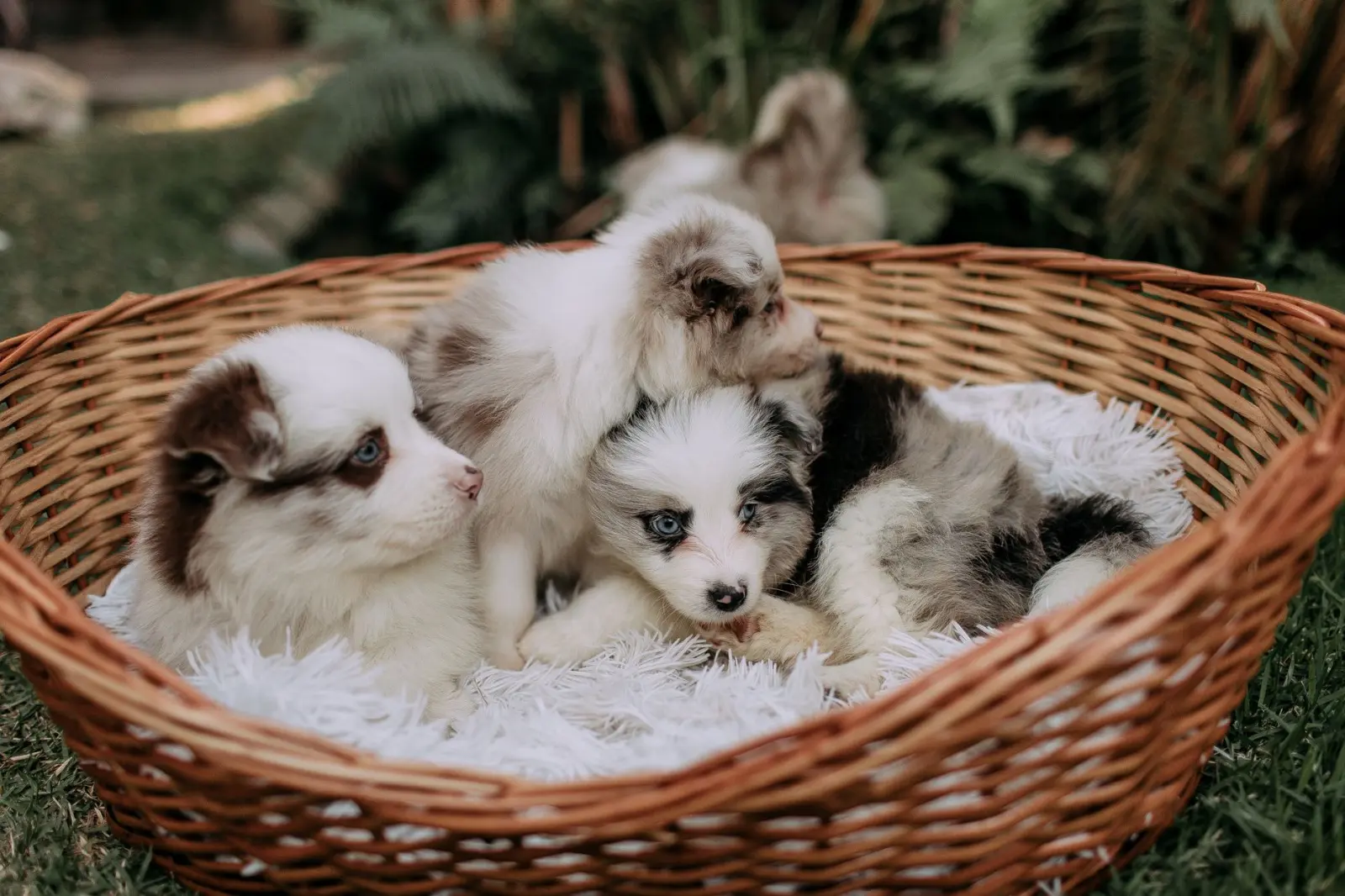
Australian Shepherd puppies around children tend to reveal themselves quickly. Within the first few interactions, you’ll see whether you have a pup that’s naturally cautious, exuberant, or somewhere in between. The breed itself carries strong herding instincts and high energy, which means the introduction process isn’t just about letting them play together and hoping for the best. There’s a real difference between a puppy that’s been exposed to children and one that’s learned how to behave around them.
I’ve worked with enough Aussie puppies to notice that many owners underestimate how much stimulation children represent. A child’s unpredictable movements, sudden noises, and quick gestures can trigger herding behavior – nipping at heels or ankles – even in a puppy that shows no aggression. The puppy isn’t being mean; it’s responding to instinct. But that doesn’t make it acceptable, and the sooner you address it, the easier the relationship becomes.
What Happens in the First Encounters
The initial meeting between an Aussie puppy and children rarely goes wrong in a dramatic way. Most puppies are curious and willing. What often happens instead is a gradual pattern: the puppy gets excited, the children get excited, and within minutes you have a situation that’s harder to manage than it was at the start. The puppy’s mouth is involved more than it should be. The children are running, which triggers more chasing. Everyone’s having fun until someone gets knocked over or nipped.
This is where controlled introductions matter. I’ve seen the difference between a puppy introduced to calm, sitting children versus one thrown into an environment with running kids and loud voices. The calm introduction doesn’t mean boring – it means manageable. It gives the puppy a chance to process the presence of children without being overwhelmed or overstimulated.
One thing I notice consistently: puppies that have been around children during their critical socialization window (roughly 3 to 16 weeks) tend to treat them as a normal part of their world. They’re not cautious or suspicious later on. But “been around” doesn’t mean unsupervised or unstructured. It means exposure with clear boundaries.
Managing Energy and Impulse Control
Australian Shepherds are working dogs. Their brains are wired to manage movement and respond to stimuli. A puppy sitting calmly with children is actually working harder mentally than you might think. It’s restraining its natural instinct to engage, chase, or herd. This is why energy management before introductions matters more than most people realize.
A tired puppy is almost always a better puppy around children. Not exhausted – just exercised enough that the baseline energy level is lower. A 15-minute play session or walk before children arrive can shift the entire dynamic. The puppy is less likely to jump, nip, or get overstimulated by sudden movements.
I’ve also noticed that puppies respond better to children when there’s structure in place. Not rigid rules, but simple patterns. If a child sits down, the puppy learns that’s a signal for calm interaction. If a child stands and moves quickly, that’s different. Puppies pick up on these patterns faster than people expect, but only if the patterns are consistent.
The Herding Behavior Question
This is the behavior that trips up most families. An Aussie puppy will nip at moving heels, ankles, or even clothing. It’s not aggression – it’s herding instinct – but the distinction doesn’t matter much to a child who’s been nipped. The puppy doesn’t understand that children aren’t sheep or cattle. It just sees movement and responds.
Redirecting this behavior early is critical. When it happens, you interrupt it immediately and redirect the puppy’s attention to something appropriate. A toy, a command, a change of direction. The goal isn’t punishment; it’s teaching the puppy that nipping children gets a specific response every time, and that response isn’t rewarding.
Some puppies have stronger herding drives than others, and some children trigger it more than others. A child who runs and shrieks is almost guaranteed to activate herding behavior in an Aussie puppy. A child who moves slowly and speaks quietly might never see it. This is useful information. It tells you where the puppy’s thresholds are and where you need to focus training.
Building Positive Associations
The best introductions I’ve seen involve children being part of positive experiences for the puppy. Not just passive presence, but active participation in things the puppy enjoys. A child offering a treat, throwing a toy, or playing a gentle game creates a different association than a child who’s just there while the puppy is being corrected or managed.
This doesn’t mean children should be the primary source of training or discipline. But they can be involved in play, feeding, and reward-based interaction. A puppy that learns that children mean good things is more likely to seek out appropriate interaction with them later.
I’ve also found that teaching children how to interact with the puppy makes a real difference. Many children naturally want to pet, pick up, or chase a puppy. Some of this is fine, but some of it creates problems. A child who knows to let the puppy come to them, to use gentle hands, and to recognize when the puppy needs space is going to have a better relationship with the dog long-term.
Supervision and Realistic Expectations
There’s no age at which you can safely leave an Aussie puppy unsupervised with children for extended periods. This isn’t about the puppy being dangerous – it’s about the puppy not having the impulse control or judgment to navigate that situation independently. A puppy can escalate play quickly, or a child can accidentally hurt the puppy, or the puppy can get into something it shouldn’t while everyone’s distracted.
What changes over time is the quality of supervision you need. A 10-week-old puppy needs constant, active watching. A 6-month-old puppy might need less intensive supervision but still shouldn’t be left completely alone with young children. By the time the dog is mature, the relationship has usually settled into something much more stable.
The reality is that introducing an Aussie puppy to children is a process, not an event. It’s months of consistent exposure, management, and training. The payoff is a dog that’s genuinely comfortable around children and children who understand how to interact with the dog safely. That foundation holds up for years.