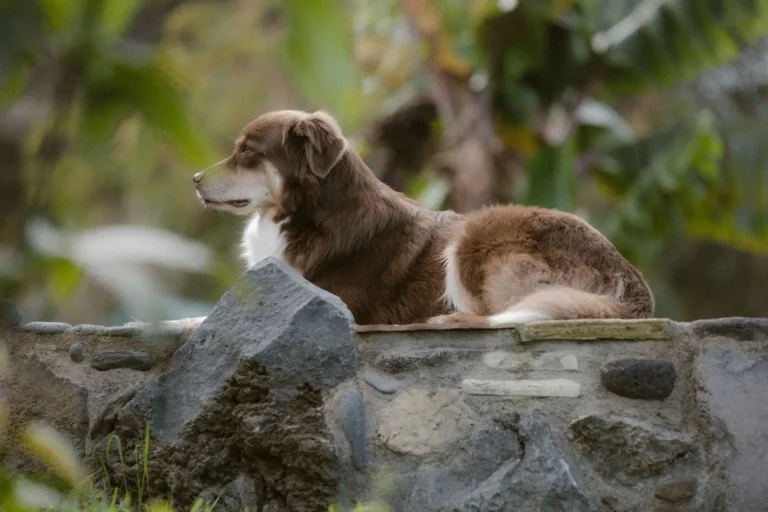

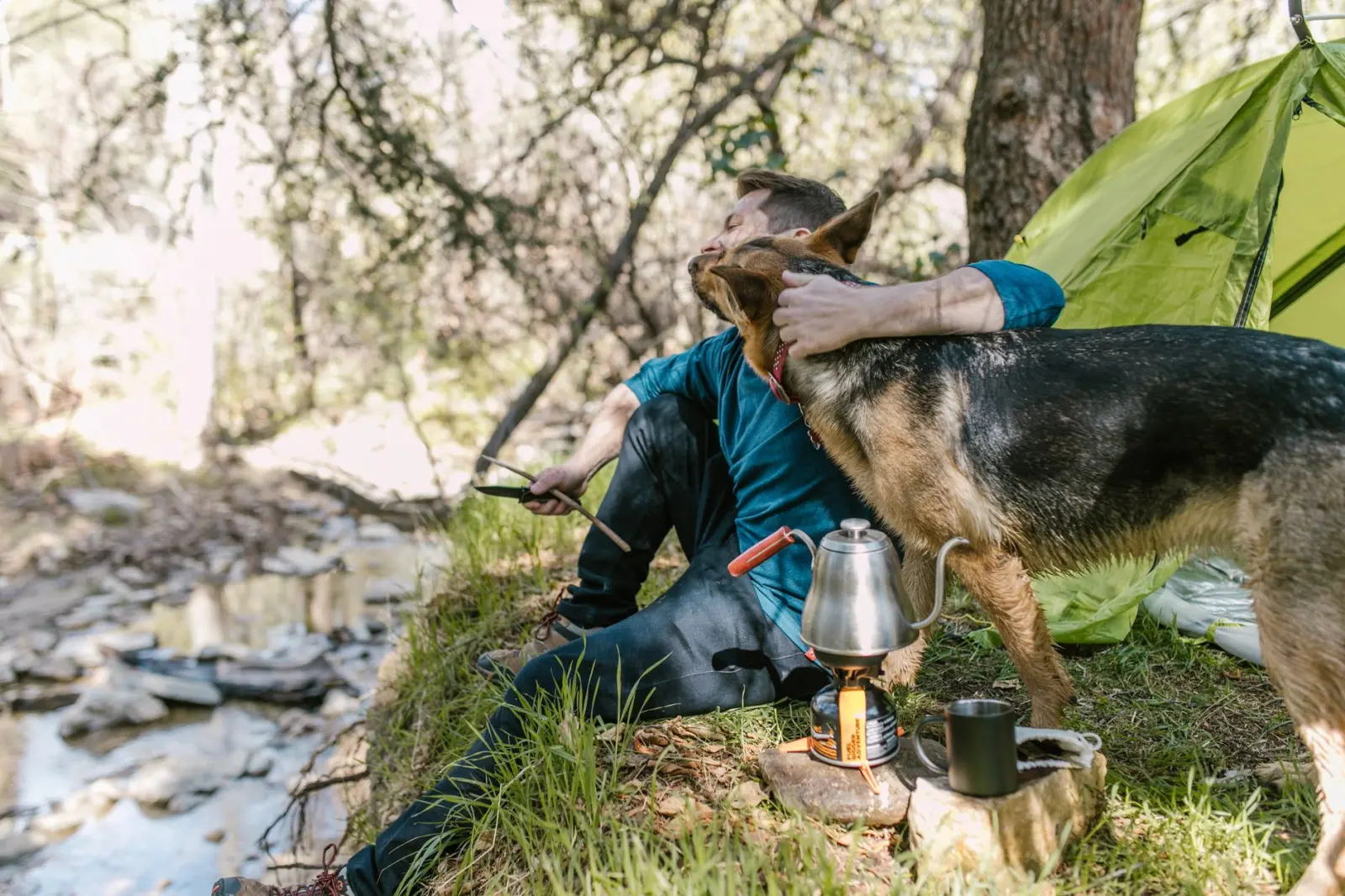
Taking an Australian Shepherd camping in Australia is not the novelty it might sound. These dogs were developed to work livestock in harsh conditions, and they respond predictably when given access to open country and real work. That said, the experience rarely unfolds the way people imagine it will.
The first thing you notice is that your dog’s energy doesn’t drop just because there’s more space. If anything, it intensifies. Australian Shepherds are bred to problem-solve and move stock across difficult terrain for hours. A campsite, no matter how scenic, is not inherently stimulating to them. They need direction. Without it, they’ll create their own – chasing wildlife, testing boundaries, or fixating on minor movements that would bore most dogs. I’ve watched dogs become restless in stunning locations simply because they had no job to do.
Heat management becomes the real constraint in most Australian camping scenarios. The interior and many coastal regions experience sustained high temperatures, often with low humidity. An Australian Shepherd’s double coat is designed for temperature regulation, but it’s not designed for extreme sustained heat. Their tolerance is better than many breeds, but it’s not unlimited. Early morning and late evening movement is necessary, not optional. Midday rest in shade is non-negotiable. I’ve seen dogs push themselves beyond safe limits because their drive overrides their comfort signals, and owners miss the early warning signs of heat stress – panting that doesn’t ease, reluctance to move, or excessive drooling.
Terrain and Foot Condition
Australian terrain varies dramatically, but much of it is harder on paws than suburban grass or manicured trails. Rocky ground, dry earth, and sharp vegetation are common. Australian Shepherds have tough paws, but toughness has limits. After a few days of continuous walking on rough country, even well-conditioned dogs develop sore feet. This isn’t always obvious until the dog starts favoring a limb or becomes reluctant to move. Checking paws daily isn’t excessive – it’s practical. Small cuts or embedded debris can become infected quickly in warm climates.
The landscape also affects how you manage the dog’s movement. Open country invites running, but it also creates distance and visibility problems. A dog that vanishes over a ridge chasing a wallaby or following a scent can be difficult to locate quickly. Even well-trained dogs revert to instinct in unfamiliar, stimulating environments. Recall becomes less reliable, not more, when there’s genuine prey or novel terrain to explore. This isn’t a training failure – it’s how working dogs are wired. Managing this means accepting that off-lead freedom requires either secure boundaries or active supervision, not just trust.
Water and Hydration
Water sources in Australian camping areas are unpredictable. Some sites have reliable water; others don’t. Carrying sufficient water for a large, active dog is often overlooked. An Australian Shepherd working or playing in heat can drink more than expected. Stagnant water sources – which are common in remote areas – introduce parasites and bacteria that cause gastrointestinal issues. I’ve seen dogs become ill days after drinking from what looked like a clean water hole. Bringing your own water supply is simpler than managing the consequences.
Dehydration in these dogs is sometimes masked by their behavior. They don’t always slow down when they’re becoming dehydrated. They keep moving, keep working, and the problem becomes apparent only when it’s more serious. Offering water frequently, even when the dog doesn’t seem to ask for it, prevents this. It’s not about coddling the dog – it’s about recognizing that their instinct to work can override their instinct to rest and drink.
Behavioral Shifts in Open Country
Australian Shepherds often show behavioral changes in genuine wilderness settings. Dogs that are calm and obedient in suburban environments can become intensely focused, reactive to movement, or territorial. Some become more confident; others become anxious about unfamiliar sounds or wildlife activity. These shifts are normal. The dog isn’t misbehaving – it’s responding to an environment that matches its genetic purpose more closely than a backyard does.
This can be positive or challenging depending on the individual dog and how you prepare. A dog that becomes overly fixated on distant movement or develops territorial barking around the campsite may need more structured activity, not less. Boredom isn’t always the problem; sometimes it’s understimulation of the right kind. A dog that has spent an hour genuinely working – moving stock, herding, or tracking – often settles differently than one that has simply run around.
Wildlife encounters are inevitable in most Australian camping areas. How your dog responds matters. Chasing native animals, particularly if the dog is off-lead, creates both safety and ethical problems. Training a reliable recall before the trip isn’t just useful – it’s essential. Even then, expect that in the moment, instinct may override training. Managing this means accepting that certain areas or times may require the dog to remain on-lead, regardless of how much space is available.
Practical Setup and Routine
Campsite setup changes when you have an active dog. Secure areas, shade structures, and water placement all become more important. A dog tied to a tree or stake for hours while you’re away from camp isn’t ideal, but it’s sometimes necessary. The alternative – an unsecured dog in unfamiliar territory – creates worse problems. Establishing a routine that includes regular movement, rest periods, and feeding helps the dog settle. Dogs that know what to expect tend to be calmer than those in unpredictable situations.
Feeding in camp requires attention to temperature and wildlife. Food left exposed attracts animals and spoils quickly in heat. Feeding times matter too – a large meal followed immediately by vigorous activity can cause problems. Spacing feeding and activity appropriately reduces digestive stress.
The experience of camping with an Australian Shepherd in Australia is genuinely different from camping with the same dog elsewhere. The environment activates instincts that suburban life keeps dormant. This can be rewarding – many dogs seem more themselves in open country. It can also be demanding. Success depends less on the destination and more on realistic expectations and consistent management. The dog isn’t a passenger on your camping trip; it’s an active participant with its own needs and drives. Acknowledging that from the start makes the whole experience more straightforward.